13 September 2026
Map Your Travel Style: Alps Rail Trips or Rockies Road Trips
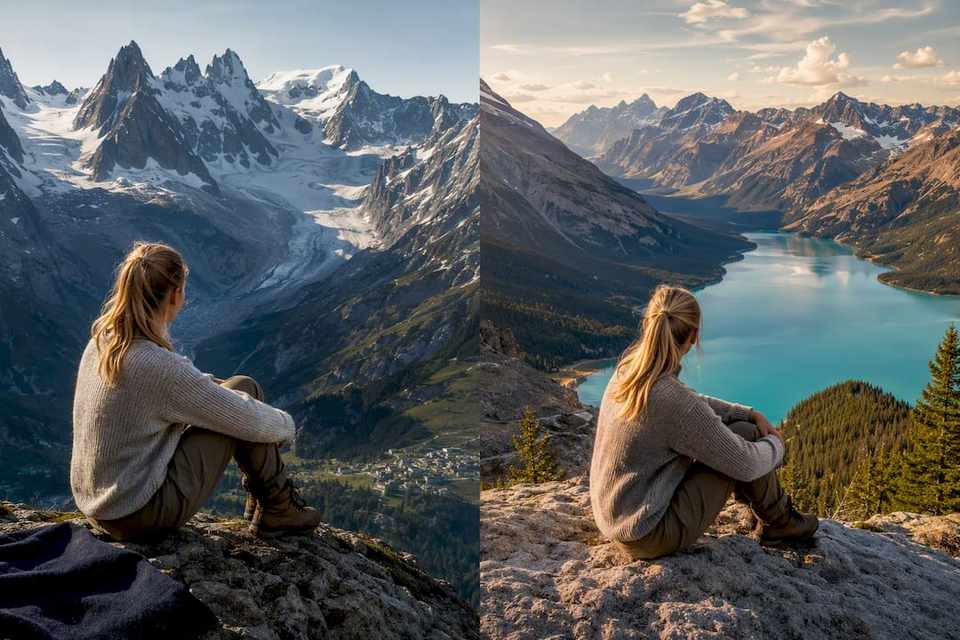
Pick the Alps for lift-rich village culture, higher single summits, and easy rail access to dramatic ridgelines. Pick the Rockies for wide-open wilderness, dry powder, and a road-trip national-park experience. Mont Blanc tops out well above any Rocky Mountain peak, but the Rockies deliver more raw trail mileage and backcountry space. The sections below break down exactly why each range suits a different kind of traveler.
TL;DR:
- The Alps are shorter but feature sharper, more dramatic terrain with high-altitude villages and extensive rail networks, making short, cultural trips easier.
- The Rockies offer broader valleys, more wilderness, and more peaks above 14,000 feet, ideal for long road trips, backcountry adventures, and wildlife sightings.
- Alpine snow tends to be wetter and heavier, while Rockies powder is drier and lighter, influencing ski experiences and preferred season windows.
- Transportation in the Alps relies on dense rail and lift systems, whereas the Rockies depend on longer drives and shuttle services for wilderness access.
- BergMe’s matching service simplifies booking by aligning group priorities like transport and snow style with tailored resort packages, especially for Alps-focused trips.
Table of Contents
- Alps vs Rockies: Scale, Geology, and the Highest Peaks
- What Do the Landscapes and Wildlife Actually Look Like?
- Which Range Offers Better Skiing, Hiking, and Climbing?
- How Do Villages and Transportation Shape the Trip?
- When Is the Best Time to Visit Each Range?
- What Do Permits, Passes, and Parking Actually Cost?
- Should You Choose the Alps or the Rockies?
- How Does BergMe’s Matching Approach Fit Into This Decision?
- Does the “Better” Mountain Range Even Exist?
- A Faster Way to Book Your Alpine Ski Trip
- Sources
- FAQ
Alps vs Rockies: Scale, Geology, and the Highest Peaks
The two ranges are built on entirely different geological timelines, and that difference shows up the moment you look at a map. The Alps stretch about 750 miles across eight countries, a compressed arc of young, sharply folded rock pushed up by the collision of the African and Eurasian plates. The Rockies run a long distance from New Mexico into British Columbia, an older and more sprawling system that trades density for sheer territorial reach.
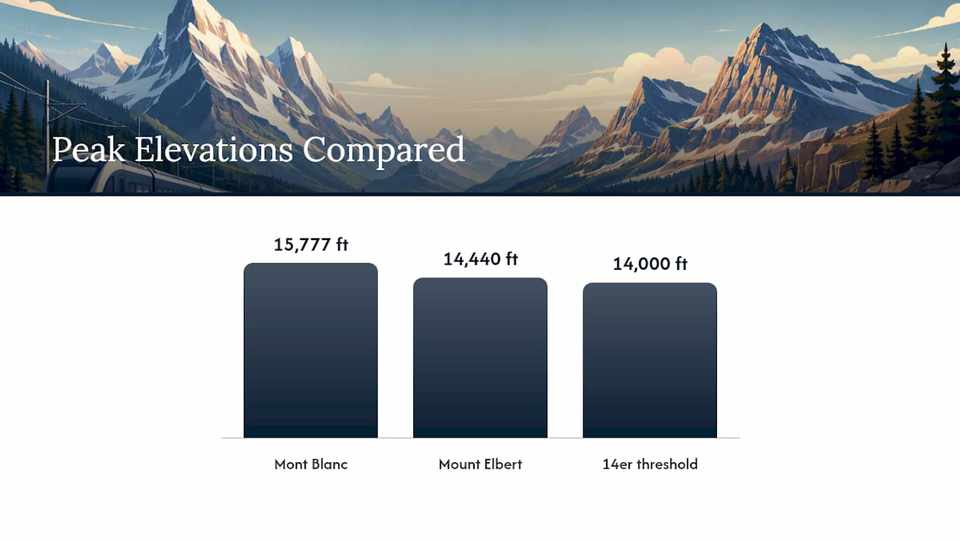
Height tells its own story. Mont Blanc rises to 15,777 feet, while Mount Elbert, the tallest peak in the Rockies, reaches 14,440 feet. That 1,300-foot gap matters less than it sounds, though, because the Rockies compensate in volume rather than altitude. Colorado alone holds many peaks above 14,000 feet, so climbers chasing a personal “14er” list have more targets in the American range than in Europe.
Geology shapes the view as much as the numbers do. The Alps’ younger, faulted rock produces knife-edge ridgelines and near-vertical faces, the kind you see behind Zermatt or Chamonix. The Rockies, sculpted by older uplift and heavy glacial carving, tend toward broader massifs and wide U-shaped valleys rather than singular spires.
For trip planning, scale changes what a single vacation can realistically cover:
- The Alps compress dramatic terrain into short distances, so a two-week trip can hit Switzerland, Austria, and Italy without exhausting drive time.
- The Rockies demand longer point-to-point travel. Denver to Jasper is a multi-day drive, not an afternoon hop.
- Altitude planning favors the Rockies for base towns (many sit above 8,000 feet already) while Alpine villages often sit lower, with altitude gained mainly on lifts and trains.
- Acclimatization matters more in Colorado ski towns like Breckenridge, where visitors flying in from sea level sometimes feel the thin air within hours of arrival.
What Do the Landscapes and Wildlife Actually Look Like?
Glaciers define the Alps in a way that’s hard to overstate. Sharp aretes, crevassed icefields, and near-vertical rock faces surround towns like Chamonix and Zermatt, creating a landscape that looks aggressive even from a café table. The Rockies favor a gentler, wider composition: broad glacial valleys, turquoise lakes fed by mineral runoff, and rolling alpine meadows that open up rather than close in.
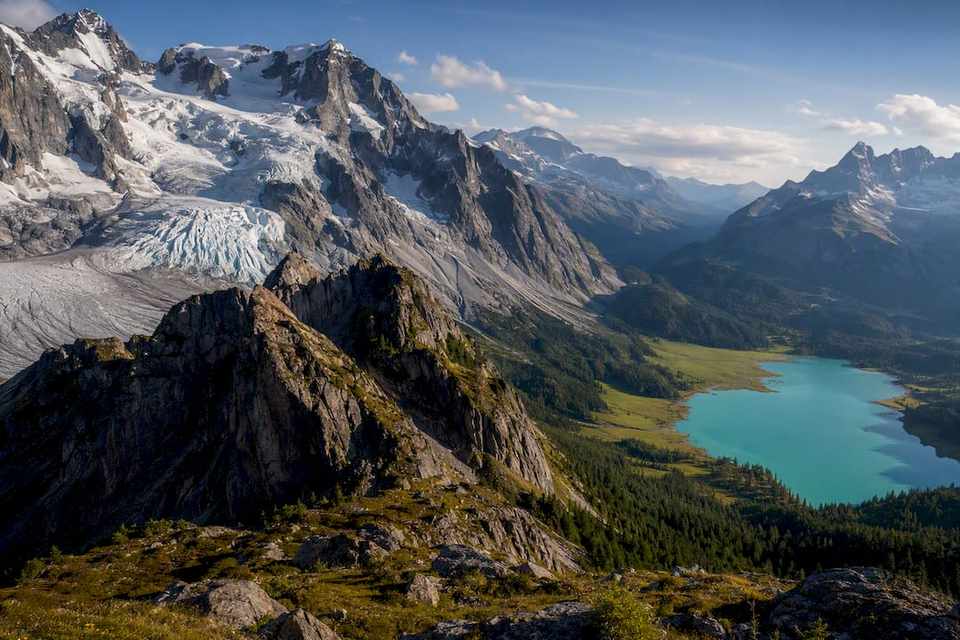
That visual difference comes from settlement patterns as much as geology. Alpine valleys have been farmed and built up for centuries, so meadows, chalets, and church spires sit right up against the ice. Rockies scenery, especially inside national parks, stays largely undeveloped. A hike outside Banff or Jasper can run for hours without a building in sight, which is exactly the appeal for travelers chasing solitude.
Wildlife visibility follows the same pattern. The Rockies host grizzly and black bears, elk, moose, and bighorn sheep in numbers that make sightings a near-daily possibility on popular trails. The Alps have chamois, ibex, and marmots, but decades of human presence mean animals are more elusive and less likely to interrupt your hike.
- Alps terrain: jagged ridgelines, crevassed glaciers, farmed valley floors, dense village presence.
- Rockies terrain: broad U-shaped valleys, glacial lakes, extensive backcountry, minimal development inside park boundaries.
- Vegetation zones shift faster in the Alps due to compressed elevation gain; Rockies zones spread across longer approaches.
- Wildlife encounters are more frequent and more consequential in the Rockies, where bear activity requires real precautions.
Pro Tip: Carry bear spray and know how to use it before any Rockies backcountry hike. Rangers recommend making noise on blind corners, since surprise encounters cause more incidents than animals that simply see you coming.
Which Range Offers Better Skiing, Hiking, and Climbing?
Recreation is where the two ranges diverge most sharply, and it comes down to infrastructure as much as terrain.
- Skiing. Alpine resorts run on dense lift networks that connect entire valleys, so one pass can move you between dozens of interlinked peaks in Austria or Switzerland. Rockies resorts run smaller, self-contained lift systems, but they make up for it with drier, lighter powder that suits tree skiing and deep bowls better than the Alps’ often heavier, wetter snowpack.
- Hiking. The Alps run on a hut-to-hut system, letting hikers travel multiple days between staffed mountain huts with hot meals and a bed waiting at the end. Rocky Mountain National Park alone offers more than 350 miles of trails and over 60 peaks above 12,000 feet, favoring long day hikes and backcountry camping over the Alps’ lodge-to-lodge rhythm.
- Climbing. Via ferrata routes, protected with steel cables and ladders, make technical Alpine terrain accessible to hikers without full climbing gear. The Rockies have far fewer via ferrata and lean instead toward traditional alpine and rock climbing, often requiring more self-sufficiency.
- Summer activities. Both ranges open up mountain biking and rail-accessed viewpoints once snow melts, but the Alps add paragliding and lake swimming close to town, while the Rockies emphasize multi-day backpacking and wildlife-focused trips.
How Do Villages and Transportation Shape the Trip?
The Alps run on rail in a way few American ranges can match. Mountain trains like the Jungfrau Railway carry visitors from valley towns to glacier-level viewpoints without a car, and dense regional networks make it realistic to plan an entire Alpine vacation without ever renting a vehicle. Rockies travel leans the opposite direction: national park roads and personal vehicles remain the default, and parking, not train schedules, becomes the daily planning constraint.
Village culture reinforces that split. Alpine base towns built their economies around tourism for well over a century, so food, lodging, and non-ski activities are woven into daily life. A non-skier in a group can spend the day at a spa, a market, or a cable car ride while skiers hit the slopes. Rockies gateway towns like Estes Park or Banff offer real hospitality too, but the surrounding wilderness, not the town itself, is usually the draw.
- Alps transport: dense rail and lift networks, car-optional itineraries, short transfers between countries.
- Rockies transport: car-dependent access, longer drives between destinations, shuttle systems inside busy parks.
- Alpine villages integrate food, culture, and non-ski activity directly into the ski-town experience.
- Rockies towns function more as staging points for wilderness access than as destinations in their own right.
When Is the Best Time to Visit Each Range?
Ski season length depends heavily on elevation and lift infrastructure. Many Alpine resorts extend their season into glacier zones, where lifts reach high enough to offer skiing well into spring even as lower slopes melt out. Rockies resorts generally run a tighter window, roughly late November through early April, though their higher base elevations often mean more consistent natural snowfall without artificial help.
Snow character differs enough to matter for planning. The Rockies’ drier, colder climate produces lighter powder prized by skiers and photographers chasing that fresh-snow look. The Alps see more variable snowpack, sometimes heavier and wetter, particularly at lower elevations closer to valley floors.
Summer hiking windows run roughly June through September in both ranges, though high-altitude trails in either location can hold snow into July. Trail conditions in Rocky Mountain National Park shift fast at elevation, and winter hazards can require microspikes or snowshoes even in late spring. Avalanche risk and road closures affect both ranges, so checking current conditions before any shoulder-season trip is not optional.
What Do Permits, Passes, and Parking Actually Cost?
Rocky Mountain National Park runs a timed-entry permit system during peak months, and popular trailheads fill their limited parking early in the day. Visitors who skip the shuttle system often end up circling for a spot or getting turned away entirely.
Alpine lift and rail tickets can carry sticker shock for single rides. A one-way trip up a marquee peak can cost real money without a regional pass, though multi-day lift passes and rail passes bring the per-day cost down considerably for longer stays.
- Rockies: reserve timed-entry permits ahead of peak season, plan for shuttle use, and expect limited trailhead parking.
- Alps: buy a multi-day lift or rail pass rather than single tickets if you’re staying more than two or three days.
- Budget tip: shoulder-season travel in either range (late spring or early fall) cuts both crowds and costs.
- Parking: free but scarce in the Rockies; often paid but more available in Alpine resort towns.
Should You Choose the Alps or the Rockies?
The decision usually comes down to what kind of trip you actually want, not which mountains are “better.”
- Pick the Alps if you want lift-connected skiing across multiple resorts, rail travel without a rental car, and a mix of culture, food, and mountain scenery in one trip.
- Pick the Rockies if you want dry powder, long wilderness trails, wildlife sightings, and a road-trip pace with fewer people per square mile.
- Family ski trip (5 to 7 days): the Alps work well, since non-skiers can ride lifts to viewpoints or explore villages while others ski.
- Wilderness road trip (10+ days): the Rockies fit better, with national parks strung together along a driving route.
- Train-based scenic holiday: the Alps are the clear choice, given how much ground you can cover without a car.
Pro Tip: Decide your transport preference first, car or rail, before picking a range. That single choice narrows the decision faster than comparing peak heights or snow types.
How Does BergMe’s Matching Approach Fit Into This Decision?
Choosing between these two ranges gets easier when the decision starts with your group’s actual priorities rather than a spreadsheet of peak heights. Bergme’s questionnaire asks about group type, transport preference, and snow style, then matches those answers to real resort options rather than a generic “top 10” list.
- Group type determines whether lift-accessed village comfort or wide backcountry access matters more.
- Transport preference often decides the range before snow quality even enters the conversation.
- Snow style (dry powder versus varied Alpine snowpack) narrows the choice further once a range is picked.
An example of an Alps-side package includes rail access, village amenities, and lift-connected terrain in one curated booking.
Does the “Better” Mountain Range Even Exist?
There isn’t one. A family wanting village comfort and a non-skier-friendly itinerary belongs in the Alps. A traveler chasing solitude, dry powder, and long trail days belongs in the Rockies. Both ranges carry real conservation stakes, so sticking to marked trails and shuttle systems protects the terrain that makes either trip worth taking. The verdict from the top holds: match your transport and crowd tolerance first, then let the range follow.
— Eduard
A Faster Way to Book Your Alpine Ski Trip
If the Alps side of this comparison sounds like your trip, Bergme turns that instinct into an actual itinerary without hours of resort research. The matching questionnaire asks about your group, snow preference, and transport style, then returns curated packages instead of a raw list of hotel links.

The Interlaken New Year ski package is a direct example: rail-accessible lodging, a linked ski pass, and village amenities bundled into one booking rather than pieced together separately. Independent planning still makes sense for travelers who want full control over every stop, but if you’d rather skip the resort-by-resort comparison, start the questionnaire and get a matched trip in minutes.
Sources
- How the Alps compare to the Rockies | WorldAtlas
- Hiking in Rocky Mountain National Park | NPS
- Alps destination travel guide 2026 | TravelPulse
FAQ
Which Are Older, the Alps or the Rockies?
The Rockies are considerably older, with uplift dating back tens of millions of years earlier than the Alps, whose younger, still-active tectonic folding produces sharper, less-eroded peaks.
Are the Alps Higher Than the Rockies?
Yes, at the single-summit level. Mont Blanc reaches 15,777 feet compared to Mount Elbert’s 14,440 feet, though the Rockies contain far more peaks above 14,000 feet overall.
Why Do Some Travelers Find the Alps More Dramatic Than the Rockies?
The Alps’ younger geology creates sharper ridgelines and glacier-draped faces visible right from village level, while the Rockies’ older, more eroded terrain tends toward broader, gentler massifs.
Is Banff National Park More Beautiful Than the Swiss Alps?
Beauty here is a matter of style rather than a clear winner. Banff offers wide glacial valleys and turquoise lakes with abundant wildlife, while the Swiss Alps combine jagged peaks with village culture and rail access most visitors find hard to match elsewhere.
Which Range Suits a Ski Trip Planned Through Bergme?
Bergme’s questionnaire fits travelers leaning toward the Alps particularly well, since its matching accounts for group type, transport preference, and lift-connected village comfort in one curated package.