6 September 2026
Match Your Colorado Ski Trip to Aspen or Vail: Four Mountains or One
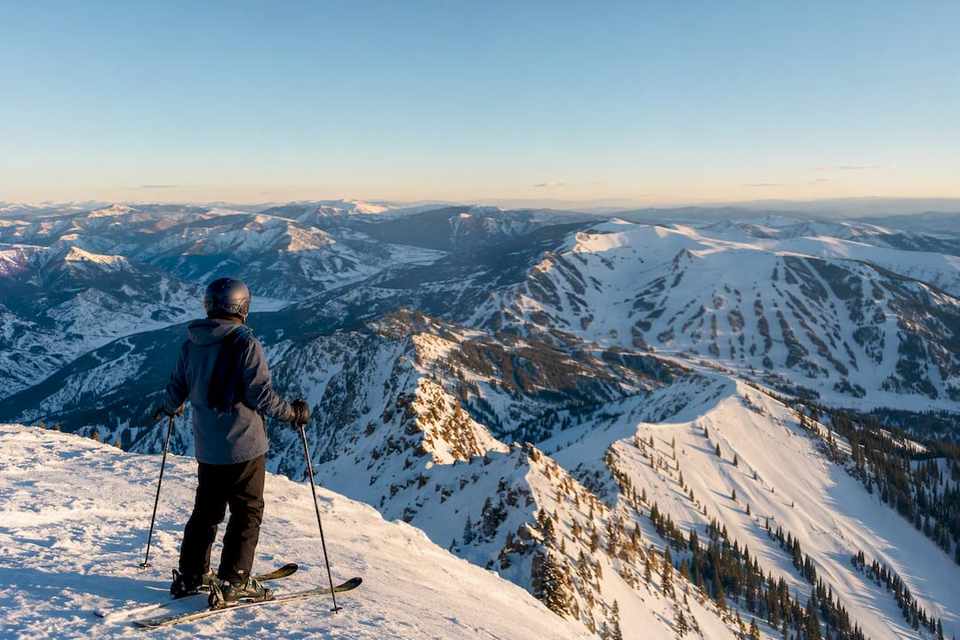
Vail wins for travelers who want maximum interconnected terrain, easier logistics, and a family-friendly base village, while Aspen wins for skiers who want four distinct mountains, serious expert terrain, and a historic town with real cultural depth after the lifts close. The caveat: airport access and peak-week pricing can flip that calculus, since Aspen’s local airport is more weather-sensitive and both resorts carry steep surcharges around Christmas and Presidents’ Week. Match your group’s skill spread and tolerance for logistics to the right side before booking anything.
TL;DR:
- Vail offers seamless skiing over one connected mountain, ideal for groups that value spontaneity and easy navigation across terrain.
- Aspen’s four separate mountains provide diverse experiences and vary their difficulty, suited to groups with mixed skill levels or specific mountain preferences.
- Aspen’s airport is less reliable for winter flights, and peak-week prices surge significantly at both resorts, requiring advance planning and buffer days.
- Lodging choices impact logistics: Snowmass Village is best for families seeking ski-in/ski-out, while Vail’s village simplifies proximity to lifts and ski schools.
- Ski safety risks are comparable, but more advanced terrain and hike-to zones at Aspen Highlands demand experienced skiers, with weather and avalanche conditions requiring attention.
Table of Contents
- Aspen vs Vail Skiing: Mountain Layout and Terrain
- Which Resort Has Better Terrain for Your Skill Level?
- Getting There: Airports, Drive Times, and Weather Buffers
- Aspen’s Culture vs Vail’s Village: Where to Spend Your Evenings
- Snowfall, Crowds, and the Best Time to Visit
- Lodging and Family Logistics: Ski School, Rentals, and Where to Stay
- Lift Passes and Ticket Economics: What to Buy and When
- How to Decide: A Quick Checklist for Aspen or Vail
- How Bergme Helps You Pick the Right Trip
- Avalanche Risk and On-Mountain Safety at Both Resorts
- Accessibility for Skiers and Visitors With Disabilities
- What Actually Should Decide Your Trip
- Get a Personalized Aspen or Vail Recommendation
- Sources
Aspen vs Vail Skiing: Mountain Layout and Terrain
The physical shape of each resort drives almost everything else about the trip, from where you stay to how your ski day unfolds.
Vail is one continuous mountain covering roughly 5,317 acres, stitched together by lifts that carry you from the front side into the Back Bowls and out to Blue Sky Basin without ever removing your skis. Aspen Snowmass is the opposite model: four separate mountains, Aspen Mountain (locals call it Ajax), Aspen Highlands, Buttermilk, and Snowmass, sharing one lift ticket but connected only by road and shuttle. Combined, Aspen Snowmass covers about 5,527 acres, slightly more than Vail’s single-mountain footprint, but that acreage is split across four locations with distinct personalities rather than one flowing system.
That structural difference changes how a ski day actually runs.
- Vail: ski from the village lift straight into the Back Bowls, loop through Blue Sky Basin, and return to base without a transfer.
- Aspen Snowmass: pick one mountain per day, since moving from Buttermilk to Highlands or Snowmass requires a free shuttle or a short drive.
- Vail’s advantage: spontaneity. You can chase weather and terrain in real time across one map.
- Aspen’s advantage: variety. Each mountain feels like a different resort, so a week never gets repetitive.
For families who want to minimize decision fatigue, Vail’s single system removes a layer of daily planning. For groups who like the idea of “today we ski Highlands, tomorrow we ski Snowmass,” Aspen’s four-mountain format turns a week into four distinct experiences rather than one long one.
Which Resort Has Better Terrain for Your Skill Level?
Skill mix inside your group matters more than raw acreage. Here’s how the two stack up by ability:
- Beginners: Buttermilk is purpose-built for learners and even hosts the Winter X Games on terrain gentle enough for first-timers, while Vail’s front-side ski school zones near the village offer similarly forgiving green runs with faster lift access back to the base.
- Intermediates: Vail’s front side delivers long, uninterrupted cruisers that let intermediate skiers rack up vertical fast, while Snowmass answers with wide, consistently groomed runs that reward steady mileage over a full day.
- Experts: Aspen Highlands’ Highland Bowl is a hike-to zone widely considered one of the best lift-accessed expert descents in North America, and Aspen Mountain’s steeps add technical, narrow chutes close to town. Vail counters with the sheer scale of the Back Bowls and the gladed powder stashes of Blue Sky Basin, both lift-accessed with no hiking required.
- Mixed-ability groups: Vail makes it easier to split up in the morning and reunite for lunch, since every zone funnels back to one base area.
Getting There: Airports, Drive Times, and Weather Buffers
Access is where a well-planned trip can unravel fast if you don’t build in a cushion.
- Aspen/Pitkin County Airport (ASE) sits just 4 miles from downtown Aspen, making it the most convenient option on paper, but it’s notoriously weather-fussy. Storms that make skiing great can also delay or cancel flights.
- Eagle County Regional Airport (EGE) serves Vail and Beaver Creek and tends to handle winter weather more reliably than ASE, though flight frequency is lower than at major hubs.
- Denver International (DEN) works for either resort and has the most flight options, but expect a two-hour drive to Vail and closer to four hours to Aspen, both subject to I-70 mountain traffic and closures.
Build at least one buffer day into your itinerary if you’re flying into ASE, and expect I-70 slowdowns on Vail-bound trips during peak weekends. Neither resort strictly requires a rental car if you’re basing in the main village, but a car adds flexibility for day trips and grocery runs. Shuttle services and resort-run transfers cover most airport-to-lodging routes reliably.
Aspen’s Culture vs Vail’s Village: Where to Spend Your Evenings
Off-slope priorities often decide this comparison faster than terrain does.
Aspen is a real, historic mining town that predates the ski industry, and it shows in the architecture, the gallery scene, and a restaurant lineup that leans genuinely upscale. Vail, by contrast, was purpose-built in the 1960s as a Bavarian-style pedestrian village designed around lift access and family convenience, with après-ski that feels more communal than exclusive.
- Aspen: expect reservation pressure at top restaurants during holiday weeks and a later, livelier bar scene downtown.
- Vail: family-centered après happens right at the base, with an earlier, more low-key evening rhythm overall.
- Non-ski evening in Aspen: catch a gallery opening or a show tied to the town’s winter cultural calendar.
- Non-ski evening in Vail: walk the pedestrian village for ice skating, shopping, and casual dining without needing a car.
Book Aspen dinner reservations well ahead during peak weeks. Vail’s village layout makes last-minute plans far easier to pull off.
Snowfall, Crowds, and the Best Time to Visit
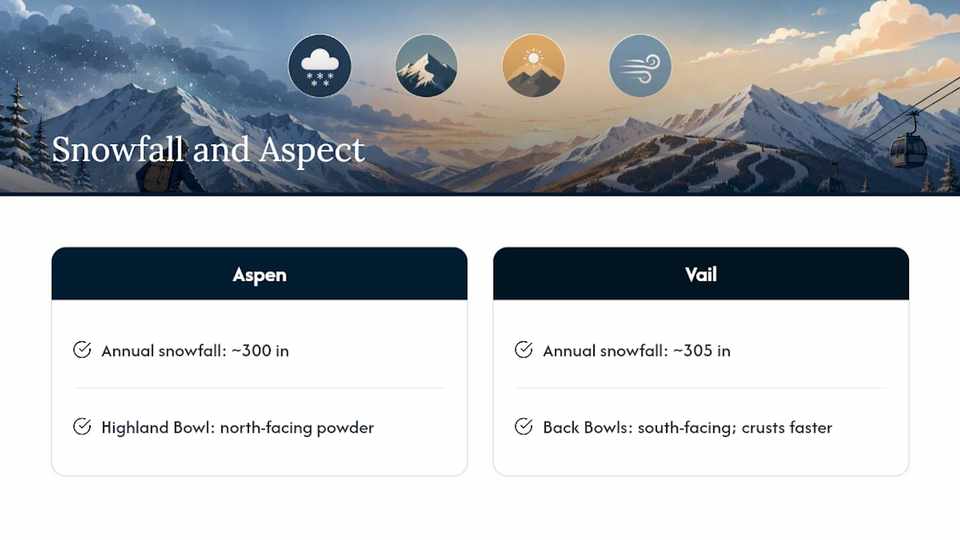
Snowfall totals are close enough that they shouldn’t be your deciding factor. Aspen averages roughly 300 inches annually while Vail averages about 305 inches, a gap too small to matter for trip planning. What matters more is aspect: Highland Bowl’s north-facing exposure holds powder longer after a storm, while some of Vail’s Back Bowls face south and can crust over faster in strong sun.
Crowds follow a predictable pattern at both resorts. Christmas week and Presidents’ Week bring the heaviest lift lines and the highest prices, while early December, January weekdays, and early March tend to offer better value and shorter waits. Late-season skiing stretches into April at both resorts, though closing dates vary year to year depending on snowpack, so it’s worth checking each resort’s site before locking in a late-spring trip. If flexibility is on your side, shifting even a few days off a holiday week measurably improves the experience at either mountain.
Lodging and Family Logistics: Ski School, Rentals, and Where to Stay
Where you sleep shapes your entire trip more than most travelers expect.
In the Aspen area, Snowmass Village has the strongest ski-in/ski-out inventory, making it the more practical base for families with young kids, while staying in downtown Aspen means a shuttle or drive to reach Snowmass, Highlands, or Buttermilk each morning. Vail’s village is built for walking: most lodging sits within a short walk of lift access, and Golden Peak is specifically set up for ski school drop-off and pickup, which simplifies mornings considerably for parents.
- Snowmass Village: best ski-in/ski-out access in the Aspen system.
- Downtown Aspen: better restaurants and nightlife, but expect a shuttle to most mountains.
- Vail Village or Lionshead: walk-to-lift convenience with strong ski school infrastructure at Golden Peak.
- Rentals and lessons at both resorts book up fast during holiday weeks, so reserve equipment and childcare slots at least a month ahead for peak dates.
Pro Tip: If you’re traveling with a beginner and an expert in the same group, book lodging in Snowmass Village. It puts the learner steps from Buttermilk’s shuttle stop while keeping Highland Bowl within a short ride for the more advanced skier.
Lift Passes and Ticket Economics: What to Buy and When
Pass ecosystems differ sharply between these two resorts, and getting this wrong can cost real money. Vail is a flagship destination on the Epic Pass, while Aspen Snowmass runs on Ikon Pass or Mountain Collective. Each program carries its own blackout dates and, in some cases, reservation requirements during peak weeks, so check both before you book flights.
Single day tickets make sense for short trips of two or three days, but multi-day passes or advance pass purchases pay off fast for a full week, especially if you’re skiing five or more days. For value, Vail tends to offer more mid-range lodging options within a short drive than Aspen does, which can meaningfully lower per-person costs on a multi-family trip. Traveling in January or early March instead of a holiday week is still the single biggest lever for cutting both lodging and lift costs at either resort.
How to Decide: A Quick Checklist for Aspen or Vail
Rank these five priorities for your group before you book anything:
- Skill mix — is everyone close in ability, or do you have a wide spread from beginner to expert?
- Town culture vs convenience — do you want a historic town with galleries and fine dining, or a walkable village built for easy mornings?
- Budget flexibility — can you shift travel dates to avoid holiday-week pricing?
- Travel tolerance — are you comfortable with a weather-sensitive airport for shorter drive times?
- Group size and logistics appetite — does your group want one seamless mountain, or four distinct ones worth the shuttle time?
A few scenarios make the choice obvious. A family with beginner kids and a tight schedule fits Aspen Snowmass, basing in Snowmass Village for ski-in/ski-out ease. A pow-chasing expert group belongs at Aspen Highlands for Highland Bowl. A group that wants variety and zero transfers does best at Vail. Once you’ve picked, confirm flight and drive buffers, pre-book lessons and rentals, and double-check your pass’s blackout and reservation rules.
How Bergme Helps You Pick the Right Trip
Working through skill levels, budget, and town preference for every traveler in your group takes time, especially when opinions differ. A questionnaire can collect that information directly, group size, skill mix, budget, and atmosphere preference, and return curated package options that reflect what your specific trip actually needs rather than a generic resort ranking. It’s built as a faster way to apply the decision checklist above without doing the comparison shopping yourself.
Avalanche Risk and On-Mountain Safety at Both Resorts
Both resorts operate extensive avalanche mitigation programs on their patrolled, lift-served terrain, and the vast majority of skiing at Aspen and Vail happens within professionally managed boundaries. Risk profiles diverge mainly at the edges of each resort’s terrain.
Aspen Highlands’ Highland Bowl requires a hike beyond the top lift, and while it’s patrolled and avalanche-controlled before opening, its steep, high-alpine terrain carries more inherent exposure than groomed runs. Ski patrol controls access with rope closures and avalanche mitigation work each morning, and the bowl only opens once conditions are checked. Vail’s Back Bowls and Blue Sky Basin are lift-accessed rather than hike-to, which reduces one layer of exposure risk, but both zones include ungroomed, variable terrain where conditions change fast after storms.
The practical safety difference isn’t about which resort is “safer” in general. It’s about matching your comfort level to specific zones. Highland Bowl and the steepest chutes on Aspen Mountain demand more experience and equipment awareness (some zones require avalanche gear checks) than intermediate terrain at either resort. Skiers heading into any expert bowl terrain at either mountain should check daily conditions with ski patrol, carry a partner, and respect rope closures without exception. Neither resort’s front-side, lift-served terrain presents meaningfully different avalanche risk from the other; the gap opens up specifically in the advanced hike-to and bowl zones.
Accessibility for Skiers and Visitors With Disabilities
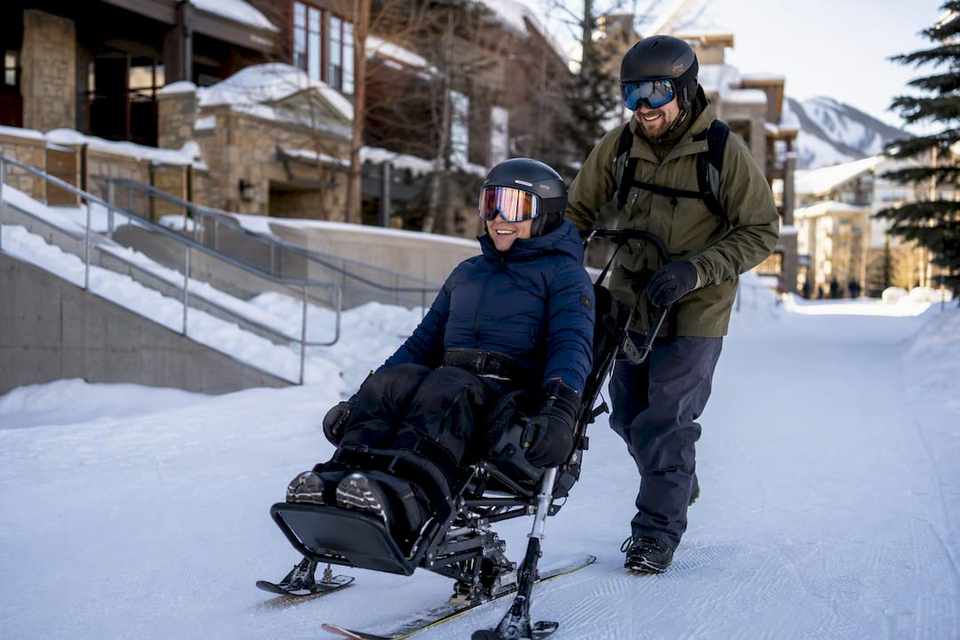
Both resorts run adaptive ski programs and maintain accessible infrastructure across their base villages, though the on-mountain experience differs by layout. Vail’s single-mountain system and walkable village mean shorter distances between accessible parking, adaptive ski school meeting points, and lift access, which tends to simplify logistics for visitors using mobility devices or requiring assistance.
Aspen Snowmass spreads accessible services across four separate mountains, so visitors should confirm which specific mountain offers the adaptive program and equipment they need before finalizing lodging, since Snowmass Village and downtown Aspen sit apart from each other. Both resort systems offer accessible lodging in their base areas, ramped access to core village amenities, and staff trained to assist with adaptive equipment, but travelers with specific mobility needs should contact each resort’s guest services team directly to confirm current-season accommodations, since programs and equipment availability can shift year to year. Booking early and stating specific needs in advance remains the most reliable way to guarantee the right adaptive equipment and lesson slots are available on arrival.
What Actually Should Decide Your Trip
Most comparisons treat this as a popularity contest, ranking Aspen and Vail against each other as if one is objectively better. That framing misses the point. The right question isn’t which resort wins; it’s which resort matches the specific people going on this specific trip.
Conventional advice tends to overweight terrain acreage and underweight logistics fatigue. A family that picks Aspen for the cultural cachet but underestimates the shuttle time between Buttermilk and Snowmass will spend more of their vacation in transit than they expected. A group of strong skiers who choose Vail for convenience but never make it to Blue Sky Basin has left the best terrain on the table.
The scenarios in this comparison exist because they reflect how real groups actually travel: a family with a beginner and an expert, a couples trip built around dinner reservations, a week planned entirely around one bowl. Prioritize skill mix and atmosphere preference before acreage or brand recognition. If you’re still torn after working through the checklist, running your group’s specifics through a tool like Bergme’s questionnaire will surface a package faster than debating it over dinner.
— Eduard
Get a Personalized Aspen or Vail Recommendation
A service can turn everything covered above, skill mix, budget, town preference, group size, into a specific package recommendation instead of leaving you to cross-reference multiple articles. The questionnaire takes a few minutes, requires no registration or email, and returns curated options that reflect competitively priced packages even during peak season, when lodging prices tend to spike.

If you already know your dates are flexible, a New Year ski package in the Swiss Alps shows how Bergme structures a curated trip end to end, lodging, ski pass, and logistics bundled into one offer. For a tailored Aspen or Vail match instead, start the questionnaire now and get package options built around your group’s actual skill levels and budget rather than a generic resort ranking.