9 September 2026
Christmas Skiing: Balance Snow and Festivities With a Quick Match
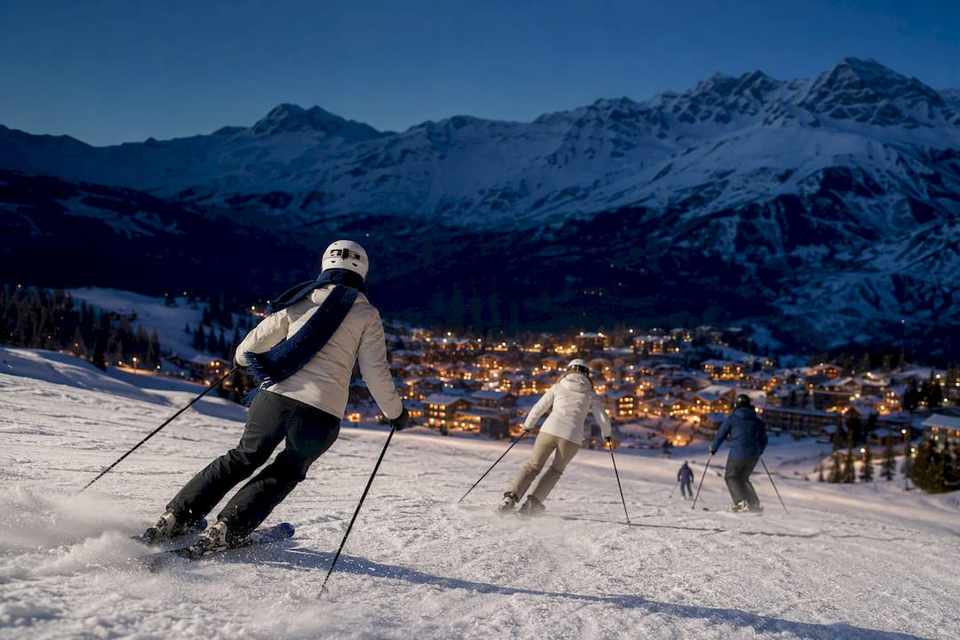
For reliable Christmas skiing, favor glacier resorts, high-altitude villages, or northern-latitude destinations over lower Alpine towns that depend on early snowfall. Book lift passes and accommodation now, confirm lift status the week before departure, and use a matching tool like Bergme’s questionnaire if you want a curated shortlist instead of hours of resort research.
TL;DR:
- Glacier resorts and high-altitude destinations like Val d’Isère and Hintertux offer the most reliable snow conditions for Christmas skiing.
- Booking lift passes and accommodations well in advance, ideally six to nine months, is essential to secure availability during peak holiday weeks.
- Resorts with dedicated Christmas programming, such as Levi or Saas Fee, provide better holiday experiences for families than general-purpose resorts.
- Scandinavian resorts like Levi or Norway’s northern resorts offer guaranteed snow and unique winter phenomena like the northern lights during the holidays.
- Using a personalized ski trip questionnaire can streamline resort selection based on snow reliability, holiday atmosphere, and budget, saving hours of research.
Table of Contents
- What Are the Best Ski Resorts for Christmas by Trip Goal?
- What Should You Expect Region by Region?
- How Do You Know a Resort Is Actually Snow-Sure?
- How Far Ahead Should You Book a Christmas Ski Trip?
- How Bergme Matches You to a Christmas Ski Trip
- What Health and Safety Factors Matter for Christmas Ski Trips?
- Snow Reliability or Festive Atmosphere: Which Should Win?
- Book Your Christmas and New Year Ski Week Now
- Where to Verify Conditions Before You Travel
- Sources
What Are the Best Ski Resorts for Christmas by Trip Goal?
Matching your holiday priority to the right resort type saves more planning time than comparing dozens of individual mountains. Snow reliability, family programming, nightlife, and value rarely come from the same resort, so start by ranking what matters most to your group.
For snow-sure skiing, glacier access and elevation above roughly 2,000 to 2,500 meters do the heaviest lifting. Val d’Isère, which sits on two glaciers, along with Austria’s Hintertux glacier and Italy’s Marmolada, consistently rank among the more dependable European options for Christmas week because permanent ice and high elevation buffer them against a slow start to the season. In North America, Whistler and Lake Louise benefit from long seasons that typically run from November into May, backed by heavy annual snowfall totals that reduce the odds of a thin base come Christmas.
For family-Christmas trips, look for resorts that publish dedicated holiday programming rather than assuming any big-name mountain will have kids covered. Levi in Finnish Lapland runs a full schedule of Christmas activities, keeps its slopes and cross-country tracks in strong condition through the holiday, and explicitly advises buying lift passes online in advance to avoid queues during its busiest week. That kind of published, family-specific programming is a better filter than general resort size when you’re traveling with young children.
For festive nightlife and après-ski, Austrian villages like St. Anton and Ischgl built their reputations on the scene as much as the skiing, while Andorra’s Pas de la Casa pairs high-altitude reliability with some of the liveliest and most affordable après culture in Europe. Andorra in general tends to undercut French and Swiss prices while still delivering solid elevation.
For affordable, high-value picks, Andorra and parts of Italy’s Trentino region (including areas near Val di Fassa) offer a strong ratio of snow reliability to cost, since lift passes and lodging there typically run well below equivalent altitude and glacier access in France or Switzerland.
Here’s how those goals map to example regions:
- Snow-sure: Val d’Isère (France), Hintertux (Austria), Marmolada (Italy), Whistler and Lake Louise (Canada)
- Family-Christmas: Levi (Finland), Saas Fee (Switzerland), smaller Colorado resorts with dedicated kids’ clubs
- Festive nightlife: St. Anton and Ischgl (Austria), Pas de la Casa (Andorra), Val Thorens (France)
- Affordable/high-value: Andorra resorts broadly, Val di Fassa and Trentino (Italy), select Utah resorts outside the marquee names
One detail worth flagging before you commit to a date: forum discussions among skiers frequently debate whether skiing over Christmas and New Year is worth the crowds and cost given variable early-season snow. The answer usually comes down to whether you picked a resort type built for reliability, or one that simply looks good in photos.
What Should You Expect Region by Region?
Snow patterns, daylight hours, and the flavor of the holiday itself shift dramatically depending on which mountain range or country you choose. Treat this as a starting map, not a ranking.
The Alps: France, Austria, Switzerland, and Italy
The Alps remain the default answer for a reason. France’s Val d’Isère, Tignes, and Val Thorens sit high enough to combine glacier or near-glacier terrain with extensive snowmaking, and French resorts generally schedule their Christmas markets and torchlight descents to coincide with peak arrivals. Austria pairs glacier access at Hintertux with a wide network of lower, festive villages, meaning you can base yourself somewhere lively and still bus up to guaranteed snow. Switzerland’s Zermatt and Saas Fee both have glacier terrain that operates essentially year round, which insulates them from a shaky early season. Italy’s Dolomites, including Val di Fassa near the Marmolada glacier, tend to run slightly cheaper than their French and Swiss counterparts while offering comparable altitude.
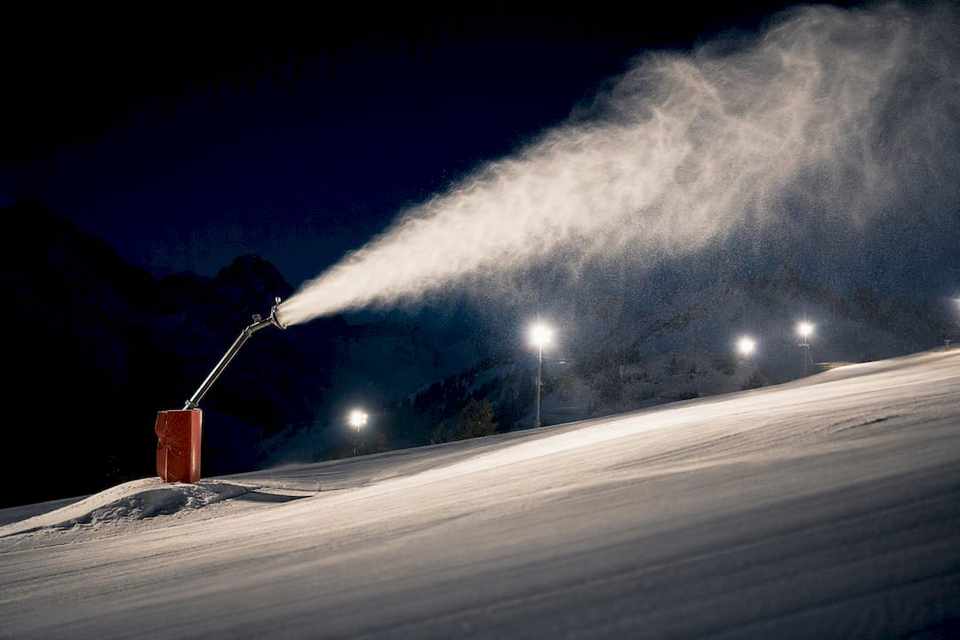
Snowmaking coverage across all four countries has expanded significantly over the past decade, and most major resorts now cover the majority of their beginner and intermediate runs artificially, which matters more at Christmas than at any other point in the season.
Scandinavia: Finland, Norway, and Sweden
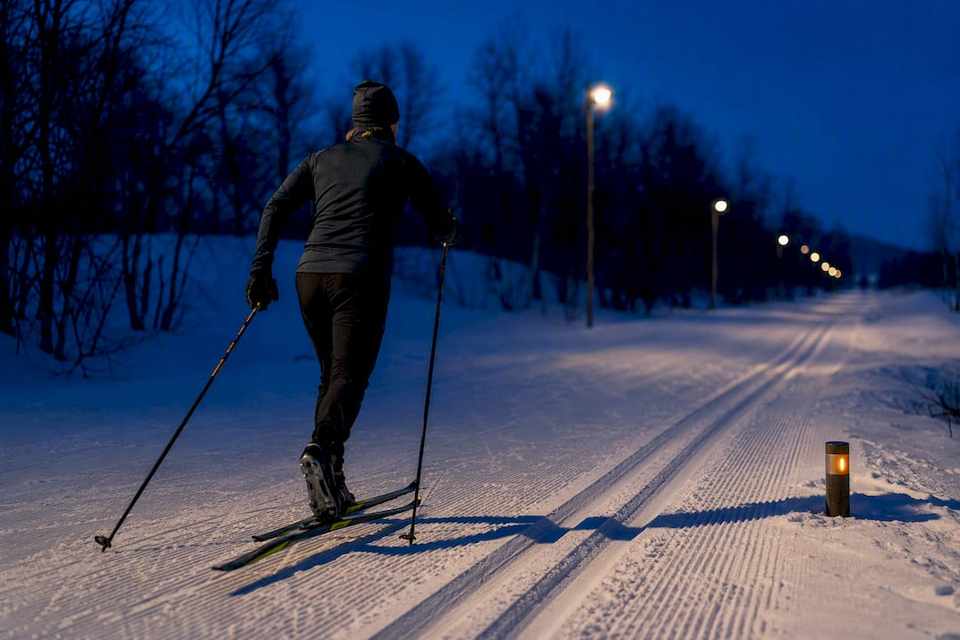
Finland’s Levi and Norway’s and Sweden’s northern resorts operate under near-polar-night conditions in late December, with only a few hours of blue twilight rather than full daylight. That sounds like a drawback until you experience it: floodlit slopes, the northern lights on clear nights, and a level of guaranteed cold that keeps snow quality consistent in ways the Alps can’t always match. Levi’s cross-country tracks and downhill slopes are typically in strong shape through the holiday period, and the resort runs structured Christmas programming built around family activities, Santa experiences, and reindeer encounters that you won’t find in the same form anywhere in the Alps.
North America: Canada and the United States
Canadian resorts benefit from long seasons and consistently high snowfall totals, with Whistler and Lake Louise anchoring a reputation for reliable early-season skiing that runs from November through May in many years. In the United States, the higher-elevation resorts of Colorado and Utah, think Breckenridge, Vail, Park City, tend to open earlier and hold snow better than lower-elevation resorts in the Northeast, where Christmas week skiing can be more weather-dependent.
Japan: Hokkaido and Northern Honshu
Japan’s Hokkaido region, including Niseko, gets hit by consistent Siberian weather systems that dump heavy, dry powder from early December onward, making it one of the more dependable early-season powder destinations anywhere in the world. Add in a distinct cultural Christmas experience, illuminations, hot springs, izakaya dinners, and you get a holiday trip that looks nothing like a European chalet vacation but delivers arguably deeper snow.
Andorra and Other Micro-Resorts
Andorra’s compact ski areas, particularly Pas de la Casa and Grandvalira, sit at high enough altitude to be relatively snow-sure while undercutting French and Swiss prices on lift passes, lodging, and food. They’re a smart pick for groups that want lively evenings and dependable daytime skiing without the price tag of Val d’Isère or Zermatt.
Pro Tip: If you’re torn between two regions, check each resort’s own base-elevation figure before comparing them. A “high-altitude” resort at 1,800 meters and one at 2,600 meters can have wildly different snow outcomes in a thin early season, even if both market themselves the same way.
How Do You Know a Resort Is Actually Snow-Sure?
Marketing copy calls almost every resort “snow-sure.” The features that actually back up that claim are narrower and easier to check than most travelers realize.
- Glacier presence. A resort with permanent glacier terrain, like Val d’Isère’s two glaciers or Austria’s Hintertux, has a built-in floor under its snow conditions that no amount of warm early-December weather can fully erase.
- Base elevation above roughly 2,000 to 2,500 meters. Elevation determines temperature, and temperature determines whether snowmaking systems can even run. Resorts below this range depend far more heavily on natural snowfall timing.
- Snowmaking coverage as a percentage of skiable terrain. When a resort claims “90% snowmaking coverage,” check whether that figure covers beginner and intermediate runs only, or the advanced terrain you actually want to ski. The number is only useful once you know what it’s measuring.
- Historical opening dates. Most major resorts publish or can be asked for their typical opening date over the past five to ten years. A resort that has reliably opened by early December in recent years is a safer Christmas bet than one that often opens late.
- Real-time lift-status pages. Check these the week of departure, not months in advance, since conditions can shift fast in either direction.
On the forecasting side, don’t overweight seasonal outlooks. In a neutral ENSO year, meaning neither El Niño nor La Niña is dominant, regional variability increases and local geography becomes the more reliable predictor than any long-range forecast. That’s exactly why elevation and glacier presence matter more at Christmas than at any other point in the season: they’re facts about the mountain, not guesses about the weather.
How Far Ahead Should You Book a Christmas Ski Trip?
Christmas week, roughly December 23 through January 2, is the single most competitive booking window of the ski season. Popular resorts in Europe and Canada often see accommodation booked out six to nine months in advance, and flexible daters can save meaningfully by shifting even two or three days outside that peak stretch.
Work through this rough order when planning:
- Flights and accommodation first, ideally several months out for popular resorts, since lodging sells out before lift passes or lessons do.
- Lift passes second, purchased online in advance wherever the resort offers it, both to lock in pricing before any holiday surcharge and to skip on-site queues.
- Ski lessons and childcare third, since Christmas week slots for instructors and kids’ clubs fill fast at family-oriented resorts.
- Gear rental last, though booking it a few weeks ahead still beats showing up and hoping for your size.
Budget-wise, expect Christmas week rates to run noticeably above shoulder-season pricing across flights, lodging, and even restaurant menus in resort towns. Shifting your trip to start December 27 instead of December 22, or booking a package that bundles lodging with a lift pass, are the two most effective ways to soften that cost without sacrificing snow quality.
Transportation deserves its own line item. Winter road conditions between airports and resorts can add hours to a transfer that looks short on a map, so build in buffer time and check whether your resort offers a shuttle rather than requiring a rental car on mountain roads. Travel insurance that specifically covers weather-related disruption is worth the extra cost during Christmas week, since flight delays and road closures are more common in this window than in January or February.
Pro Tip: Book your airport transfer as a fixed-price shuttle rather than a taxi if you’re arriving after dark. Mountain roads in a snowstorm are not where you want to be negotiating a fare.
For readers who also want a broader trip framework covering logistics and dining beyond the slopes, a regional travel planning guide can help round out an itinerary that extends past ski days, and the same early-booking logic that applies to peak-season yacht rentals holds just as true for Christmas week ski lodging.
How Bergme Matches You to a Christmas Ski Trip
Answering a handful of questions, group size, skier ability, budget, and what matters most about the holiday, replaces hours of comparing resort websites. Bergme’s questionnaire takes those signals and maps them against resort type: a family chalet in a Christmas-programming destination, a high-altitude glacier resort for guaranteed snow, or a budget-friendly micro-resort with strong après.
A family of four prioritizing guaranteed snow and childcare might get matched to a Levi-style Scandinavian package. A couple chasing nightlife and reliable elevation might land on Val Thorens or Pas de la Casa. No registration or email is required to see results, and the recommendations come with current package information rather than generic resort descriptions. If you’re stuck choosing between snow reliability and festive atmosphere, running the questionnaire takes less time than reading one more comparison article.
What Health and Safety Factors Matter for Christmas Ski Trips?
Christmas week concentrates more people into gondolas, lift lines, mountain restaurants, and shared lodges than any other point in the ski season, which raises the odds of catching a seasonal illness regardless of specific variants in circulation. Resorts and lodges have largely returned to pre-pandemic operating norms, but crowding itself remains a practical concern worth planning around.
A few precautions carry real weight during this specific week. Travel insurance that covers medical treatment abroad matters more at Christmas than in quieter weeks, since resort medical clinics and mountain rescue services see higher demand and can face longer wait times. If anyone in your group is managing a respiratory condition, consider that high-altitude resorts combine thinner air with cold, dry conditions that can be harder on breathing than moderate-elevation resorts.
Basic seasonal precautions still apply: check your destination country’s current entry and health requirements before booking, since these occasionally shift with little notice around holiday periods. Pack any prescription medications with extra buffer days in case of weather-related travel delays, and confirm your accommodation’s cancellation policy in case illness or a family emergency forces a last-minute change. None of this should discourage a Christmas ski trip, but it’s worth building into your planning the same way you’d plan for road conditions or lift-pass timing.
Snow Reliability or Festive Atmosphere: Which Should Win?
If a white Christmas is the whole point, take the guesswork out of it and book a glacier or high-altitude resort. Val d’Isère, Hintertux, and Whistler will not leave you skiing on thin cover and crossed fingers. If the holiday atmosphere matters more than guaranteed powder, an Alpine village with a strong Christmas market and torchlight tradition delivers more of what you actually came for, even if the snow report is average.
Families should lean toward resorts with published Christmas programming, not just big terrain. Couples chasing nightlife do better in Austria or Andorra than on a quiet glacier. Powder hunters belong in Hokkaido or Canada, full stop. When in doubt, use a personalized ski trip questionnaire and let the trade-off get resolved by your actual priorities instead of a résumé of resort names.
— Eduard
Book Your Christmas and New Year Ski Week Now
Bergme’s New Year Ski Holiday in Interlaken pairs a stay at Hotel Bären with a ski pass in one fixed package, built for couples and families who want a Swiss Christmas and New Year experience without piecing together lodging, lift access, and transfers separately.
Interlaken sits between two lakes in the Bernese Oberland, giving you access to nearby ski areas along with the kind of festive town atmosphere that a pure glacier resort often lacks. For peak-week planning, when lodging and lift passes both compete for the same limited inventory, having a single bundled package removes the coordination problem entirely. Check current dates and availability for the Interlaken package directly, or use a personalized ski trip questionnaire first if you want to confirm it’s the right fit against your group’s size, budget, and skiing priorities before booking.
Where to Verify Conditions Before You Travel
Check a resort’s own lift-status page the day before departure, not weeks ahead, since terrain and lift openings shift fast in December. Levi’s seasonal updates and Neilson’s resort-by-resort guide are solid starting points, alongside each resort’s official snow report page.