10 September 2026
Book 6–9 Months Ahead: Match February Skiing to Powder or Family
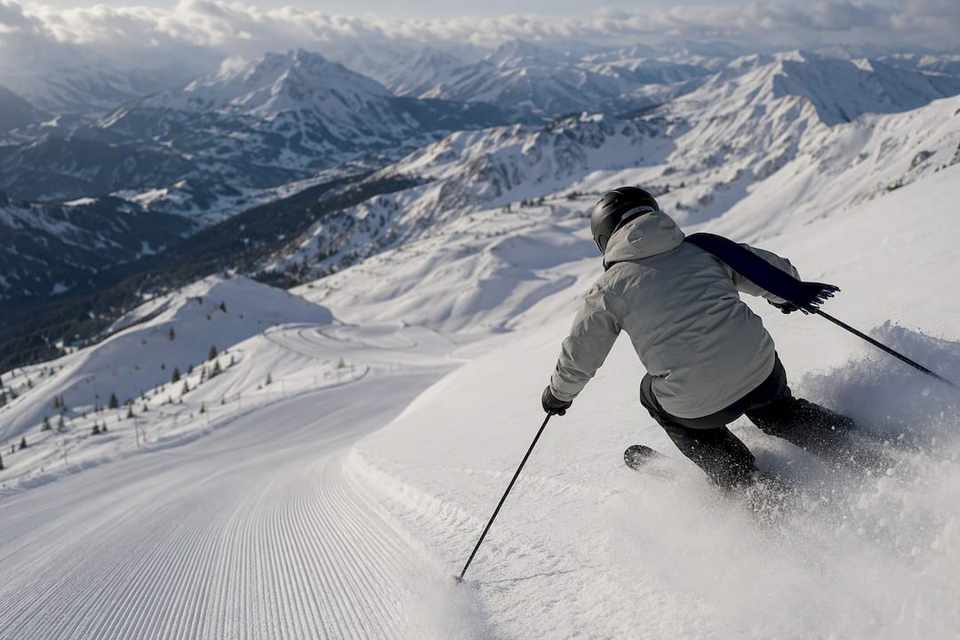
For reliable February skiing, high, glacier-backed Alpine resorts like Val Thorens, Tignes, and Zermatt deliver the strongest snow security, while Alta and Snowbird in Utah and Niseko in Hokkaido cover the deepest powder outside Europe. Large, interconnected areas absorb half-term crowds better than small ones. After a heavy February storm cycle, avalanche danger can spike to extreme, so staying on marked pistes and checking official bulletins matters as much as picking the right resort.
TL;DR:
- High-altitude European resorts like Val Thorens and Tignes provide the most consistent snow security in February, especially during storm cycles.
- Zermatt’s glacier skiing above 3,800 meters offers near-guaranteed snow, but commands early booking and a higher price point.
- Alta and Snowbird in Utah deliver reliable deep powder due to storms off the Great Salt Lake, making them ideal U.S. options for February snow.
- Heavy snowfall in February increases avalanche risk, necessitating checking official bulletins and staying on marked pistes, especially during extreme danger periods.
- Booking accommodations early, 6 to 9 months in advance, and choosing larger interconnected resorts help minimize lift lines and maximize snow reliability.
Table of Contents
- Best Places to Ski in February by Region
- Why February Snow Is Deep, and Where the Risk Comes From
- How to Choose a Resort and Place to Stay for February
- Getting There and Getting the Most Out of Your Days
- What Beginners and Intermediate Skiers Should Know
- Powder-Chasing vs. Family Logistics: How to Actually Decide
- Let Bergme Match You to the Right February Resort
- Live Resources to Check Before You Go
- Sources
- FAQ
Best Places to Ski in February by Region
February is the month when altitude and snow depth matter more than almost any other factor. Storm cycles this time of year can be intense, so the resorts that perform best are the ones with the elevation and glacier backing to turn heavy snowfall into a genuine asset rather than an avalanche liability.
Europe: altitude wins the argument
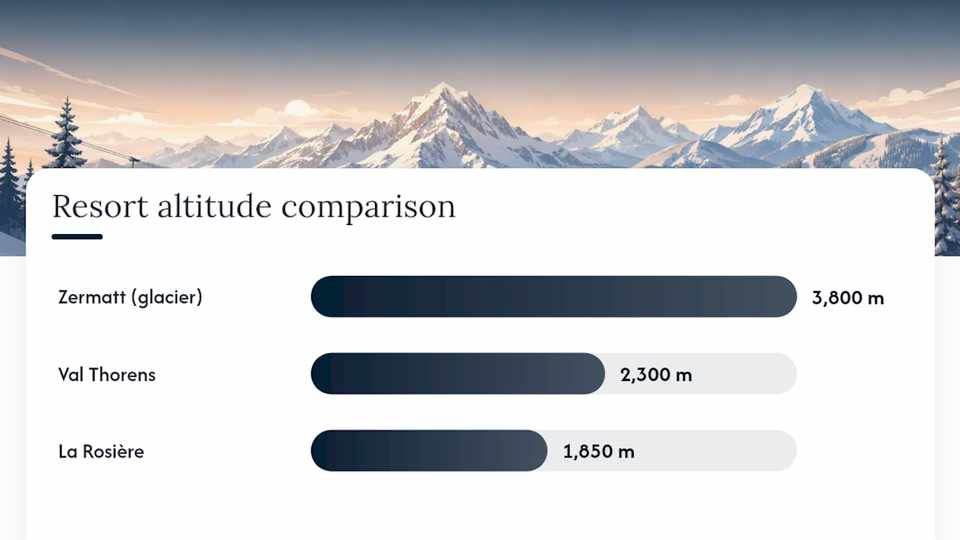
Val Thorens, at 2,300 meters, sits at the top of the Three Valleys and rarely runs short of natural snow in February. Its altitude alone makes it one of the safest bets for a fixed-week booking, and the resort connects into the wider Les 3 Vallées network, which absorbs school-holiday crowds far better than a standalone village can. Firsthand ski reports from mid-February 2026 described BC-style pillow powder across Les 3 Vallées during a major storm, alongside extreme avalanche danger, a reminder that deep snow and elevated risk arrive together.
Tignes shares that same altitude advantage and glacier access, making it another dependable pick when you have booked dates and can’t chase forecasts. Zermatt trades a bit of snow certainty for scenery and terrain variety; its glacier skiing above 3,800 meters is about as close to a guarantee as the Alps offer, and the Matterhorn views are hard to match anywhere else. Zermatt’s own piste and lift status pages are worth bookmarking before you travel, since storm cycles can close high sectors for a day or two.
Lech, in Austria’s Arlberg region, tends to get overlooked in favor of the bigger French names, but it regularly logs heavy February snowfall and offers a quieter, higher-end alternative for travelers who want fewer lift lines without sacrificing terrain. Courchevel rounds out the European shortlist for families specifically: its ski school infrastructure and beginner terrain are built for exactly the half-term crowds that flood the Alps every February.
Nearby La Rosière illustrates just how extreme a single month can get. The resort logged 3.10 meters of cumulative snowfall in February 2026 at 1,850 meters and told visitors to stay on marked pistes because the snowpack had become unstable off them.
- Val Thorens / Tignes: best for snow security and fixed-week bookings; book 6 to 9 months out for peak weeks.
- Zermatt: best for scenery and glacier skiing; premium pricing, book early for half-term.
- Lech: best for quieter luxury and heavy natural snowfall; mid to high budget band.
- Courchevel: best for families with strong ski schools; book lodging before lift passes sell out.
North America and beyond
Alta and Snowbird, in Utah’s Cottonwood Canyons, are the U.S. answer to Europe’s altitude argument. Both resorts consistently pull in deep February powder thanks to storms rolling off the Great Salt Lake, and their combined terrain gives intermediate and advanced skiers a lot of room to spread out. The Colorado high country can run drier some seasons, while Pacific Northwest and British Columbia resorts tend to bank some of the deepest snow on the continent, so if raw depth matters more than sunshine, look west of the Rockies.
Niseko, on Japan’s northern island of Hokkaido, is in a category of its own. Cold Siberian air masses dump dry, light powder almost daily through February, and the snow quality is different from anything the Alps or Rockies produce. Travel timing matters here: February falls outside Japan’s Lunar New Year crowds in most years, which keeps lift lines shorter than you’d expect for terrain this good.
Canada’s smaller interior resorts and Scandinavia’s cold-stable ski areas offer a quieter alternative to all of the above, with consistently cold temperatures that keep snow quality high even without the storm intensity of the Alps or Hokkaido.
Why February Snow Is Deep, and Where the Risk Comes From
February typically holds the deepest base of the whole season across most Northern Hemisphere ranges. Storms stack on top of a base that’s already been building since December, and the result is usually the best on-piste coverage of the year. That same storm intensity is also what pushes avalanche danger higher than at any other point in the season.
That warning came from La Rosière after the resort logged its 3.10 meter February total, and it captures the trade-off perfectly: the same storms that produce record depths are the ones that destabilize the layers underneath. National avalanche centers recorded periods of extreme, 5 out of 5 avalanche danger in parts of Colorado and the Alps following major February 2026 storm cycles.
Three actions matter more than any gear choice:
- Check the official national avalanche bulletin for your region before leaving marked terrain. In the Alps, the Swiss SLF bulletin publishes daily, sector-specific danger ratings.
- If you want off-piste terrain during or right after a storm, go with a certified guide rather than solo.
- When the bulletin reads high or extreme, stay on marked pistes. This is not the week to test your judgment against a slope you don’t know.
How to Choose a Resort and Place to Stay for February
Snow security should drive your resort choice before anything else. Altitude and glacier access determine whether a fixed-week booking pays off, because unlike a flexible trip, you can’t chase the storm once your dates are locked. Industry data consistently backs high-altitude, large interconnected resorts as the safest half-term picks, since size lets a resort absorb crowds without every run turning into a lift line.
Here’s a practical order of priorities for narrowing down a February pick:
- Snow security first. Altitude and glacier backing determine whether you’re skiing powder or slush in a warm spell.
- Area size and interconnection. Bigger, linked ski areas spread out half-term crowds far better than a single-village resort.
- Family infrastructure. Ski school capacity and beginner terrain matter enormously if children are part of the group.
- On-mountain transport. Efficient gondolas and lift networks cut down the hours lost standing in line during the busiest weeks of the year.
Accommodation choice deserves nearly as much thought as the resort itself. Ski-in/ski-out lodging solves a problem most travelers underestimate: on a packed February morning, the walk or shuttle ride to the base lift can eat 30 to 45 minutes you’d rather spend on snow. Booking near the lifts, or right on the piste, consistently improves the daily experience more than a marginal bump in snow quality would.
Pro Tip: Book peak February weeks 6 to 9 months ahead if your dates are fixed to school holidays. If you have flexibility, shifting even one week outside the half-term window can cut lodging costs noticeably and thin the lift lines considerably.
Budget bands vary widely by region and resort prestige. Value-focused travelers should look at package deals that bundle lift passes with lodging, consider flying into a secondary airport with a longer transfer, and keep travel dates flexible where possible. Premium resorts like Zermatt or Lech sit at the high end of the spectrum; larger, family-oriented resorts like Courchevel or Val Thorens often offer more mid-range options within the same region.
Getting There and Getting the Most Out of Your Days
Airport choice can shape your whole trip. For the French Alps, Geneva and Chambéry are the standard entry points, and shuttle transfers are usually more predictable than self-drive during a heavy snow week. For Zermatt, note that the village is car-free. You’ll transfer by train from Täsch regardless of how you arrive. In Utah, Salt Lake City International sits close enough to Alta and Snowbird that many travelers skip the rental car entirely and use resort shuttles.
If you do plan to drive in snow country, a 4WD or all-wheel-drive rental is worth the extra cost in February. Chain requirements are common in the Rockies and the Alps alike during storm cycles.
Packing for February means planning for both extremes: heavy snowfall and bright, high-altitude sun on clear days. A few essentials make the difference:
- Layered base and mid layers you can adjust as temperatures swing through the day.
- High-SPF sunscreen and glacier-rated goggles or sunglasses, since UV exposure at altitude is stronger than it feels.
- A beacon, probe, and shovel if you’re heading off-piste with a guide, along with the training to use them.
- Waterproof, insulated outer layers rated for genuinely cold, wet snow, not just cool weather.
On-mountain timing matters just as much as gear. Arriving at the lifts 15 to 20 minutes before opening routinely saves an hour of queuing later in the day during half-term weeks. Booking a rest day mid-week, rather than skiing every single day, also tends to produce better runs overall, since it lets you ski a fresh storm day at full energy instead of pushing through fatigue on day five.
What Beginners and Intermediate Skiers Should Know
February’s storm cycles are a mixed blessing for newer skiers. Fresh snow is more forgiving to fall in, which makes it a genuinely good month to learn, but heavy snowfall can also mean flat light and reduced visibility on upper mountain terrain. Stick to lower, tree-lined runs on the heaviest snow days, where visibility holds up better than on open bowls.
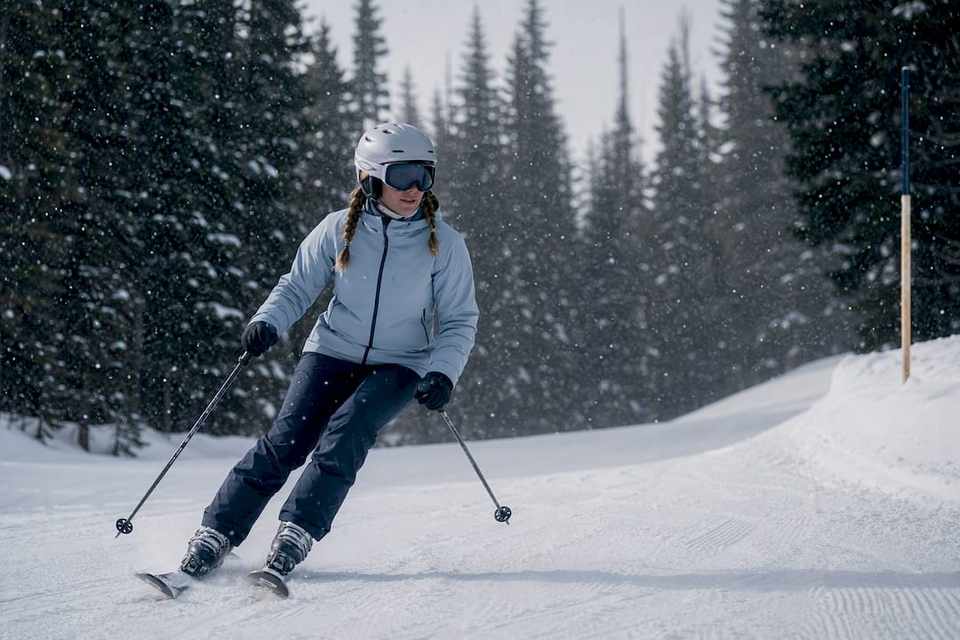
Resorts with strong ski school infrastructure, Courchevel and Zermatt among them, are worth prioritizing specifically because February brings the largest crowds of the season into beginner zones. A resort that can run multiple class sizes and levels handles that volume far better than a smaller operation stretched thin during half-term week.
Intermediate skiers chasing a step up in terrain should treat groomed, marked pistes as the default rather than the fallback. The temptation after a big storm is to head for untouched snow just past the rope line, but that’s precisely the terrain where danger ratings run highest in February. Build off-piste experience gradually, ideally with a guide the first several times, rather than using a single powder day to test skills you haven’t practiced yet. A rest day built into the middle of the trip also helps intermediate skiers ski sharper on the days that matter, instead of fighting fatigue by day four.
Powder-Chasing vs. Family Logistics: How to Actually Decide
Choosing between a powder-focused trip and a family-friendly one comes down to a simple rubric: prioritize snow security when the group is experienced and flexible, and prioritize logistics (ski school capacity, gentle terrain, short transfers) when children or mixed-ability groups are involved. A hardcore powder trip to Niseko makes little sense for a family with a five-year-old in ski school; a beginner-friendly resort like Courchevel would frustrate a group chasing untouched snow.
This is the kind of personalized approach a questionnaire can provide, weighing group composition, skill spread, and stated priorities to surface trips that actually fit. A mixed group, say, two advanced skiers and two beginners, gets matched toward resorts with both serious off-piste access and a genuinely competent ski school, rather than one built for only one type of skier.
— Eduard
Let Bergme Match You to the Right February Resort
There are services that help avoid scrolling through many listicles by offering personalized recommendations after answering a short questionnaire about group size, skill levels, and priorities, providing curated trip matches with pricing within minutes.
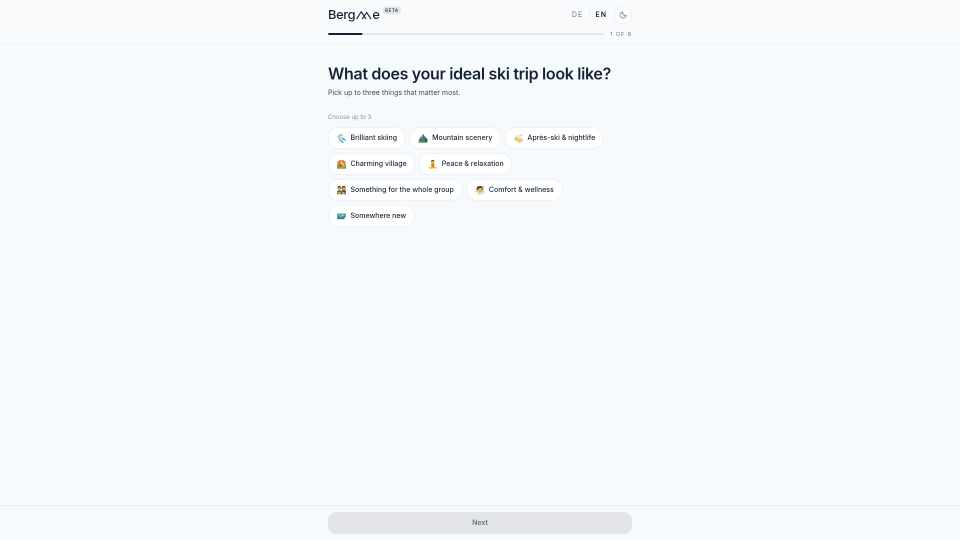
There’s no registration and no email required to get started, so you can see options before committing to anything. The New Year ski holiday package in Interlaken shows the kind of curated offer Bergme builds: a specific hotel, a specific ski pass, and a price you can act on immediately. If February is your target month, start the questionnaire now, before the best half-term weeks sell out of the packages you’d actually want.
Live Resources to Check Before You Go
Booking the right resort is only half the job. Conditions shift fast during February storm cycles, so check these before you travel and again the morning you head up the mountain:
- National avalanche bulletins, like the Swiss SLF, for daily sector-specific danger ratings.
- Resort condition pages, such as Zermatt’s official piste and lift status, for real-time closures.
- Snow-report aggregators like J2Ski’s storm-cycle updates for a wider regional picture when you’re comparing destinations.
Sources
- La Rosière — Exceptional snowfall in La Rosière: already 3.10 metres in February
- SnowBrains — Les 3 Vallées report: BC-style pillows and deep powder
- Swiss SLF — Avalanche bulletin
FAQ
Where Is the Best Place to Go Skiing in February?
High-altitude, glacier-backed European resorts like Val Thorens, Tignes, and Zermatt offer the most reliable snow, while Alta, Snowbird, and Niseko lead outside Europe for deep, dependable powder.
Where Should You Ski in February in the U.S.?
Alta and Snowbird in Utah are the strongest U.S. picks for consistent February powder, though Pacific Northwest and British Columbia resorts often bank even deeper snow in a given season.
What Is the Cheapest Month to Go Skiing?
February usually runs among the most expensive months because it overlaps with school half-term holidays; January (outside the New Year rush) and early to mid March tend to offer better value with similar snow quality.
Where Is the Best Place to See Snow in February?
Niseko on Japan’s Hokkaido island and the high Alpine resorts like Zermatt and Val Thorens see some of the heaviest and most reliable February snowfall anywhere in the world.
How Far Ahead Should You Book a February Ski Trip?
Book 6 to 9 months ahead for peak half-term weeks, since lodging near the lifts sells out first; personalized matching questionnaires can help find resorts suited to your group’s needs more quickly.