17 September 2026
Choose Hokkaido or Honshu Fast: Japan Powder Skiing for Intermediates
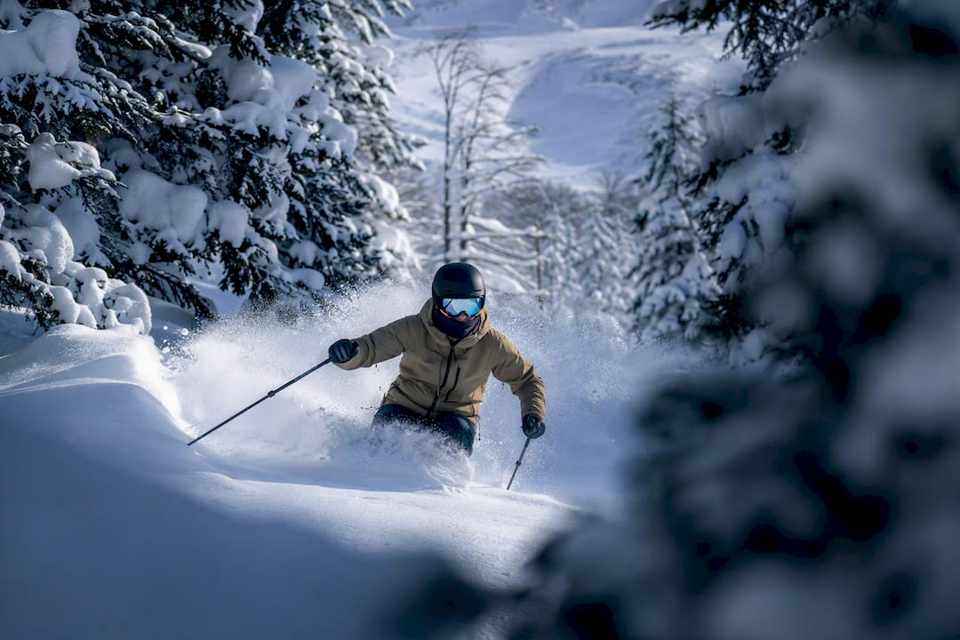
If reliable, bottomless snow is the priority, book Hokkaido. If bigger vertical and technical terrain matter more, choose Honshu, specifically Hakuba. The most dependable stretch for deep Japow runs mid-January through mid-February, though that window also carries the highest prices and biggest crowds. Decide on region first, then work backward into resort and dates.
TL;DR:
- Hokkaido offers more consistent, lighter, and drier snow, especially from mid-January to mid-February, but tends to be more crowded during peak weeks.
- Honshu provides longer, steeper descents and faster dump storms, but with higher variability and more rain intrusion, especially in late winter.
- Booking resorts like Niseko and Hakuba requires reservations nine to twelve months in advance, emphasizing early planning for peak periods.
- The best ski period is mid-January to mid-February, with rising weather risks and crowd sizes outside that window, making flexibility important.
- Travel logistics differ: Hokkaido relies on flights into CTS with transfers, while Honshu is best accessed via Shinkansen from Tokyo to Nagano then bus transfer.
Table of Contents
- Hokkaido vs Honshu: How Snow, Terrain, Crowds, and Access Differ
- Which Japan Resorts Should Be On Your Shortlist?
- When Is the Best Time to Ski Powder in Japan?
- What Gear Do You Need for Japan’s Powder?
- How Do You Get to Japan’s Ski Resorts?
- What Safety Rules Apply to Backcountry Skiing in Japan?
- What Does a Japan Ski Trip Cost?
- Two Sample Japan Powder Itineraries
- How BergMe Matches You to the Right Japow Trip
- Ski Lessons and Guide Availability in Japan
- Nightlife and Après-Ski at Japan’s Top Powder Resorts
- Why Does Snow Quality Change Through the Season?
- What Most Japow Guides Get Wrong About Choosing a Region
- Get Matched to Your Japan Powder Trip
- Sources
- FAQ
Hokkaido vs Honshu: How Snow, Terrain, Crowds, and Access Differ
Hokkaido wins on consistency. Long-term station records show higher average season snowfall totals in valleys like Niseko and Rusutsu compared with Honshu, and JapowDB’s region analysis confirms the pattern holds across most winters, not just exceptional ones. The snow arrives lighter and drier, storm cycles repeat through the season, and the terrain, while less vertically dramatic, delivers tree runs and side hits that stay skiable for days after a storm.
Honshu trades some of that reliability for scale. Hakuba and Myoko sit at higher elevation with steeper pitches and longer descents, and single storms there can dump harder and faster than anything Hokkaido produces in one cycle. The catch is variability: Honshu sees more rain intrusion as the season progresses, particularly in March, and warm fronts off the Pacific can turn a promising powder week into a slush week with little warning.
Access and crowd patterns split along the same line:
- Hokkaido: Flights into New Chitose Airport, a more insulated feel from mainland tourism surges, but Niseko itself now draws serious crowds during peak weeks.
- Honshu: Shinkansen access from Tokyo makes it far easier to bolt on a ski week to a broader Japan itinerary, with denser infrastructure and English signage in tourist corridors.
- Language and logistics: Honshu’s proximity to Tokyo means better transit English and more last-minute flexibility; Hokkaido rewards those who plan further ahead.
Neither island is the “correct” answer. It’s storm-chasing consistency against terrain ambition, and most trip planning should start there.
Which Japan Resorts Should Be On Your Shortlist?
Narrowing to two or three resorts before booking saves weeks of research. Here’s a fast read on the names that come up most:
- Niseko — the default entry point to Hokkaido powder, with the most lift infrastructure and English-speaking services, but also the most crowded gondola lines by mid-January.
- Rusutsu — a strong alternative for skiers who want Hokkaido-grade snow without Niseko’s density; Rusutsu and Kiroro are frequently recommended as the quieter Hokkaido picks.
- Kiroro — smaller resort footprint, fewer lifts, but tree skiing that stays untracked far longer than Niseko’s on a comparable snow day.
- Furano — further from the Niseko cluster, popular with Japanese domestic skiers, and a solid pick for travelers who want a more local atmosphere.
- Hakuba Happo-One — the benchmark for Honshu vertical and widely cited as Japan’s best terrain for advanced skiers chasing steeper lines.
- Myoko — heavy snowfall totals for Honshu, less polished infrastructure, and a magnet for skiers who prioritize snow quality over amenities.
- Nozawa Onsen — a working hot-spring town with a ski hill attached, better suited to travelers who want culture alongside their laps.
Resort-side lodging in Niseko and Hakuba routinely books nine to twelve months out for the peak window, so reserve accommodations before locking flights if you have a fixed week in mind. Nearby towns offer a fallback, though they add commute time. For those who’ve done a Japow trip before, Kiroro’s back bowls and Myoko’s less-trafficked lift lines count as the closest thing to hidden gems left on a well-mapped map.
When Is the Best Time to Ski Powder in Japan?
Mid-January through mid-February is the consensus peak. Snow depth and consistency are at their best in this stretch, but so is everything else that comes with popularity.
- Mid-January to mid-February: The most reliable powder window, and also the period with the highest prices and largest crowds — gondola waits at popular Hokkaido resorts can stretch past ten minutes on the best snow days.
- Late February to early March: Crowds thin and prices soften, but Honshu’s rain risk climbs and Hokkaido’s snow, while still frequent, can turn slightly heavier late in the season.
- Christmas and New Year: Avoid this stretch unless dates are fixed by circumstance. Domestic Japanese travel spikes hard, and snow totals this early in the season are the least dependable of the winter.
Book lodging and airport transfers as soon as your week is set. The resorts and towns that fill first are exactly the ones worth fighting for.
What Gear Do You Need for Japan’s Powder?
Japan’s snow is famous for its low density, and that changes what belongs in your ski bag. A ski or board with a waist width around 100mm or wider provides noticeable float in the deep stuff, and renting powder-specific gear on arrival is common practice even among skiers who own their own setup at home, largely because checking heavy ski bags adds real time at the airport.
Before you leave, get skis tuned and freshly waxed, check binding release settings against your current weight and boot sole length, and pack goggles with a low-light or rose-tinted lens for the flat, overcast days that define a proper storm cycle.
- Rent wide skis locally if you don’t own powder-specific gear.
- Confirm binding safety settings before departure, not at the rental counter.
- Pack a low-light goggle lens; storm days rarely offer bright visibility.
- Layer for temperature swings between lift lines and tree runs.
Pro Tip: On deep days, stay centered over your skis and slow your rhythm down. Aggressive carving fights the snow instead of floating through it, and a relaxed stance keeps your legs fresh for more laps.
How Do You Get to Japan’s Ski Resorts?
Airport choice depends entirely on which island you’ve picked. New Chitose Airport (CTS) serves Hokkaido directly, with coach or private transfer required to reach Niseko, Rusutsu, or Kiroro since none of them sit on a direct rail line.
Honshu routes through Tokyo, where the Shinkansen to Nagano connects to a local bus for Hakuba or Myoko. A JR Pass pays off on the Tokyo to Nagano leg but won’t cover the final resort bus transfer, so budget for that separately.
- Hokkaido: Fly into CTS, then coach or private transfer to your resort.
- Honshu: Fly or train into Tokyo, Shinkansen to Nagano, local bus to the final resort.
- JR Pass logic: Useful for the Tokyo to Nagano segment, not for last-mile resort transfers.
- Accommodation strategy: Book resort-side early; treat nearby towns with a rental car as the fallback, understanding that a rental car adds commute time on storm-heavy mornings.
What Safety Rules Apply to Backcountry Skiing in Japan?
Sidecountry and backcountry terrain in Japan comes with real local risk, and rules vary by resort gate. Local guides recommend hiring certified operators for anything beyond marked runs, since gate access and rope-line policy differ from one resort to the next and guides know both the terrain and the current avalanche picture.
- Hire a certified guide before ducking any rope line into ungroomed terrain.
- Carry a beacon, probe, and shovel, and know how to use all three before you need them.
- Use a buddy system and leave your plan with lodging staff or your guide.
Gondola wait times on peak powder days can exceed ten minutes at popular resorts, a small but telling sign of how many skiers are funneling into the same limited terrain, which is exactly the pressure that pushes some visitors toward guided sidecountry access instead of fighting lift lines.
What Does a Japan Ski Trip Cost?
Lift tickets vary by resort tier. Adult day passes typically run ¥7,500 to ¥10,500, smaller hills can dip to around ¥4,900, and premium resorts push toward ¥16,200 on peak days.
- Buy multi-day passes in advance where resorts offer them; per-day savings add up over a week.
- Rent powder skis locally rather than shipping your own if you’re not making multiple Japan trips a year.
- Travel midweek where your schedule allows, and base in a nearby town if resort-side lodging is sold out.
Two Sample Japan Powder Itineraries
A Hokkaido powder week: land in Sapporo, transfer to Niseko or Rusutsu the same day, ski five days with one onsen rest day mid-week to recover, then fly out from CTS. A Honshu long weekend: Tokyo to Nagano via Shinkansen, bus to Hakuba, two to three ski days with a built-in contingency day for weather.
- Hokkaido week: Arrive in Sapporo, transfer to resort, ski days one through three, rest and onsen day four, ski days five and six, departure day seven.
- Honshu weekend: Tokyo arrival, Shinkansen to Nagano, bus to Hakuba, two ski days plus one contingency day, return to Tokyo for departure.
Slot a guided day on the first storm cycle of the trip. Save bluebird days for terrain you already know, and let a local guide handle route-finding when visibility drops.
How BergMe Matches You to the Right Japow Trip
A specialized questionnaire asks about group size, skill level, risk tolerance, and date flexibility, then returns curated trip options in minutes. For a first-time Japow trip, or a group with mixed priorities between Hokkaido reliability and Honshu terrain, a curated package removes the guesswork of matching resort choice to actual snow patterns. It works best when timing is tight and the stakes of picking wrong are high.
Ski Lessons and Guide Availability in Japan
Ski schools operate at every major resort covered here, with English-language instruction widely available in Niseko, Hakuba, and Rusutsu, and more limited English options in smaller hills like Kiroro or Myoko.
Beginner and intermediate group lessons run in half-day or full-day blocks at most resorts, and private instruction is bookable in advance during peak weeks, when instructor availability tightens fastest. Advanced skiers looking for backcountry or sidecountry access should book a certified mountain guide rather than a standard ski school instructor, since sidecountry gates require guide-led supervision at many resorts.
Terrain availability skews toward intermediate riders across the board. Niseko and Hakuba both run extensive groomed terrain suitable for progressing skiers, alongside tree runs and off-piste zones for advanced riders. Beginners will find the gentlest learning curves at Furano and Nozawa Onsen, where lower-angle terrain and smaller crowds make early runs less intimidating.
Book lessons and guides at least a few weeks ahead for the mid-January to mid-February window. Walk-up availability exists in shoulder season, but the best instructors and guides at Niseko and Hakuba fill their peak-week calendars early, particularly for English-language private sessions.
Nightlife and Après-Ski at Japan’s Top Powder Resorts
Niseko has the most developed après-ski scene of any Japan resort, with a dense cluster of bars, izakayas, and international restaurants in Hirafu village that stays busy well past dinner during peak weeks.
Hakuba runs a close second, with a village-style strip of bars and restaurants that leans slightly more local than Niseko’s international crowd, though English-friendly spots are easy to find. Rusutsu and Kiroro offer a quieter evening scene by design, built around resort-hotel dining and onsen soaking rather than bar-hopping, which suits travelers prioritizing recovery over nightlife.
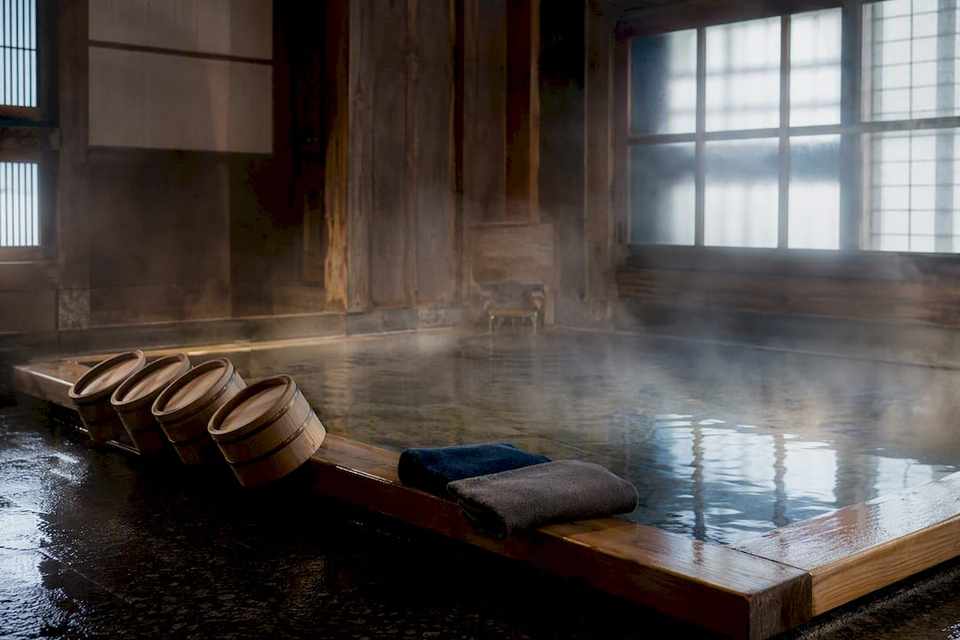
Nozawa Onsen stands apart from the rest of the shortlist. The town’s public bathhouses, built around its hot-spring heritage, function as the evening ritual in place of a bar scene, and that cultural texture is part of what seasoned Japow visitors point to when they say the trip is as much about hospitality and onsen culture as it is about snow depth.
Furano and Myoko sit toward the quieter end, with limited but genuine local dining options and minimal English signage outside the main lodges. For travelers who want energy after dark, Niseko and Hakuba deliver it. For those who’d rather soak and sleep before another powder day, Rusutsu, Kiroro, and Nozawa are the better fit.
Why Does Snow Quality Change Through the Season?
Japan’s powder isn’t uniform across the winter, and the shift follows a predictable arc tied to storm patterns and temperature. Early season snow, before mid-January, tends to be thinner and less consistent as base depth builds. The mid-January to mid-February peak delivers the driest, lightest snow of the year, driven by cold Siberian air masses crossing the Sea of Japan.
By late February and into March, temperatures climb and Honshu resorts in particular see more rain intrusion at lower elevations, which can crust or wet the snowpack even when Hokkaido further north is still producing dry storms. This is the core reason the region choice matters as much as the date choice: a late-season trip to Hakuba carries more weather risk than the same dates in Niseko or Rusutsu.
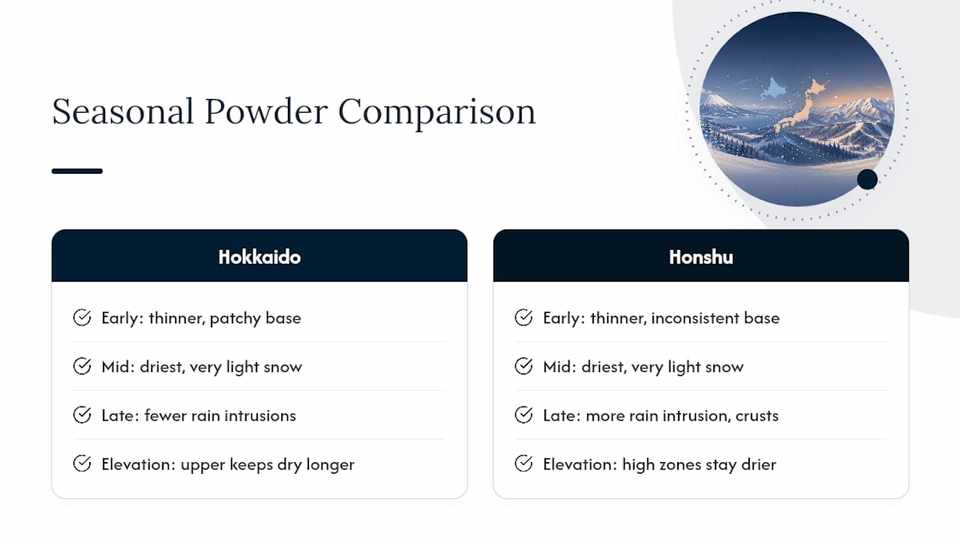
Elevation compounds the effect. Higher-elevation zones at Hakuba and Myoko hold cold, dry snow longer into a warm spell than lower base areas, so a storm-day itinerary that prioritizes upper mountain terrain often outperforms one stuck on lower runs, regardless of which island you’re on.
What Most Japow Guides Get Wrong About Choosing a Region
Most guides treat Hokkaido versus Honshu as a snow-quality debate and stop there. That undersells the real decision, which is about risk tolerance and trip flexibility. A fixed one-week trip with no room for a bad-weather contingency belongs in Hokkaido, full stop. A flexible traveler who can shift days around a storm forecast, or who’s already building a broader Japan itinerary around Tokyo, gets real value out of Honshu’s terrain without the reliability trade-off mattering as much.
The other blind spot is culture. Trip reports from experienced Japow travelers consistently mention onsen, food, and local hospitality as reasons a lighter snow year still felt worthwhile, and that’s a variable most planning guides skip entirely in favor of snowfall charts. Reliability numbers matter, but they’re not the whole trip.
If there’s one piece of conventional advice worth ignoring, it’s the instinct to chase the single deepest resort on a snowfall chart. Match the region to your actual schedule flexibility first, then pick the resort.
— Eduard
Get Matched to Your Japan Powder Trip
Bergme is the alternative to hours of resort-by-resort research for planning a Japan powder trip. Instead of cross-referencing snowfall charts, flight routes, and resort forums yourself, you answer a short questionnaire covering group size, skill level, and date flexibility, and get back curated, priced trip options without creating an account or handing over an email address.

That matters most for groups with mixed priorities, first-time Japow travelers unsure whether Hokkaido or Honshu fits their week, or anyone booking on a tight timeline where research time is the real cost. The questionnaire filters out mismatched resorts before you waste time comparing options that never fit your group in the first place. Start the Bergme questionnaire to see curated Japan powder options matched to your trip.
Sources
- Best Ski Resorts in Japan for Powder: 2026–27 Season Guide | JapowDB
- Skiing in Japan: Powder, Resorts & Practical Tips | Japan Nakama
- Fifteen years in Japan | Backcountry Magazine
- Skiing in Japan: Everything You Need to Know for Your Japan Ski Trip - Getting Off Piste
FAQ
Is Powdery Snow Better for Skiing?
Dry, low-density powder makes turns feel softer and more forgiving than packed groomers, and it’s the primary reason skiers travel specifically to Japan. It does require wider skis and a centered stance to ski well, since aggressive carving fights the snow instead of floating through it.
What Country Has the Best Powder Skiing?
Japan is widely regarded as the top destination for consistent, high-volume powder, particularly Hokkaido, where long-term station records show reliable season totals year after year. Other regions produce deep single storms, but few match Japan’s frequency of light, dry snowfall through a full season.
What Are the Best Powder Ski Options for Japan?
Niseko, Rusutsu, and Kiroro lead the Hokkaido shortlist, while Hakuba Happo-One and Myoko top the Honshu list for terrain and vertical. A tool like Bergme’s questionnaire can also match you directly to a resort based on your group’s skill level and schedule.
What Is Powder When Skiing?
Powder refers to fresh, unpacked snow that hasn’t been groomed or skied out, and Japan’s version is known for unusually low moisture content that makes it feel light underfoot. That low density is why skis around 100mm or wider at the waist are recommended for float in Japanese conditions.