19 November 2026
Lake Louise vs Sunshine Village: Which Banff Ski Area Fits You

Lake Louise is the larger mountain, with longer runs, tree skiing and lift-served expert terrain, and it is a drive-to-the-base day. Sunshine Village is higher and holds snow longer, and it suits beginners, mixed-ability groups and families who want a car-free ski village. Most stays of three days or more work best with a ticket covering both. The sections below set out the numbers and the trade-offs so the choice can be made by ability, group and trip length.
TL;DR
- Terrain and scale: Lake Louise has about 4,200 skiable acres and a 991 m vertical; Sunshine has about 3,300 acres across three mountains and the highest peak of the two.
- Ability: Lake Louise rewards confident intermediates and experts; Sunshine is gentler for beginners and families, with its hardest zones requiring a hike and safety gear.
- Access: Lake Louise is a short drive and a parking lot. Sunshine requires an access road and a gondola ride, then there is no car on the mountain.
- Trip length: for four days or more, a multi-day SkiBig3 ticket covers both resorts plus Mount Norquay.
Table of Contents
- The two mountains at a glance
- Terrain and difficulty by ability
- Snow, season and altitude
- Getting there and getting started
- Which resort suits families
- Lift tickets and passes
- A simple way to choose
- Why a questionnaire beats a comparison table
- Plan the Banff trip with BergMe
- FAQ
- Sources
The two mountains at a glance
Both resorts sit inside Banff National Park in Alberta, Canada, roughly 45 minutes apart by road. They differ in shape more than in quality. Lake Louise spreads out over several faces and is reached by car. Sunshine is a compact cluster of peaks on the Continental Divide, the line separating Alberta from British Columbia, with a lodge at its centre.
| Lake Louise | Sunshine Village | |
|---|---|---|
| Skiable terrain | 4,200 acres | 3,300 acres |
| Layout | Five faces, 171 named runs | Three mountains |
| Lifts | 13 (one gondola, nine chairs, three carpets) | 12 lifts |
| Top elevation | 2,637 m | 2,730 m, the highest ski area in Canada |
| Vertical drop | 991 m | 1,070 m, counting the gondola ascent |
| Longest run | 8 km | Not listed in the sources used |
Counts of runs and lifts differ between sources, because resorts and third parties count trails, glades and lifts differently. The official figures above come from each resort’s own site where available. Treat the Sunshine lift and elevation figures as approximate, and check the resort’s trail map before planning a specific route.
Two points explain most of the difference in feel. Lake Louise is bigger, so a skier can spend several days on it without repeating a run. Sunshine is higher, and most of its terrain lies above the tree line, so it is more open and more exposed to weather on a bad day.
Terrain and difficulty by ability
The published terrain splits are close. Alberta Insider puts Sunshine at about 20% beginner, 60% intermediate and 20% advanced, and Lake Louise at 25%, 45% and 30%. The practical gap is in where that terrain sits and how it is reached.

Beginners
Sunshine is the more forgiving of the two for first-timers. Its beginner and intermediate runs are wide and open, and the compact layout means a mixed group can split up and meet again at the village plaza. Lake Louise does offer beginner runs, but local instructors quoted by The Traveler say the easiest terrain clusters low on the front side, while the upper mountain moves quickly into steeper blue and black pitches.
Intermediates
Both work. Intermediates who want distance and variety lean toward Lake Louise, where the longer runs and tree skiing give more mileage per day. Intermediates who prefer wide, open cruising and a short walk to lunch lean toward Sunshine. Lake Louise says it has beginner, intermediate and expert runs from nearly every chair, which is useful for groups with uneven ability.
Advanced and expert skiers
Lake Louise is the stronger pick for a single expert day. Its Back Bowls and West Bowl give lift-accessible steeps, chutes and off-piste lines. Sunshine’s best-known expert zones, Delirium Dive and Wild West, need a hike, avalanche safety gear and registration before entry, according to the same Alberta Insider comparison. Anyone planning to ski those zones should confirm the current entry rules with the resort and carry a transceiver, probe and shovel, and know how to use them.
Snow, season and altitude
Snowfall is the strongest argument for Sunshine. InTheSnow gives annual snowfall of roughly 454 cm at Lake Louise against about 914 cm at Sunshine, and calls Sunshine the most reliable of the three SkiBig3 mountains for natural snow. Banff Sunshine also describes its season as the longest in Canada.
This matters most at the edges of winter. In early December and in spring, higher elevation and heavier snowfall tend to mean more open terrain at Sunshine. In January and February both resorts are in full season, and the choice turns on terrain and access rather than snow.
Both open in stages. Lifts and runs come online as snow allows, so a trip in November or early December should be planned around the live status pages of the resorts, not the full trail count. Opening and closing dates are published each year by the resorts and change from season to season.
Getting there and getting started
Access is where the two feel least alike.
Lake Louise: the base area is a short drive from Lake Louise village and about 45 minutes from Banff town, according to Alberta Insider. A skier parks, walks to the lifts and starts. Lifts run from 9:30 a.m. to 4:30 p.m. in winter.
Sunshine Village: the base is reached by an access road of about 8.3 km, followed by a mandatory gondola of roughly 15 to 20 minutes into a car-free ski village. Alberta Insider reports that the gondola queue can add 30 to 45 minutes on busy weekend mornings. Banff Sunshine advertises a free daily shuttle from Banff to the Bourgeau Base Area, which removes the parking question for guests staying in town.

A car-free village has one more benefit. Skiers staying at the on-mountain lodge, which Banff Sunshine lists as ski-in/ski-out, avoid the morning road and gondola queue altogether.
Which resort suits families
Families usually weigh three things: where the children learn, how simple the day is, and what there is to do when the legs give out.
Sunshine scores well on the first two. Banff Sunshine’s own pages list Snow School lessons, daycare and Tiny Tigers lessons, complimentary SnowHost tours and ski-in/ski-out lodging. Everything happens around one plaza, so a parent can ski a lap while a child is in a lesson and be back in minutes. The main friction is the morning gondola.
Lake Louise has a simpler arrival, a lower learning area and a broader list of non-ski options. The resort promotes tubing, scenic gondola rides, dining and après alongside skiing. For families with older children who already ski blue runs, it offers more room to progress.
A rule of thumb: first-week skiers and young children favor Sunshine; teenagers and parents who ski confidently favor Lake Louise; a family of mixed ability that can spare a day for each gets the best of both.
Lift tickets and passes
Prices move with date, advance purchase and season, so the figures below show shape rather than a fixed rate.
Lake Louise lists 2026/27 early-season full-day tickets for adults (18 to 64) in a range of $80 to $185, with youth, child and senior tickets lower and children aged 5 and under free. The range reflects the date of the ski day and how early the ticket is bought, and it excludes 5% GST. Banff Sunshine’s standard daily prices are not published as a single number on its lift-ticket page; the page lists categories by age and points to its early-season offers.
For seasonal skiers, Banff Sunshine’s compare-passes page lists a full adult season pass at $1,899 and a family pass at $3,990, with midweek and afternoon options priced lower.
For a holiday rather than a season, the better question is whether to buy one resort or several. The SkiBig3 lift ticket covers Lake Louise, Sunshine and Mount Norquay on a single ticket, and InTheSnow notes that multi-day tickets generally beat single days for stays of four days or more. The SkiBig3 booking page states that tickets run from one to 14 days, include grace days so a rest day does not waste the ticket, and are fully refundable until seven days before arrival.
A simple way to choose
- One day only, expert or strong intermediate: Lake Louise, for Back Bowls and West Bowl terrain reached by lift.
- One day only, beginner or mixed group: Sunshine, for open terrain and a single village base.
- Two to three days: one day on each, with the third on whichever suited the group better.
- Four days or more: a multi-day SkiBig3 ticket, splitting days by weather. Higher Sunshine suits days with fresh snow and wind-free skies; Lake Louise’s trees give shelter when the upper mountain is windy or visibility is poor.
- Early or late season: start with Sunshine, then check which lifts are open at each resort before travelling.
On stays long enough to include Banff town, the town itself adds restaurants, bars and non-ski activities. If the group includes non-skiers, staying in Banff and taking a shuttle is easier than staying at either base. Picking a base is similar to choosing between two neighboring mountains elsewhere: a Blacktail and Whitefish ski comparison shows how the same logic of terrain, travel time and lodging applies in Montana’s Flathead Valley.
Why a questionnaire beats a comparison table
We built BergMe around a plain observation: a comparison like this one is only half the work. The numbers tell you that Lake Louise is bigger and Sunshine is higher. They do not tell you whether your nine-year-old, your partner who has skied twice, and you with ten seasons behind you are better served by a gondola village or a parking lot.
That is why we start with a short questionnaire about ski style, group makeup and preferences, and filter out the mismatches before showing a ranked list of resorts and packages. It takes minutes, and it asks for no registration or email.
For a Banff trip, that means the question is not “which resort is better” but “which resort, which base, and which ticket fit this group”. Families, couples and friends planning together tend to disagree about the first answer, and a ranked list built from everyone’s preferences settles the argument faster than another tab of reviews.
Eduard
Plan the Banff trip with BergMe
For travelers who want the Lake Louise and Sunshine decision made against their own group, BergMe offers hand-picked ski trips. A short questionnaire covers skiing style, group dynamics and preferences, and returns curated options and packages without registration.
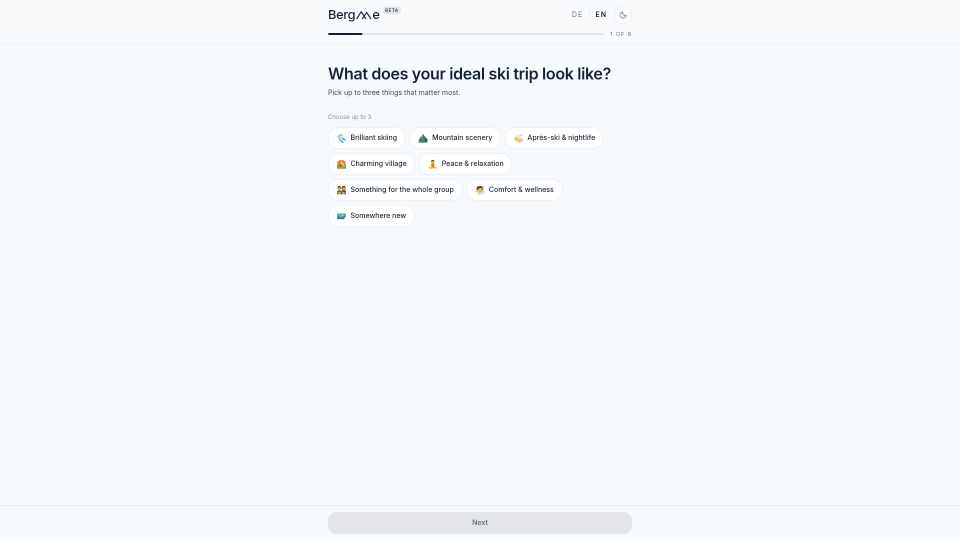
Start on the BergMe home page to see trips matched to your group.
FAQ
Is Lake Louise or Sunshine Village better for beginners?
Sunshine is generally the better fit. Its beginner and intermediate terrain is wide and open, and lessons, daycare and lodging sit around one village base. Lake Louise has beginner runs too, but they are concentrated low on the front side.
Which resort is bigger?
Lake Louise. Its official stats list 4,200 skiable acres and 171 named runs across five faces, against about 3,300 acres across three mountains at Sunshine. Sunshine has the higher summit, at 2,730 m against 2,637 m at Lake Louise.
Can I ski both on one ticket?
Yes. The SkiBig3 lift ticket covers Lake Louise, Sunshine and Mount Norquay, and the multi-day versions include grace days. It is designed for visitors who want to move between mountains during one stay.
Which gets more snow?
Sunshine. InTheSnow gives annual snowfall of about 914 cm at Sunshine against about 454 cm at Lake Louise. That difference is most noticeable in early season and spring.
Sources
- Mountain Stats, Ski Louise
- Banff Sunshine Village
- The Lake Louise Ski Resort
- Sunshine Village vs Lake Louise Ski Resort, Alberta Insider
- Lake Louise vs Sunshine Village, The Traveler
- Banff and Lake Louise, InTheSnow
- Lake Louise lift tickets
- Banff Sunshine winter lift tickets
- Banff Sunshine compare passes
- SkiBig3 lift tickets
- Blacktail vs. Whitefish Mountain ski guide