24 August 2026
Ski Holidays with Children: The Right Region for Your Family
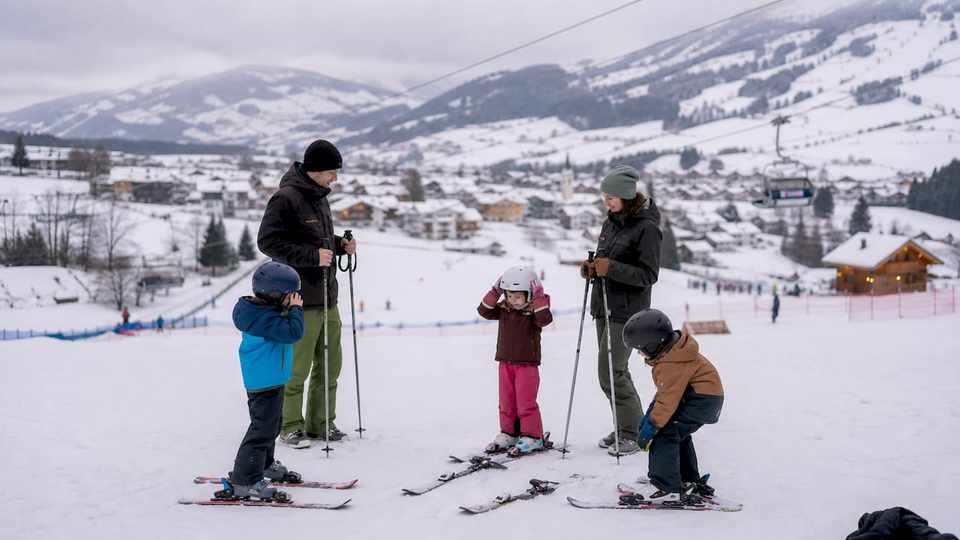
For families with small children, compact, easy-to-navigate ski resorts with magic carpets and short distances to the accommodation are best, such as Berwang or parts of Styria. Families of beginners are well served by wide practice slopes and good ski schools, like those offered by Serfaus-Fiss-Ladis or SkiWelt Wilder Kaiser-Brixental. Families with a mix of ability levels, meanwhile, need a large, varied resort with dedicated children’s areas, such as Schmittenhöhe near Zell am See.
The reason is always the same: safety and visibility matter more than the number of kilometres of pistes. Compact family ski resorts often manage with 2 to 6 lifts and 3 to 20 kilometres of pistes, and it is precisely this size that makes it easy for parents to keep an eye on their children while they learn how to stop.
So what really matters when choosing a resort?
- Small children (up to age 5): short distances, magic carpets, ski school from age 3
- Beginners of all ages: wide blue pistes, patient ski instructors, small groups
- Mixed-ability families: a large resort with clearly separated children’s zones and adult pistes
The following sections explain how to choose the right region in detail, which packing list has proved useful, and how to save money on ski passes.
Key Takeaways
A successful ski holiday with children depends less on the size of the ski resort than on clear orientation, suitable lifts, and accommodation that fits the family’s daily routine.
| Topic | Details |
|---|---|
| Choose the resort for your family profile | Small children benefit from compact, easy-to-navigate resorts such as Berwang, while mixed ability levels benefit from large resorts such as SkiWelt. |
| Consider the type of lift | Magic carpets and height-adjustable conveyor belts make it much easier for young children to get started. |
| Check ski pass promotions | When an adult buys a multi-day pass, children can often ski free in many resorts. |
| Plan for health and safety | Sun protection, a helmet, and a check of the avalanche report are essential for every day on the mountain. |
| Compare offers carefully | Bergme presents hand-picked, family-friendly ski trips without registration and sends you directly to the provider. |
Table of Contents
- Ski holidays with children: which ski resorts really suit families
- Checklist: How to find the right family ski resort
- Packing list and daily routine: How to keep the ski day relaxed
- What to do when the slopes are not appealing
- Hotel, holiday apartment, or chalet: What suits your family?
- What a ski holiday with children really costs
- How Bergme makes it easier to find the right ski resort
- Protecting children from cold and sun in the mountains
- Safety on the slopes: What parents should know
- When Mum is a beginner and her son already skis moguls
- Food and drink for children at the ski resort
- Eduard’s view: The order makes the difference
- Your next step: A specific offer instead of endless research
- Sources
Ski Holidays with Children: Which Ski Resorts Really Suit Families
Not every large ski resort is automatically family-friendly. What matters is whether it combines child-friendly infrastructure with genuine scale without leaving parents constantly afraid of losing sight of someone while skiing.
1. Serfaus-Fiss-Ladis
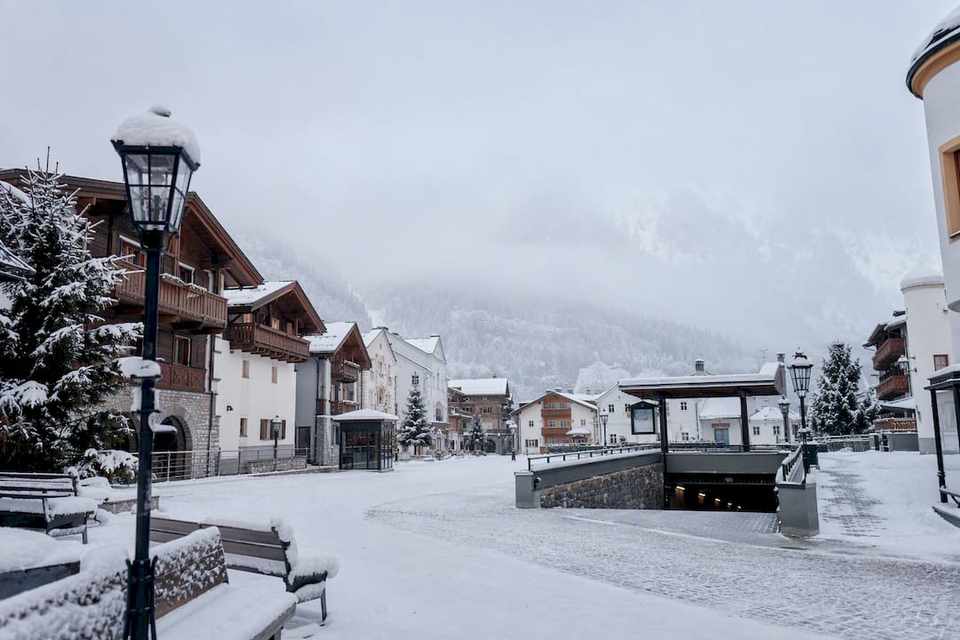
This Tyrolean trio has long been regarded as one of the best-planned family ski resorts in the Alps. The underground village railway keeps cars out of the centre, which is worth its weight in gold when travelling with small children. Ski schools accept young children, and the practice slopes are located directly beside the valley stations.
2. SkiWelt Wilder Kaiser-Brixental
At first glance, SkiWelt’s size makes it seem unlike a typical resort for small children. For families with older children or mixed ability levels, that is precisely the advantage: there are many access points, wide nursery slopes in several villages, and a family promotion under which children can often ski free when one parent buys a multi-day ski pass. These conditions change from season to season, so it is always worth checking the current local rules.
3. Schmittenhöhe near Zell am See
Large children’s slopes, mascot programmes, and special play areas for children make Schmittenhöhe a resort that keeps younger children motivated even when their legs get tired. At the same time, Zell am See’s local mountain offers enough variety for sporty parents who want to enjoy a few red or black runs themselves.
4. Berwang (Skiarena Berwang)
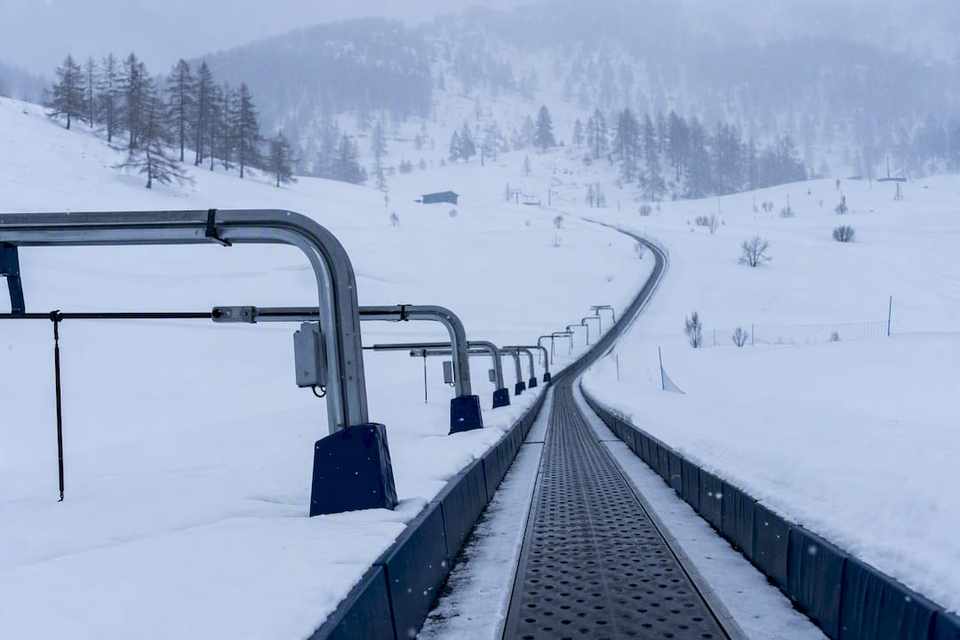
Anyone putting a small child on skis for the first time will find nearly ideal conditions in Berwang. The resort uses magic carpets and height-adjustable conveyor belts, which make getting started much easier and prevent the frustration that steep lift rides can quickly cause. Ski lessons here often begin at age three, and the resort remains compact enough that parents do not have to keep chasing after their children.
German Alternatives with Shorter Journey Times
Not every family wants to spend five hours in the car before making the first turn. Oberjoch in the Allgäu, Winterberg in the Sauerland, and Großer Arber in the Bavarian Forest offer shorter journey times and generally relaxed practice slopes. The trade-off is noticeably less reliable snow than in the high Alps, and lift queues can build up on warm weekends.
In brief:
- Reliable snow and child-friendly: Serfaus-Fiss-Ladis, Berwang, Schmittenhöhe
- Large and flexible for mixed ability levels: SkiWelt Wilder Kaiser-Brixental
- Short journey, but more weather-dependent: Oberjoch, Winterberg, Großer Arber
Checklist: How to Find the Right Family Ski Resort
The number of kilometres of pistes is the figure featured on every brochure, but it says almost nothing for families with children. The proportion of blue pistes and how well the resort is organised matter much more. Fewer kilometres paired with clear, easy-to-navigate practice slopes will help young families reach their goal faster than a huge resort with confusing runs.
The type of lift also makes a real difference. A magic carpet—a flat, slow conveyor belt—removes children’s fear of traditional chairlifts. Some resorts also equip their lifts with height-adjustable conveyor belts to make boarding and exiting easier. Details like these rarely appear in superficial lists, yet they have a major effect on how quickly young children learn.
It is worth taking a closer look when choosing a ski school: How large are the groups in practice? Are there separate, fenced children’s ski areas? How is supervision organised outside lesson times? A children’s area with screening and slides is often more important than the most beautiful mountain panorama.
Also check:
- Is the accommodation truly within walking distance of the slopes, or only “according to the brochure”?
- Is there a free ski bus if the slopes are farther away after all?
- Does the resort offer family rates or combined ski pass and accommodation packages?
- How flexible are the cancellation terms if a child becomes ill?
Pro tip: Ask the ski hire shop specifically about the availability of small sizes. During peak season, children’s ski boots below size 30 are often the first to sell out because hardly anyone reserves them in advance.
Packing List and Daily Routine: How to Keep the Ski Day Relaxed
A good ski day with children depends on preparation the night before, not on the equipment itself. Anyone still searching for the second ski sock in the morning loses valuable time on the slopes—and patience.
- Layered clothing: Thermal underwear, fleece, a waterproof ski jacket, and at least two pairs of socks per day, because damp feet get cold faster.
- Sun and cold protection: High-SPF sunscreen, lip balm, and ski goggles rather than sunglasses to keep out UV radiation and wind.
- Spare clothes in the car or hotel: A complete replacement outfit avoids arguments when snow finds its way inside a jacket.
- Snacks and a water bottle: Children use more energy in the mountains than at home; short breaks with glucose tablets or a cereal bar prevent dips in motivation.
- Helmet and back protector: Both should fit properly, not just “more or less.” A helmet that is too loose offers little protection in an accident.
The daily routine itself should follow the child, not the price of the ski pass. Aim for two to three hours of skiing in the morning, a proper lunch break with hot food, and then one more short session. Trying to ski all day usually results in an afternoon full of tears and resistance.
Pro tip: Hire equipment for children instead of buying it. Children’s feet and height change quickly, and many hire shops now offer seasonal packages that cost less than buying new equipment every year.
For the journey, the train gives children room to move and offers an onboard café, while a car with scheduled breaks every two hours is usually more flexible when carrying lots of luggage.
What to Do When the Slopes Are Not Appealing
Even the best ski day has its limits, especially for younger children. Fog, storms, or simply a tired afternoon can be rescued with alternatives instead of allowing them to spoil the holiday.
Toboggan runs, ice rinks, and heated indoor pools are among the most reliable options when enthusiasm for the slopes fades. Experts explicitly recommend planning such activities from the outset rather than treating them merely as a fallback.
- Floodlit toboggan runs for the late afternoon
- An indoor pool or thermal spa after a shortened ski day
- Igloo villages and guided snowshoe tours for families with younger children
- Mascot appearances and children’s shows at many larger ski resorts
After a strenuous morning on the slopes, a warm indoor pool can often feel like a second holiday. And a child who had fun in the water during the afternoon is much more motivated to put their ski boots back on the next morning.
Hotel, Holiday Apartment, or Chalet: What Suits Your Family?
The choice of accommodation often has a greater effect on the holiday atmosphere than the ski resort itself. A traditional family hotel provides childcare, a children’s club, and often meals as well, but costs more than a simple holiday apartment.
- Family hotel: Childcare, fixed mealtimes, and less work for parents, but a higher price per night
- Holiday apartment or chalet: More space and your own kitchen, ideal for self-catering and multigenerational holidays with grandparents
- Ski-in/ski-out or nearby hotels: Short distances save time and patience, but generally cost more than accommodation a little farther away
- Holiday park: A good balance of self-catering and extra facilities such as a swimming pool or play area
When booking, check specifically whether the ski pass is included in the price or added as a separate children’s package. This can significantly change the final comparison between two otherwise similar offers.
What a Ski Holiday with Children Really Costs
The biggest cost drivers are rarely the ones families think of first. Travel and accommodation account for the largest share, but ski passes, equipment hire, and ski school can add up when several children are old enough for lessons.
- Travel: Train or car; highly dependent on distance and the number of travellers
- Accommodation: The largest single expense, varying greatly by category and proximity to the slopes
- Ski pass: Often the second-largest expense, especially with several children
- Ski hire: Usually cheaper per child than per adult, but still noticeable over a week
- Ski school: Half-day or full-day lessons, with significant price differences depending on group size
It is worth looking closely at family rates. In some resorts, a young-family pass allows parents to share a ski pass if they are not both skiing at the same time. This arrangement can often be booked only at the resort and rarely appears in online price comparisons. Many resorts also offer free or discounted passes for small children, with exact age limits and conditions varying from region to region.
To save money, book outside peak season, combine accommodation and ski passes in one package, and compare promotions from several resorts instead of settling for the first offer.
How Bergme Makes It Easier to Find the Right Ski Resort
There is a huge choice of family ski resorts, and every family has different priorities: some need childcare, others want a holiday apartment with a kitchen, while others simply want the shortest possible journey. Bergme sorts these preferences and shows suitable offers within minutes, without registration or endless comparisons between individual websites.
- A selection of hand-picked offers for different family arrangements
- Comparison of around 250 ski resorts in the Alps based on personal criteria
- Direct links to detailed travel offers from established partners
A New Year’s ski holiday in the Bernese Oberland, with accommodation at Hotel Bären and a ski pass included, shows how specific such an offer can be: Alpine scenery, short distances, and a package that families do not have to assemble themselves.
Protecting Children from Cold and Sun in the Mountains
Children get cold faster than adults because their bodies distribute heat differently. Several thin layers provide more warmth than one thick jacket, and gloves should be waterproof, not merely water-resistant.
The mountain sun is more deceptive than many parents realise. UV radiation increases with altitude, and snow reflects additional light that can quickly irritate children’s skin. High-SPF sunscreen is just as essential as good ski goggles, which should also be worn under overcast skies because UV rays penetrate clouds.
When adjusting to altitude, remember that small children are more sensitive to large changes in elevation than adults. Families travelling directly from lowlands to a high-altitude ski resort should deliberately take things more slowly on the first day, with more drink breaks and less intensive activity. Headaches or unusual tiredness on the first day are often signs that the body is still adapting. They are not necessarily a reason for concern, but they are a good reason to slow down.
One tip that is often overlooked: Do not skip sunscreen on cloudy days. Snow continues to reflect UV light even when the sun itself is not directly visible.
Safety on the Slopes: What Parents Should Know
A helmet is now standard for children in most Alpine ski resorts and is even required by law in some countries. Regardless of the exact legal position at your destination, a well-fitting ski helmet is the single most important measure for preventing serious head injuries and should be essential equipment for every child without exception.
Avalanche danger affects families with children less often directly because most stay on secured pistes. Nevertheless, it is worth checking the avalanche report before every ski day, especially if anyone plans to ski off-piste or if toboggan runs cross open terrain. Always remain on marked pistes and respect closed areas, particularly when accompanied by children.
Emergency preparation involves more than carrying a first-aid kit. Useful precautions include:
- The ski instructor’s mobile number and the exact meeting point at the end of lessons
- A note with the child’s name and contact details in their jacket pocket in case they get lost
- Knowing the location of the nearest ski patrol or mountain rescue station
- Travel insurance that covers mountain rescue and repatriation
These steps take very little preparation time but can save valuable minutes in an emergency.
When Mum Is a Beginner and Her Son Already Skis Moguls
Mixed experience levels within a family are the rule rather than the exception. The solution is rarely for everyone to ski together all the time; instead, choose the right resort and divide the day wisely.
Larger resorts such as SkiWelt or Schmittenhöhe are particularly well suited because they offer separate zones for different ability levels. The more experienced parent can ski red or black pistes with the older children while the other remains with the younger ones in the practice area. A fixed meeting point at lunchtime still brings the family together.
Ski schools often solve this problem more elegantly than parents could themselves. While the children are in lessons, adults have time to ski their own pistes without feeling guilty. Everyone meets again in the afternoon after enjoying the day at their own pace.
Pro tip: Schedule one shared “family day” per week when everyone skis together on the easiest pistes. This strengthens family bonds without anyone feeling over- or under-challenged.
Above all, it is important to discuss expectations openly. A child on skis for the first time does not need to be compared with an older sibling already in their third season.
Food and Drink for Children at the Ski Resort
Hunger and low blood sugar are the most common causes of bad moods on the slopes—even more than cold or tiredness. Many larger ski resorts have responded by offering dedicated children’s menus in mountain huts, often with smaller portions and milder dishes than the standard menu.
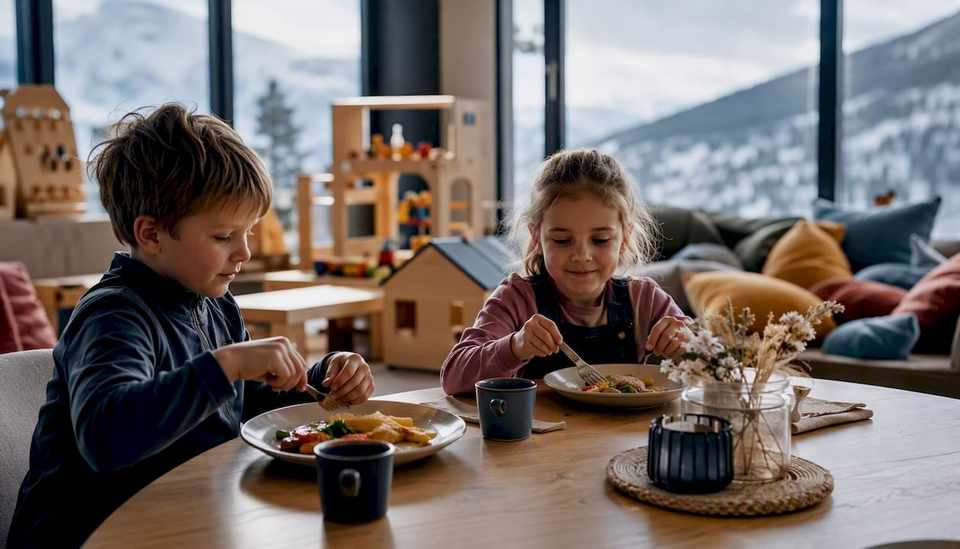
It is still always worth packing snacks: cereal bars, dried fruit, or a small flask of hot chocolate bridge the gaps between scheduled breaks. This makes a real difference for small children in particular, who may not manage until lunch without something to eat.
Many mountain restaurants in family-oriented resorts such as Serfaus-Fiss-Ladis or SkiWelt have their own play corners inside the dining room. Children do not immediately become restless after eating, and their parents can finish their coffee in peace. Checking the menu in advance—for example, on the ski resort’s website—helps avoid disappointed faces at the table if a favourite dish is unavailable.
Eduard’s View: The Order Makes the Difference
Many conversations about family travel reveal a pattern: families who book the ski resort first and plan equipment afterwards usually enjoy the more relaxed trip. Those who do the reverse—buying equipment first and then desperately searching for a suitable resort—often end up compromising on childcare. So define your family’s profile first; everything else will then almost fall into place by itself.
— Eduard
Your Next Step: A Specific Offer Instead of Endless Research
Instead of clicking through twenty ski resort websites, Bergme shows suitable offers within minutes, sorted by what truly matters to your family. No account, no email address, and no hours spent comparing prices and services.

A good example is the New Year’s ski holiday at Hotel Bären in Interlaken, which combines accommodation and a ski pass in one package. Offers like this are particularly suitable for families who value a clear overview of costs and do not want to search separately for ski passes, hotels, and equipment hire. Bergme directs you transparently to the relevant travel partner, who completes the booking.
Anyone who would like to see several options can find an overview of more hand-picked offers for different family arrangements and budgets on Bergme. Two minutes of input are often enough to receive three or four suitable suggestions instead of searching dozens of individual websites.