29 September 2026
Plan a Ski Trip Fast: Answer 6–8 Questions, No Signup

Pick your dates and travel group first, set a per-person budget, then reserve accommodation and lift passes as early as your calendar allows. Early action matters because pass discounts and room availability shrink as the season approaches. For readers short on time, a questionnaire can generate personalized destination suggestions in minutes without requiring an email or account.
TL;DR:
- Booking lift passes and accommodations early can secure discounts and ensure availability, especially during peak times when options are limited.
- Medium-length trips of four to seven days optimize skill development, terrain variety, and weather flexibility, making longer or shorter stays less efficient.
- Choosing lodging options with easy access to lifts, such as a short walk or shuttle, often balances cost savings with convenience for most groups.
- Prioritizing travel midweek or during shoulder seasons significantly reduces costs compared to peak holiday periods.
- Using personalized matching services can quickly produce tailored trip suggestions, saving time and aligning choices with group priorities.
Table of Contents
- Step-by-step booking checklist for ski trip planning
- How to match a destination to your group’s priorities
- High-impact ways to cut ski trip costs
- How many days you need and when to go
- Choosing lodging and arranging transfers
- Packing and gear checklist: what to bring versus rent
- Insurance and safety steps before you go
- How a personalized matching service shortens ski trip planning
- Local customs and etiquette on the slopes
- Après-ski activities and local entertainment options
- Environmental impact and eco-friendly skiing practices
- A planning tradeoff worth knowing before you book
- Get curated ski trip options without the research
- Sources
- FAQ
Step-by-step booking checklist for ski trip planning
Ski trip planning works best as a sequence, not a scramble. Each decision narrows the next, so working in order avoids the common trap of booking flights before knowing which resort fits the group.
- Decide on dates, trip length, and who is coming, including skill levels and any non-skiers in the party.
- Set a per-person budget that covers travel, lodging, lift access, lessons, equipment, food, and incidental costs.
- Shortlist three destinations that match your group’s skill mix, travel time, and budget ceiling.
- Reserve travel first, then accommodation, and buy lift passes early where discounts apply.
- Book lessons, childcare, and equipment rentals once travel and lodging are confirmed.
- Confirm transfers and local transport last, once arrival and departure times are fixed.
- Keep copies of every reservation’s cancellation policy and buy travel or winter-sport insurance that matches your trip.
This order matters because lift passes and lodging often carry early-booking discounts that disappear closer to the trip, while transfers can usually be adjusted later without penalty. Skipping ahead, such as booking a resort before agreeing on a budget, tends to produce costly changes down the line.
How to match a destination to your group’s priorities
The right resort depends on what your group actually needs, not on name recognition. A weekend crew of intermediate skiers has different priorities than a family with two beginners and a toddler.
- Match terrain difficulty to your group’s ability split: a resort dominated by black runs frustrates beginners, while an all-green area bores advanced skiers.
- Prioritize snow reliability, since industry data shows visitation held up through the 2024/25 season largely because snowmaking and efficient operations offset variable natural snowfall.
- Favor shorter transfers for weekend trips, since long transfers eat into limited ski time and add fatigue.
- Check off-slope services such as childcare, spas, or nearby towns if your group includes non-skiers.
- Consider lesser-known destinations for value, since about two thousand ski resorts exist worldwide, including growing markets outside the traditional Alpine core.
Pro Tip: Ask each group member to rank their top three priorities (snow, terrain, nightlife, cost) before you shortlist resorts. It resolves disagreements faster than debating specific resort names.
High-impact ways to cut ski trip costs
Cost control on a ski trip comes from timing and lodging choices more than from cutting corners on gear or lessons.
- Buy lift passes early or look at multi-day and multi-resort passes, since pass holders now account for nearly half of total visits as frequency products replace single-day tickets.
- Travel midweek or in the shoulder season rather than peak weeks, since travel-industry experts point to midweek and late-season travel as reliable ways to cut costs.
- Skip premium ski-in/ski-out lodging in favor of a central village location or a self-catered apartment.
- Rent skis and boots at the resort instead of checking bulky bags, and bring only well-fitted items like base layers and goggles from home.
- Split transport and lodging costs across the group, and compare package deals that bundle lift passes with lessons.
How many days you need and when to go
Trip length changes what you can realistically accomplish on snow.
- Weekend trips (2 to 3 days): good for a quick getaway but leave little room for lessons or travel delays.
- Four to seven days: the range most groups find works best, allowing time to progress on skills, try varied terrain, and absorb a weather delay without losing the whole trip.
- Early season: fresh lift infrastructure and thinner crowds, though natural snow can be inconsistent.
- Peak season: guaranteed services and full terrain access, at the highest prices.
- Late season: better value and longer daylight hours, with more variable snow conditions.
Build in a buffer day for any international trip or a destination known for changeable weather, since a delayed flight can otherwise cost you a full day on the mountain.
Choosing lodging and arranging transfers
Lodging location is often the single biggest lever on both cost and convenience. Ski-in/ski-out access saves time each day but usually carries a premium that only pays off for groups skiing heavily across a multi-day trip.
- Self-catered chalets or apartments usually lower per-person costs for groups and simplify meal planning.
- A short walk or shuttle ride to the lifts is often a reasonable trade for lower nightly rates.
- Private shuttles offer door-to-door convenience for families or groups with gear.
- Shared coach transfers cost less and suit budget-focused groups comfortable with a shared schedule.
- Rental cars add flexibility for exploring multiple villages but come with parking and winter-driving considerations.
Confirm arrival and departure windows with your transfer provider ahead of time, and check your airline’s baggage policy for skis and boards, since fees and size limits vary widely.
Packing and gear checklist: what to bring versus rent
A solid packing list prevents both forgotten essentials and overweight luggage fees.
- Pack base layers, an insulated mid layer, and a waterproof outer shell as your core clothing system.
- Bring a well-fitted helmet and goggles rather than renting, since fit affects both safety and comfort.
- Decide on skis and boots based on how often you ski: frequent skiers often prefer their own boots for fit, while occasional skiers can rent both locally.
- Keep medications, a change of layers, and travel documents in your carry-on in case checked luggage is delayed.
- Protect skis and boots in a padded bag during transit to avoid transport damage.
Pro Tip: Pack a spare pair of glove liners and a small multi-tool or roll of duct tape. Both fix minor gear failures on the mountain without a trip back to the rental shop.
Insurance and safety steps before you go
Travel insurance for a ski trip needs different coverage than a standard vacation policy.
- Check that your policy includes winter-sport rescue and evacuation coverage, along with adequate medical limits.
- Confirm cancellation and change terms, especially for weather-dependent travel where storms can affect flights or road access.
- Beginners should take lessons and stay on marked runs, while experienced skiers heading off-piste should check avalanche forecasts before touring.
- Save emergency numbers and ski-patrol contact information in your phone and share them with your group before hitting the slopes.
How a personalized matching service shortens ski trip planning
Answering a detailed questionnaire is often faster than manually comparing dozens of resorts. A personalized process can ask about group size, skiing style, and priorities, then narrow the field to a short list of matching trips.
- The approach works best when planning time is limited or the group has mixed abilities and competing priorities.
- A typical flow involves answering six to eight questions and receiving two to three curated trip suggestions to compare.
- No signup or email is required to see results, which suits travelers who want quick answers before committing time to deeper research.
- Curated suggestions can serve as a starting shortlist even for travelers who plan to book directly with a resort or operator afterward.
Local customs and etiquette on the slopes
Mountain etiquette exists mainly to keep runs safe as skiers of different speeds and abilities share the same terrain. The core rule nearly everywhere: skiers and riders downhill of you have the right of way, since they cannot see you coming. Always look uphill before merging onto a run or pulling out from a stop.
Lift line etiquette varies slightly by region, but the general expectation is to fill chairs to capacity and merge in an orderly queue rather than cutting across lines. On the lift itself, keep poles clear of other riders and raise the safety bar only when everyone agrees.
Stopping on a run should happen at the side, never in the middle of a slope or just over a blind rise, since collisions often happen when a stationary skier is invisible to those coming downhill. If you fall, clear the run as quickly as you safely can.
Tipping customs for instructors and guides vary by country and resort, so it is worth checking local norms before your trip rather than assuming a flat percentage applies everywhere. In many European resorts, a nod or greeting when passing ski patrol or lift operators is standard courtesy, reflecting a generally more reserved on-mountain culture than some North American resorts, where friendly small talk on lifts is common.
Après-ski activities and local entertainment options
The hours after skiing often shape how a trip is remembered as much as the skiing itself. Most resort villages build a rhythm around this: outdoor terraces near the base area fill up as lifts close, offering food and drinks with a view of the last runs of the day.
Family-oriented resorts typically pair this with early evening activities such as ice skating, tubing, or swimming pools attached to hotels, giving non-skiers and kids something to do that does not require snow gear. Larger resort towns often add live music, fondue nights, or torchlight descents as scheduled evening events, particularly during peak weeks.

For groups that prioritize nightlife, look for resorts with a compact village center where bars, restaurants, and lodging sit within walking distance, since a spread-out resort often means choosing between a car ride and an early night. Quieter, smaller resorts tend to offer a more relaxed evening scene centered on restaurants and hotel bars rather than late-night venues, which suits groups traveling with young children or those prioritizing an early start the next day.
Matching the après-ski scene to your group’s actual habits, rather than the resort’s reputation, avoids a common mismatch: a lively resort can feel exhausting to a group that wants to rest for tomorrow’s skiing, while a quiet one can disappoint a group hoping for nightlife.
Environmental impact and eco-friendly skiing practices
Ski tourism has a real environmental footprint, from snowmaking’s water and energy use to the carbon cost of travel to often remote mountain destinations. Resorts increasingly invest in more efficient snowmaking and renewable energy for lifts and buildings, partly as a response to variable natural snowfall and partly due to rising energy costs.
Travelers can reduce their own impact with a few practical choices. Picking a resort reachable by train rather than flying cuts the trip’s largest single emissions source for many travelers. Carpooling or using shared shuttles instead of individual rental cars reduces both emissions and parking congestion at the base area.

On the mountain, staying on marked runs protects vegetation and wildlife habitat that off-piste traffic can damage over a season. Refilling a reusable water bottle instead of buying bottled water, and choosing accommodation with visible sustainability practices such as renewable energy or local sourcing, are small but concrete steps.
None of these choices require sacrificing the quality of the trip, and several, like taking the train or choosing a closer resort, can also reduce cost and travel time.
A planning tradeoff worth knowing before you book
Group transfers are worth pre-booking every time. The tradeoff that comes up most is cost versus convenience in lodging: a self-catered apartment a short walk from the lifts beats a pricier ski-in/ski-out unit for most groups.
— Eduard
Get curated ski trip options without the research
Skip the weeks of comparing resorts one by one: BergMe’s questionnaire turns your group’s priorities into a short list of hand-picked trips, priced and ready to compare.
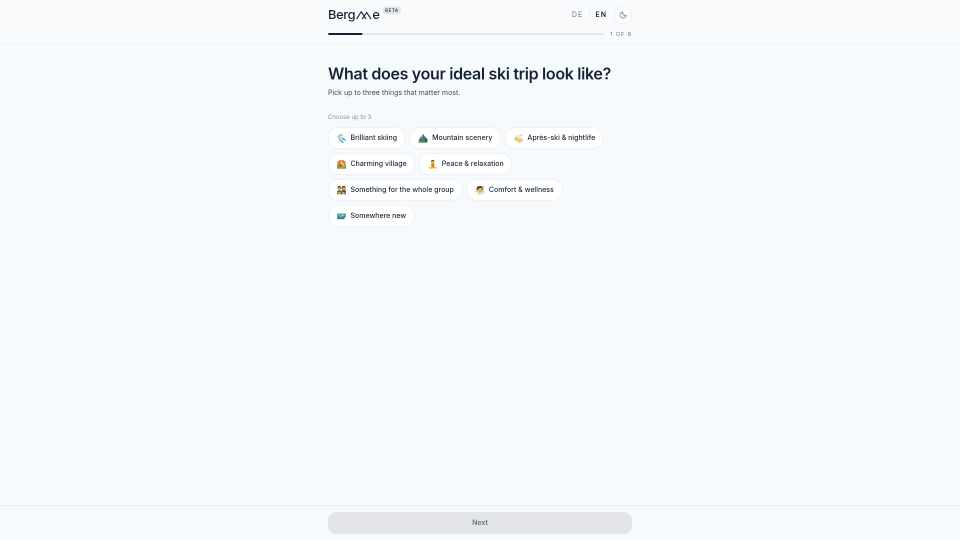
- Answer a short set of questions about your group, budget, and skiing style.
- Review two to three curated trip suggestions without providing an email or creating an account.
- Use the results as a starting shortlist, whether you book through a suggested package or plan the rest yourself.
Start with the BergMe questionnaire and see what it suggests for your next trip.
Sources
- 2026 International Report on Snow & Mountain Tourism - Global review of the 2024/25 winter season
- U.S. Ski Industry Reports Data From 2024-25 Season, Season Ranks 2nd Best On Record
- Tips for Finding Ski Trip Discounts from Top Skiing Industry Experts
FAQ
How much should a ski trip cost?
Ski trip costs vary widely based on destination, trip length, and lodging choice, with lift passes, accommodation, and travel making up the largest shares. Booking lift passes early and choosing self-catered lodging over ski-in/ski-out units are two of the most effective ways to lower the total.
What does corn mean in skiing?
Corn refers to a snow texture that forms when the surface repeatedly thaws during the day and refreezes overnight, leaving granular, loose crystals. Skiers often seek it out in spring because it is soft and forgiving, typically best in the late morning before it turns slushy.
How many days do you need for a ski trip?
Four to seven days is the range that gives most groups enough time to build skiing skills, try different terrain, and absorb a weather delay without losing the whole trip. A weekend of two to three days works for a quick getaway but leaves little buffer for lessons or travel disruptions.
What is the best way to plan a ski trip?
The most efficient approach is to fix your dates and group first, set a budget, then book travel and lodging before lift passes and lessons, since early booking often unlocks pass discounts. Services like BergMe can speed this up by turning a short questionnaire into a curated shortlist of matching trips.