4 October 2026
Skiing by Train 2026/27: Save on Baggage and Avoid Extra Nights

Yes, many major ski resorts are reachable by train, and for week-long trips, families, groups, or anyone hauling bags of gear, train travel is often the more practical choice. The main trade-offs are seasonal service windows, like Eurostar Snow’s Saturday-out/Sunday-back pattern, and the final-leg transfer from station to slope, which varies widely by resort.
TL;DR:
- Train travel often provides significant cost savings by including free or low-cost ski baggage and reducing last-mile transfer expenses compared to flying.
- Station-in-resort train stations like Zermatt or Les Arcs eliminate transfer delays, saving time and money during the trip.
- Eurostar Snow runs only on Saturdays and Sundays in the 2026/27 season, requiring careful planning of travel dates around fixed schedules.
- Night trains like ÖBB Nightjet can replace hotel stays by offering overnight travel from northern Europe into the Alps, especially during peak season.
- The Denver Winter Park Express is one of the few dedicated ski trains in the US, with fares starting low during promotional periods and operating on weekends and holidays.
Table of Contents
- Top routes and named ski trains across Europe and North America
- Why station-in-resort access changes the whole trip
- Booking windows, timetables, and a real cost comparison
- Packing and on-board storage for a multi-leg rail trip
- Planning the final mile from station to slope
- When train travel wins and when flying still makes sense
- Sample route snapshots for planning your own trip
- Why we plan ski trips around the train first
- How to match yourself to a train-friendly ski trip
- FAQ
- Sources
Top routes and named ski trains across Europe and North America
Rail access to the mountains runs on a patchwork of seasonal specials, high-speed lines, and night trains, each suited to a different starting point and resort cluster.
Eurostar Snow is the clearest entry point for travelers starting in London. The 2026/27 season runs on a limited winter window, departing on Saturdays and returning on Sundays, which shapes how a trip has to be structured around that rhythm. Fares typically start from about £99 one way, though a Standard fare usually runs closer to £125 and Eurostar Plus around £175, and the service includes free ski baggage, a detail that matters once you start comparing it against flying.
From Paris, the TGV INOUI network extends into the French Alps through gateway stations like Albertville, Moutiers, and Bourg-Saint-Maurice, each serving a cluster of resorts reachable by connecting coach. These high-speed links cut travel time dramatically compared to driving the same route in winter traffic.
Switzerland’s rail network is built around tight integration between train, funicular, and cable car, and it hosts two of the most recognized scenic routes in the world: the Glacier Express and the Bernina Express. Both typically require mandatory seat reservations, and travelers using a Swiss Travel Pass can bundle much of the regional travel into a single pass rather than booking each leg separately.
For travelers coming from Germany, the Low Countries, or Northern Europe, ÖBB Nightjet night trains offer a direct overnight route into Austria, often landing travelers in Innsbruck or the Tyrol region in the morning, ready to head straight to the slopes. Reservations fill early in peak season, so these are not a last-minute booking.
In the United States, the Amtrak Winter Park Express connects Denver directly to Winter Park Resort on weekends and holidays through the winter season, with ski carriage included as standard. It remains one of the few true ski-train services in North America and a useful benchmark for what a well-designed snow train can look like.
- Eurostar Snow: London to the French Alps, Saturday-out/Sunday-back, free ski baggage included.
- TGV INOUI: Paris to Albertville, Moutiers, and Bourg-Saint-Maurice for the main French ski valleys.
- Glacier Express and Bernina Express: scenic Swiss routes with mandatory reservations.
- ÖBB Nightjet: overnight service from northern Europe into Innsbruck and the Tyrol.
- Amtrak Winter Park Express: Denver to Winter Park Resort on weekends and holidays.
Why station-in-resort access changes the whole trip
Some resorts put you on the slopes within minutes of stepping off the train, while others leave you waiting for a shuttle with skis balanced on your shoulder. The difference is worth planning around.
- Define the term first: a station-in-resort destination has a train stop inside or immediately adjacent to the ski village, cutting out a separate transfer leg entirely.
- Know the standout examples: St. Anton am Arlberg, Zermatt, and Bardonecchia all have stations within walking distance of lifts, and Les Arcs connects via a short funicular straight from the valley station.
- Weigh the savings: skipping a shuttle or taxi transfer saves both time and the cost of moving ski bags and boots across a second vehicle change, which adds up over a week-long trip.
- Verify before booking: check the resort’s own “getting here” page and look at shuttle frequency during your travel window. A resort that looks close on a map can still mean a 40 minute wait for an infrequent bus.
Booking windows, timetables, and a real cost comparison
Named seasonal services tend to sell out their best fares early, and the data backs up the usual advice to book three to six months ahead, particularly for night trains and any service tied to a fixed winter window like Eurostar Snow.
Eurostar Snow’s 2026/27 season runs only on a Saturday-out, Sunday-back pattern, and that detail catches travelers off guard more often than any other part of the booking process. If your accommodation changes over on a different day, you can end up paying for an extra night at your destination or losing one at home. Fares start from about £99 one way, though typical fares run higher, closer to £125 for Standard and £175 for Eurostar Plus, and free ski baggage is included either way.

A worked example makes the comparison concrete. A London-to-Alps trip by Eurostar Snow, including the connecting leg to Bourg-Saint-Maurice, costs less than flying when factoring in typical fares, free ski baggage, and airport transfer fees.
Train travel’s free or generous ski carriage, combined with low last-mile costs at a station-in-resort destination, is a major reason rail pricing often beats flying once you add up every fee, according to this illustrative comparison. That gap tends to widen for families traveling with multiple sets of gear, since checked ski bag fees on most airlines apply per person, per direction.
A few timing tactics help beyond the headline fare:
- Night trains like Nightjet can replace a hotel night entirely, since you sleep during the journey rather than at a destination hotel.
- Midweek travel is often meaningfully cheaper than weekend departures on the same route.
- Chalet changeover days, usually Saturday or Sunday, can clash with a named service’s fixed schedule, so check both calendars before booking either side of the trip.
Packing and on-board storage for a multi-leg rail trip
Ski gear and train travel are not naturally compatible, but a few adjustments make the handoffs manageable. Most named services, including Eurostar, ÖBB, and the main Swiss and French operators, allow free ski carriage, and some seasonal and Swiss trains have dedicated ski racks built into the carriage. Rules vary by operator, so confirm the specifics on each carrier’s own site before you travel rather than assuming one operator’s policy applies to the next leg.
Splitting heavy kit into two or three smaller bags, rather than one oversized case, makes platform transfers far easier to manage alone. A wheeled ski bag handles the bulk of the weight, while a small daypack holds boots and first-day essentials so you are not digging through a full ski bag the moment you arrive.

On board, boarding early secures better storage space, especially on trains without dedicated ski racks, and reserving seats or luggage space in advance avoids a scramble at a crowded platform. For longer multi-leg itineraries, some travelers use baggage-forwarding services to send bulkier gear ahead and travel lighter on the connecting legs.
Pro Tip: Keep boots and one base layer in your cabin bag, not your ski bag, so a delayed connection never means skiing in street shoes.
Planning the final mile from station to slope
The train is often the easy part. The final leg, from station to accommodation to lift, is where most ski-by-train trips succeed or fail.

Start by checking the resort’s own “getting here” page and the published shuttle timetable for your travel dates, since winter schedules often differ from the general information shown year-round. Many resorts include free shuttles with a lift pass or guest card, but that is not universal, so confirm it rather than assuming.
Build in margin on every connection. Winter delays are common on both rail and road, and moving ski bags through a station takes longer than moving a single suitcase, so a tight connection in a major hub like Paris or Zurich carries real risk.
- Check shuttle frequency and cost for your exact arrival time, not just general daytime service.
- Allow extra connection time at large interchange stations, especially with ski bags in tow.
- Book a taxi or private shuttle in advance for late or off-peak arrivals rather than hoping one is available.
- Keep a buffer day in the itinerary when a trip depends on a single fixed-window service like Eurostar Snow.
Travel insurance that covers missed connections is worth checking for any trip built around a single named service with no same-day backup.
When train travel wins and when flying still makes sense
The right choice depends less on the destination and more on the shape of the trip itself.
- Trip length: week-long trips favor the train, since the time cost of a longer journey matters less when spread over more days.
- Group size and composition: families and larger groups benefit most from free ski baggage and fewer separate transfers.
- Station access: a station-in-resort destination strongly favors rail; a resort with a long, infrequent shuttle connection narrows the gap.
- Schedule fit: check whether a fixed-window service like Eurostar Snow actually lines up with your accommodation dates.
- Priorities: travelers prioritizing comfort or a lower carbon footprint tend to find the extra journey time worthwhile; a short weekend trip with tight time constraints often still favors flying.
A short three-night weekend trip for one person usually tips toward flying. A nine-night family trip with four sets of ski gear tips firmly toward the train.
Sample route snapshots for planning your own trip
These mini-itineraries show how the pieces fit together on real routes.
- London to Les Arcs: Eurostar Snow to Bourg-Saint-Maurice, then a short funicular directly into the resort. Book three to six months ahead and confirm the Saturday-out, Sunday-back pattern against your accommodation dates.
- Paris to Courchevel or Meribel: TGV INOUI to Moutiers, then a connecting coach timed around train arrivals. Coach schedules are built around the TGV, so check the coach timetable before locking in train times.
- Zurich to Zermatt: regular Swiss rail service via Visp, with a Swiss Travel Pass covering much of the regional leg. Reserve a seat on the Glacier Express separately if you plan to ride the scenic route rather than the standard connection.
- Denver to Winter Park Resort: the Amtrak Winter Park Express runs on weekends and holidays through the season, with ski carriage included and fares that can start very low during promotional windows.
Why we plan ski trips around the train first
We tend to favor station-in-resort destinations for families and groups, since the gap between a train platform and a lift line is where most ski-trip stress actually lives. A structured preference questionnaire helps surface rail-friendly resorts without the reader having to cross-check shuttle timetables for a dozen candidate destinations. Our Interlaken New Year package is one example of a curated itinerary built around strong Swiss rail access rather than around flying.
— Eduard
How to match yourself to a train-friendly ski trip
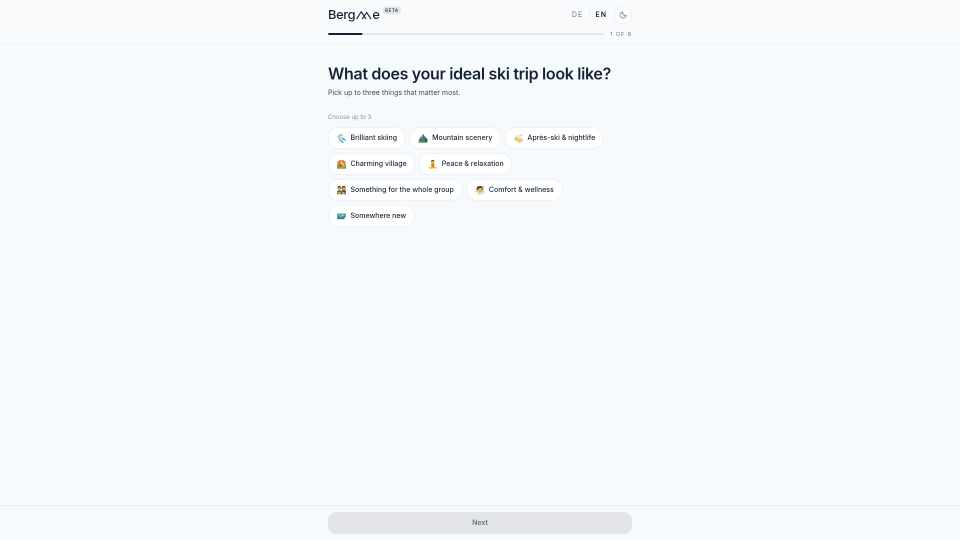
To solve a common ski trip planning problem—too many resort options, too many train routes, and no quick way to tell which combination fits your trip—this questionnaire can help. A few minutes spent answering questions about group size, preferred departure point, and tolerance for transfers helps surface fitting options without requiring an email address first.
- The questionnaire asks about starting point and transfer tolerance to filter resorts accordingly.
- It highlights station-in-resort options, as that detail changes the whole trip.
- It shows curated trips so you compare complete options rather than assembling train legs and hotel nights separately.
If you would rather skip the manual research and see curated options matched to how you actually want to travel, try our hand-picked ski trips and see what fits.
FAQ
What ski resorts can I get to by train?
Many Alpine resorts have direct or near-direct rail access, including Zermatt, St. Anton, Bardonecchia, and the French valley resorts reachable from Bourg-Saint-Maurice and Moutiers. Station-in-resort options like these cut out a separate shuttle transfer, which simplifies the trip considerably.
What ski resorts does Amtrak go to?
The Amtrak Winter Park Express connects Denver directly to Winter Park Resort, running on weekends and holidays through the winter season. It is currently one of the few dedicated ski-train services operating in the United States.
How much does a snow train ticket cost?
Eurostar Snow fares for the 2026/27 season start from about £99 one way, though typical fares run closer to £125 for Standard and £175 for Eurostar Plus, with free ski baggage included in either case. The exact fare you see depends on how far ahead you book and which travel date you choose within the Saturday-out, Sunday-back season window.
Where do billionaires go to ski?
Definitions of the top ultra-luxury ski destinations vary, but the term is generally applied to a handful of exclusive, high-end Alpine resorts rather than any single official list. We do not have a sourced ranking to point to here, so it is worth treating any specific claim about a “billionaire’s resort” with some caution.
Sources
Use these directly when booking or confirming timetables rather than relying on secondhand summaries.
- Eurostar Ski Train 2026/27: Is It Worth It? | TripProf
- Winter Park Express press release | Amtrak media
- Skiing Europe by train: The complete guide | The Wanders