27 August 2026
12 Snow-Reliable Ski Resorts in the Alps, with a Practical Checklist
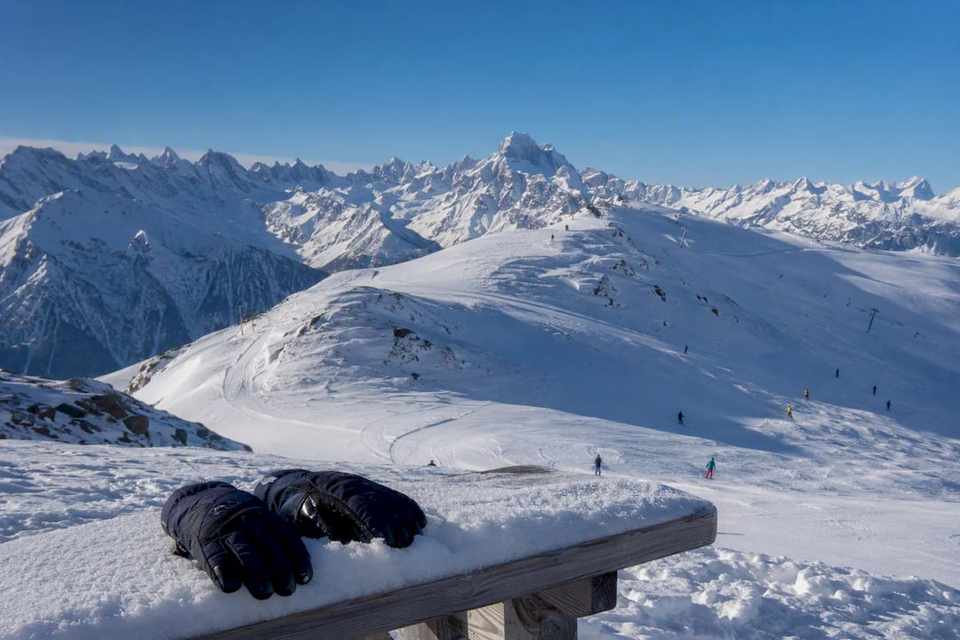
For maximum snow reliability, glacier and high-Alpine resorts such as Zermatt, Val Thorens, Hintertux Glacier, Sölden and Kaunertal are excellent choices. The key factors are elevations above 2,500 metres, glacier access and a high proportion of slopes covered by snowmaking. Families will find more dependable conditions at a gentler pace in Obertauern and Kühtai, while advanced skiers and freeriders can get the longest season on the glaciers.
In short:
- Glacier resorts such as Zermatt, Sölden and Hintertux Glacier offer the longest period of reliable snow, with up to 286 ski days per year and year-round operation.
- High-Alpine, non-glacier resorts such as Obertauern and Kühtai are particularly suitable for families and beginners thanks to shorter distances, moderate elevations and high snow-reliability ratings.
- For dependable season planning, at least 70% snowmaking coverage and elevations of 2,500 metres or more are essential for maintaining optimal conditions even when natural snowfall is limited.
- Environmental criteria should also inform the decision. Although glacier facilities can save energy, they still consume energy and water—something to consider when choosing a sustainable resort.
- Comparison services such as Bergme make it easier to find a ski holiday that quickly matches your needs, without relying on lengthy resort descriptions and hours of independent research.
Table of Contents
- Snow-Reliable Ski Resorts at a Glance: The Most Dependable Options in the Alps
- How Is Snow Reliability Measured? Criteria and Their Practical Significance
- Glacier Resorts or High-Alpine Non-Glacier Resorts: Which Is Right for You?
- Practical Checklist: How to Find the Right Resort for Your Group
- Bergme: How to Find the Right Snow-Reliable Ski Resort Faster
- What Role Does Snowmaking Play, and What About the Environment?
- When Is Ski Season, and What Does “Snow-Reliable” Really Mean?
- Why the Simple Altitude Formula Often Falls Short
- Planning a Ski Holiday Without Hours of Resort Comparisons
- Sources
- FAQ
Snow-Reliable Ski Resorts at a Glance: The Most Dependable Options in the Alps
Anyone planning a ski trip who wants to avoid unpleasant surprises such as green edges along the pistes needs hard figures, not vague advertising claims. The following list ranks the twelve most dependable resorts by altitude, glacier status and season length, and explains who each destination suits best.
1. Zermatt (Matterhorn Ski Paradise)
This Swiss ski area reaches 3,883 metres at the Klein Matterhorn, giving it some of Europe’s highest pistes. Year-round skiing is the rule rather than the exception here, as the glacier terrain and residual snow preserve conditions well into summer. The resort suits leisure skiers and advanced visitors who value panoramic views and long runs, but is less suitable for beginners who tire quickly at altitude.
2. Val Thorens
At elevations between 2,300 and 3,230 metres, Val Thorens lies at the heart of Les Trois Vallées and is considered one of France’s highest ski resorts, according to ADAC Maps. The season often begins in late November and lasts into May. Freeriders and sporty groups benefit from the altitude, while families can also find quieter pistes in the lower sectors.
3. Hintertux Glacier
Hintertux Glacier extends from 1,500 to 3,250 metres and forms part of the Ski & Glacier World Zillertal 3000. It is one of the few resorts with genuine year-round operation because, according to Wikipedia, its glacier zone can be operated independently of the winter season. This makes it particularly attractive to training groups and ambitious skiers who want to practise in autumn or early summer.
4. Sölden
Sölden connects two glaciers—the Rettenbach and Tiefenbach glaciers—and reaches elevations of up to 3,340 metres. ADAC Maps regularly lists the Ötztal resort among the most snow-reliable areas in the Alps. Its combination of a reputation for après-ski and a sporty range of pistes appeals especially to younger, active groups.
5. Kaunertal Glacier
Kaunertal lies between roughly 2,100 and 3,108 metres and specifically promotes resource-efficient snowmaking. According to the operator, modern, fully automated systems use up to 30% less energy than older systems. The resort is well suited to fit families and winter-sports enthusiasts who consider sustainability important when choosing a destination.
6. Pitztal Glacier
Pitztal Glacier reaches 3,440 metres, making it one of Austria’s highest ski resorts. Around 70% of the pistes in many Austrian resorts can be covered with machine-made snow, as the operator itself documents, while glacier zones need considerably less. The resort suits experienced skiers seeking quieter, less crowded slopes.
7. Saas-Fee
This glacier village in Valais spans elevations from 1,800 to 3,600 metres and is considered one of Switzerland’s most snow-reliable destinations. Its altitude ensures consistent conditions well into spring. Saas-Fee is suitable for families and leisure skiers who appreciate both a car-free setting and Alpine panoramas.
8. Obertauern
Obertauern lies entirely above 1,630 metres, which is unusually high for a non-glacier resort. Skiresort.info regularly awards the region top marks for snow reliability. Its compact, family-friendly piste network makes Obertauern a classic choice for beginners and families with young children.
9. Ischgl
Ischgl and Samnaun together form the Silvretta Arena ski area, which reaches almost 2,900 metres. ADAC Maps also counts the region among Tyrol’s reliably snow-sure destinations. Sporty groups and night owls will find a combination of challenging descents and a lively village centre.
10. Zugspitze
Germany’s highest mountain offers pistes up to 2,720 metres, making the Zugspitze ski area one of the country’s few genuinely snow-reliable destinations. Its season is shorter than those of the major glacier resorts, but access from southern Germany is straightforward. The area is a good fit for day-trippers and beginners who do not want a long journey.
11. Kühtai
Kühtai lies between 2,020 and 2,520 metres and is one of Tyrol’s highest village ski resorts. Its compact size and moderate difficulty make it a popular destination for families and ski schools. Visitors seeking a vast ski area will find it less suitable than the major glacier arenas.
12. Aletsch Arena
The region around Fiesch and Riederalp reaches elevations of roughly 2,869 metres, with the Alps’ largest glacier as its backdrop, and also earns top marks for snow reliability from Skiresort.info. Quieter pistes and spectacular views of the Aletsch Glacier particularly appeal to leisure skiers and families.
How Is Snow Reliability Measured? Criteria and Their Practical Significance
Snow reliability is not a matter of feeling; it can be assessed using clear metrics. Travellers who understand these criteria can evaluate any resort description themselves instead of relying on advertising copy.
- Altitude distribution of the pistes: The share of pistes above 2,000 to 2,500 metres is a key indicator because cold temperatures and natural snow remain considerably more stable in this zone.
- Glacier status: Glacier resorts often have a longer operating period and tend to require less snowmaking because their water sources are colder.
- Share of pistes with snowmaking: In many Austrian ski resorts, around 70% of the pistes can be covered with machine-made snow; in parts of South Tyrol, the figure reaches 90%. This significantly extends the usable season, especially during the cold months from December to February.
- Geographical location: Northwest-facing slopes and regions influenced by Adriatic low-pressure systems receive fresh snow more often than south-facing slopes or sheltered valleys.
Pro tip: For every resort, check not only the maximum elevation but also the base station. A resort that starts at 2,800 metres is more dependable than one that merely reaches that altitude at its highest point.
The industry uses the 100-day rule as a business rule of thumb: a ski resort is considered economically viable if it can offer at least 100 days of skiing in seven out of ten winters. This metric influences how operators invest in snowmaking systems and infrastructure.
Glacier Resorts or High-Alpine Non-Glacier Resorts: Which Is Right for You?
Both types of resort provide dependable snow, but in different ways and with different trade-offs.
Glacier ski resorts have significantly longer operating periods on average, ranging from 225 to 286 ski days, while conventional resorts often manage only around 130 days. Glaciers come with their own challenges, however: environmental concerns surrounding ice coverings and water extraction, sometimes longer journeys to the mountain station, and higher ticket prices.
- Advantages of glaciers: Longer season, often less need for snowmaking, reliably cold high-altitude locations.
- Disadvantages of glaciers: Higher costs, sometimes more difficult access, and the need to adjust physically to thinner air.
- Advantages of high-Alpine, non-glacier resorts: Generally good snowmaking, often more family-friendly infrastructure and shorter distances.
- Disadvantages of high-Alpine, non-glacier resorts: Greater dependence on the current winter season and fewer reserves when natural snow fails to arrive.
Pro tip: At elevations of around 2,500 metres and above, allow yourself and your group a day to acclimatise. Headaches and faster fatigue are not uncommon for people unaccustomed to the altitude, as specialist articles on the subject note.
Practical Checklist: How to Find the Right Resort for Your Group
Before booking, it is worth carrying out a brief, honest reality check with your travel group.
- Set your travel dates: December and January often call for higher elevations or glaciers; in March and April, lower-lying areas are usually a safer bet too.
- Assess the group’s fitness and age: Children and people unaccustomed to altitude will have a more relaxed experience in resorts such as Obertauern or Kühtai than at 3,000 metres.
- Rank your priorities: Snow reliability, cost and accessibility can rarely all be maximised at once, so which criterion matters most?
- Check webcams and piste status: Current images and the day’s percentage of open pistes tell you more than any forecast.
- Consider the trip length: For a weekend, a short journey often matters more than a few hundred extra metres of altitude; for a two-week holiday, a glacier region is more worthwhile.
Bergme: How to Find the Right Snow-Reliable Ski Resort Faster
Hand-picked offers save exactly the time normally required to research twelve resorts and their snowmaking data yourself. Bergme filters by altitude, glacier status and season window, then shows suitable trips for your group size within minutes.

One example is the New Year’s ski holiday at Hotel Bären in Interlaken, including a ski pass, designed for guests who want a dependable turn of the year with reliable piste conditions. At Bergme, author Eduard contributes editorial expertise in ski travel and resort comparisons, placing such offers in the broader context of snow reliability and season length.
| Criterion | Why It Matters |
|---|---|
| Altitude | Determines the share of natural snow and season length |
| Glacier status | Reduces dependence on snowmaking |
| Season window | Shows when a resort can realistically be booked |
| Suitability for the group | Determines whether families, beginners or freeriders will benefit |
What Role Does Snowmaking Play, and What About the Environment?
Without snowmaking, many winter seasons at mid-altitudes would be significantly shorter and less reliable. In numerous Austrian ski resorts, around 70% of the piste area can be covered with machine-made snow; in parts of South Tyrol, the figure is as high as 90%. This gives operators a buffer against a lack of natural snowfall, especially during the crucial weeks around Christmas.
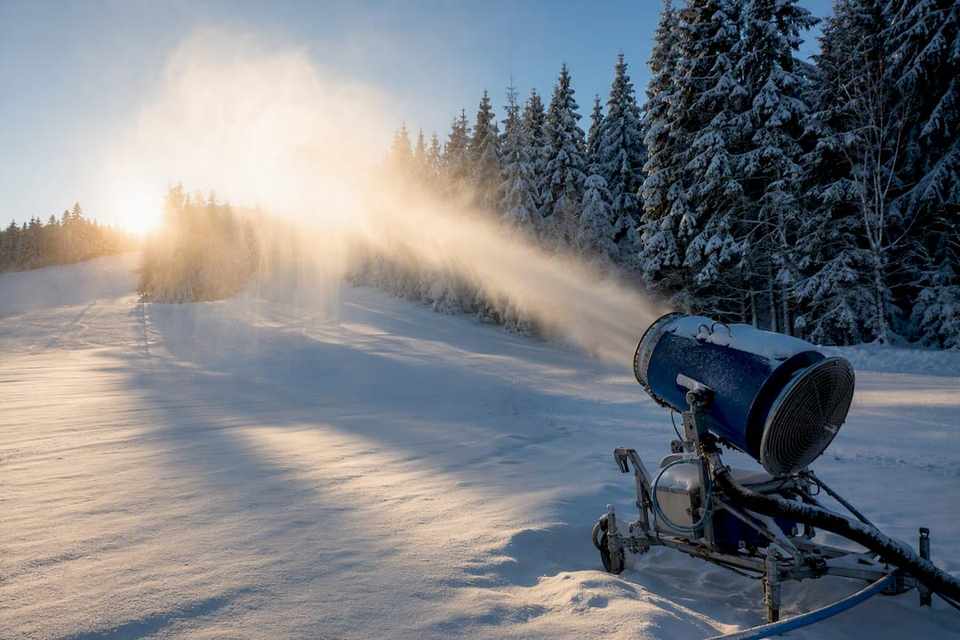
Glacier zones benefit from a physical advantage: colder water and consistently low temperatures reduce the systems’ energy requirements compared with lower-lying resorts. Operators such as Kaunertal Glacier also use fully automated systems that, according to their own figures, consume up to 30% less energy than older equipment. Water extraction from streams and reservoirs is subject to official limits to prevent excessive strain on the natural environment.
Nevertheless, snowmaking still requires energy and water, even though modern technology is more efficient than it once was. Travellers who prioritise sustainability when choosing a resort will often find more specific information in the environmental reports of major glacier resorts than from smaller, conventional ski areas without their own sustainability communications.
When Is Ski Season, and What Does “Snow-Reliable” Really Mean?
The traditional Alpine season runs from December to April. Glacier resorts such as Hintertux Glacier or Zermatt often extend this window into May or even operate parts of their piste networks year-round. ADAC Maps regularly lists high-altitude destinations with seasons running from October or November to May—considerably longer than the average at lower elevations.
In practice, “snow-reliable” does not mean that fresh snow is guaranteed every day. It means that a resort’s altitude, glacier status or snowmaking infrastructure keeps its pistes skiable throughout the planned season. Experts observe decade-scale fluctuations in snowfall and warn that resorts below roughly 1,500 metres will suffer more from climate change over the long term than high-Alpine regions.
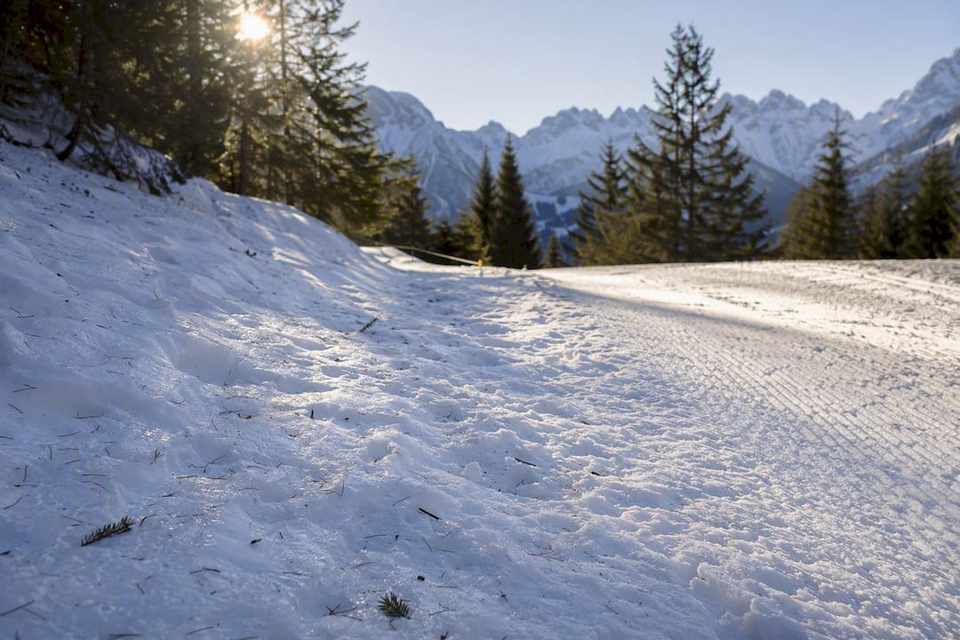
Anyone booking in December or January should therefore examine current snow conditions more carefully at resorts below 1,800 metres than at a glacier destination. By February and March, the situation improves at almost all elevations because the season’s accumulated fresh snowfall is usually sufficient by then.
Why the Simple Altitude Formula Often Falls Short
The usual recommendation is simple: the higher, the more reliable. That is broadly true, but it overlooks the fact that season length and snowmaking quality often have a greater impact on the actual skiing experience than the summit elevation alone.
What many travellers underestimate is that the 100-day rule is not a marketing term; it influences operators’ real investment decisions. Anyone who understands that snowmaking facilities and lift capacity are planned around this metric will read resort descriptions differently. My view: families are often better served by high-Alpine, non-glacier resorts such as Obertauern or Kühtai than by the largest glacier, because the infrastructure and pace are better suited to children. Anyone who wants to accumulate as many ski days as possible each year, however, will find it difficult to beat glacier destinations such as Hintertux or Zermatt.
— Eduard
Planning a Ski Holiday Without Hours of Resort Comparisons
Researching elevations, glacier status and snowmaking coverage, as this article does, takes time that many travellers would rather spend on the holiday itself. Bergme handles precisely this step: its hand-picked offers and comparison of 250 ski resorts in the Alps produce a suitable selection within minutes, with no registration or email address required.
Instead of comparing twelve resorts yourself, you answer a few short questions on Bergme about your travel dates, group size and budget, then receive suitable suggestions with direct links to the provider. For anyone looking to celebrate New Year with dependable snow, the New Year’s ski holiday at Hotel Bären in Interlaken, including a ski pass, shows what such an offer can look like in practice. Travellers seeking additional accommodation ideas for Austria can also find further recommendations at Paradise Travel. Take a look at the offer that suits you and start planning for next season.
Sources
- Snowmaking — Pitztal Glacier
- Bergsteiger
- Hintertux Glacier — Wikipedia
- Kaunertal Glacier — Snowmaking & Sustainability
- Snow-Reliable Ski Holidays: These Ski Resorts Are Worth Considering — ADAC Maps
FAQ
Which ski resort has the most reliable snow?
With elevations reaching 3,250 metres and almost year-round operation, Hintertux Glacier is considered one of the most snow-reliable resorts in the Alps, closely followed by Zermatt and Val Thorens.
Which ski resorts in Austria are particularly snow-reliable?
Hintertux Glacier, Pitztal Glacier, Kaunertal and Sölden are among Austria’s most reliable destinations, along with high-Alpine resorts such as Obertauern and Ischgl.
Where is snow guaranteed in winter?
There is no 100% guarantee anywhere, but glacier resorts above 2,500 metres, such as Zermatt, Val Thorens and Hintertux, come closest because their altitude and glacier terrain help preserve natural snow throughout the season.
Which small ski resorts in Austria have reliable snow?
Despite its compact size, Kühtai stands out for its high elevation of between 2,020 and 2,520 metres. Obertauern lies entirely above 1,630 metres and regularly receives top marks for snow reliability from Skiresort.info.