20 September 2026
Match Late Season Spring Skiing to Corn Windows 10:30–11:00 a.m.
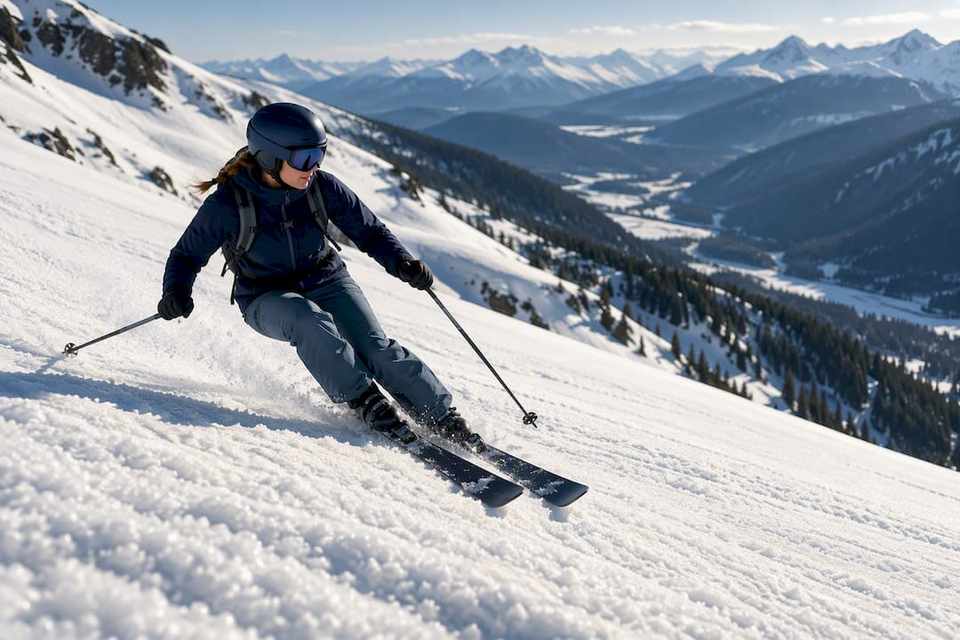
Spring skiing means skiing the daily melt–freeze cycle, and getting the corn window right can hand you the season’s best turns. Overnight freezing followed by daytime warming softens the top layer of snow into smooth, forgiving corn, usually peaking between 10:30 and 11:00 a.m.. High-elevation resorts like Mammoth Mountain and Arapahoe Basin stretch the season into late spring, while backcountry travelers face rising wet-slide risk. Services can help match travelers to the right elevation and dates before booking.
TL;DR:
- The best spring corn snow occurs between 10:30 and 11:00 a.m. on clear, sunny days in high-elevation, north-facing resorts.
- Resorts like Mammoth Mountain, Arapahoe Basin, Snowbird, Alta, and Big Sky benefit from elevation and terrain that preserve snow deep into late spring.
- Adjust your gear for warm temperatures with wax, wider skis, layered clothing, and sun protection to optimize spring skiing conditions.
- Backcountry spring skiing shifts risk from slabs to wet slides, requiring earlier start times and careful terrain selection based on real-time conditions.
- Live terrain reports are essential to match your trip with current snowpack and avoid slush or hazards, making flexible planning crucial in spring.
Table of Contents
- What Causes Corn Snow, and When Does It Peak?
- Which Regions and Resorts Ski Best in Spring?
- How Should You Adjust Gear and Technique for Spring?
- What Makes Backcountry Spring Skiing More Dangerous?
- How Do You Plan a Spring Ski Day Around the Corn Window?
- Is Spring Skiing Worth the Trip?
- A Practical Take on Timing and Trip Matching
- Let Bergme Match You to the Right Late-Season Trip
- Sources
- FAQ
What Causes Corn Snow, and When Does It Peak?
Corn snow forms through a specific temperature dance. Overnight lows drop the snowpack surface into the teens or 20s Fahrenheit, freezing it into a firm crust. Daytime warming, ideally into the 30s or low 40s Fahrenheit, softens that crust from the top down. Once the top 2 to 3 inches turn granular and rounded, you get corn: forgiving, grippy snow that skis like nothing else on the mountain, according to OpenSnow’s breakdown of the phenomenon.
Clear skies and light wind extend the window because direct sun does the softening work efficiently. Overcast days or wind can delay it by hours or kill it entirely, leaving the surface either still frozen or turned to mush too fast.
Reading the snowpack takes practice, but a few signs tell you where you stand:
- Frozen granular surface that squeaks underfoot: still in the freeze phase, wait.
- Surface turning matte and slightly grabby under ski edges: corn is arriving.
- Snow balling on ski bases or boots: you’ve moved past corn into slush.
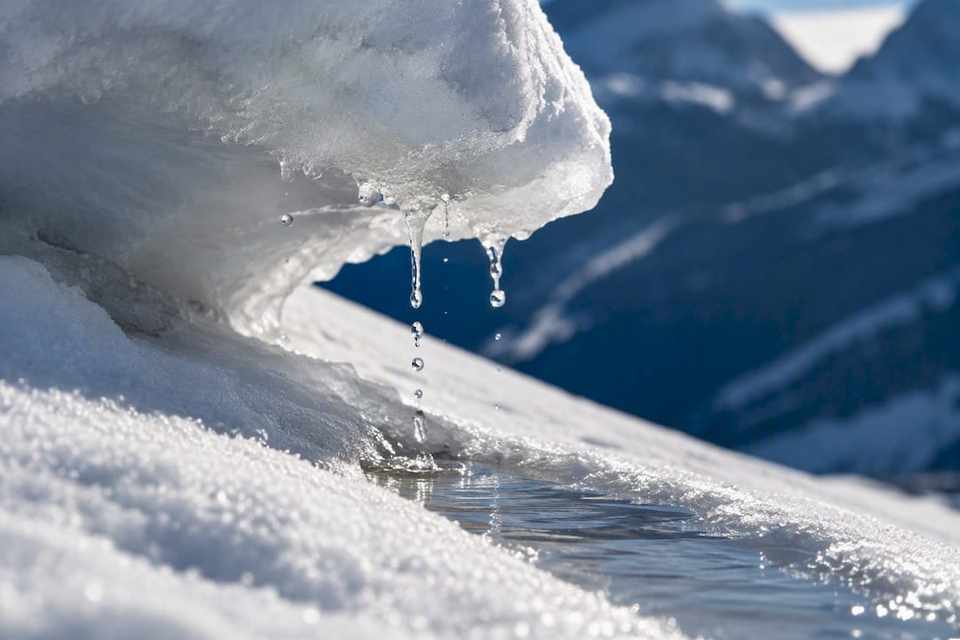
- Standing water on the surface or visible saturation: hazard territory, especially off-piste.
Prime corn window: On a clear day with typical spring temperatures, south facing slopes usually peak between 10:30 a.m. and 11:00 a.m., before conditions slide toward slush by early-to-mid afternoon, per Powder’s corn-skiing guide.
Which Regions and Resorts Ski Best in Spring?
Elevation is the single biggest predictor of late-season coverage. Higher terrain stays colder longer, holds snowpack deeper into the calendar, and buys you more days above the freeze-thaw threshold that makes corn possible. North-facing slopes matter almost as much, since they dodge direct sun exposure and keep snow from cooking off too early in the season.
A handful of resorts consistently deliver reliable spring conditions because of where they sit on the map:
- Mammoth Mountain, California: base elevation alone tops 7,900 feet, and the resort routinely stays open past Memorial Day thanks to Sierra snowpack depth, according to National Geographic’s roundup of spring-skiing resorts.
- Arapahoe Basin, Colorado: one of the highest lift-served areas in North America, often pushing its season into June.
- Snowbird, Utah: steep, high-elevation terrain and heavy annual snowfall extend rideable corn well past when lower resorts have gone brown.
- Alta, Utah: similar elevation advantage to its neighbor Snowbird, with terrain that holds snow on shaded aspects.
- Big Sky Resort, Montana: massive vertical and high-alpine terrain give it staying power most Rocky Mountain resorts can’t match.
Before booking a late-season trip, check the resort’s current snowpack numbers, daily terrain reports, and posted closing date. Those three data points matter more in April than any seasonal average, since spring conditions can shift week to week depending on how the winter played out.
How Should You Adjust Gear and Technique for Spring?
Spring snow behaves differently than midwinter powder, and your setup should shift with it. A few adjustments make the difference between a great day and a frustrating one.
- Switch to warm-weather wax. Cold-weather wax turns sticky and slow once temperatures climb into the 30s and 40s. Carry rub-on wax in your pocket and apply it midday if your bases start dragging, and get a proper spring tune before the trip. According to Christy Sports’ spring playbook, a warm-weather structure reduces the “gloppy” feeling that shows up in wet snow.
- Consider skis in the 80 to 90mm waist range. That width balances edge grip on firm morning surfaces with enough float to handle softened afternoon corn, without feeling like a dedicated powder ski that overworks your legs on hardpack.
- Layer for big temperature swings. Mornings can start in the teens and finish in the 40s, so a base layer plus a packable midlayer beats a heavy parka you’ll be stripping off by 10 a.m.
- Protect your skin and eyes aggressively. Alpine sun in spring is stronger than most skiers expect, and sun safety guidance from Juillet Juillet recommends zinc-based SPF 50+ sunscreen reapplied through the day, along with sunglasses or goggles rated for high UV exposure.
- Chase the groomers first, then follow the sun. Morning-groomed runs soften more predictably than ungroomed terrain, so start there and use daily grooming reports to plan your route as the day warms.
Pro Tip: Keep your edges sharp for early runs when the surface is still frozen. Once corn sets in, edge sharpness matters less than picking the right aspect at the right hour.
What Makes Backcountry Spring Skiing More Dangerous?
Backcountry risk in spring shifts away from the slab avalanches that dominate winter concern and toward wet slides triggered by solar warming. As the sun heats the surface, meltwater percolates down through the snowpack and weakens the bonds holding it together, and this process is most active in the afternoon, once several hours of direct sun have done their work.
That timing shift changes how you should plan a tour. Start earlier than you would in midwinter, and check the morning’s avalanche forecast before leaving the car, not the night before. As the day warms, favor lower-angle terrain or shift toward north-facing aspects, which lag behind sun-exposed slopes by an hour or more.
A few pieces of gear matter specifically in spring conditions:
- Skins for the ascent, plus ski crampons for icy early-morning traverses.
- Hybrid crampons and a lightweight ice axe for steeper, firmer pitches before things soften.
- Breathable, sun-protective layers, since spring tours run warmer and sunnier than winter ones.
Know when to turn around. Roller balls or small debris rolling downhill, pinwheeling snow, and audible rockfall are all signals that the snowpack is destabilizing in real time, according to GearJunkie’s backcountry spring guide. When conditions look marginal, a conservative objective and an earlier turnaround beat pushing for the summit.
Pro Tip: If you see standing water on the snow surface or hear dripping from cornices above you, that’s your cue to get off that aspect immediately, not later in the run.
How Do You Plan a Spring Ski Day Around the Corn Window?
A good spring day follows a rhythm, not a fixed schedule. Structure your morning around chasing the sun clockwise across the mountain.
- Take first chair on groomed runs while the surface is still firm, since grooming smooths the freeze-thaw transition and softens more evenly.
- Move to east and south-facing terrain as the sun climbs, timing your best runs for that mid-morning corn window.
- Migrate to higher elevation or north-facing slopes by early afternoon, since those aspects lag behind and hold quality snow longer.
- Stop before the slush sets in fully, typically mid-afternoon, both to protect your knees on heavy snow and to spare your base and edges unnecessary wear.
Check terrain and grooming reports that same morning rather than relying on older data, since conditions can flip within a single day depending on cloud cover and overnight lows.
Is Spring Skiing Worth the Trip?
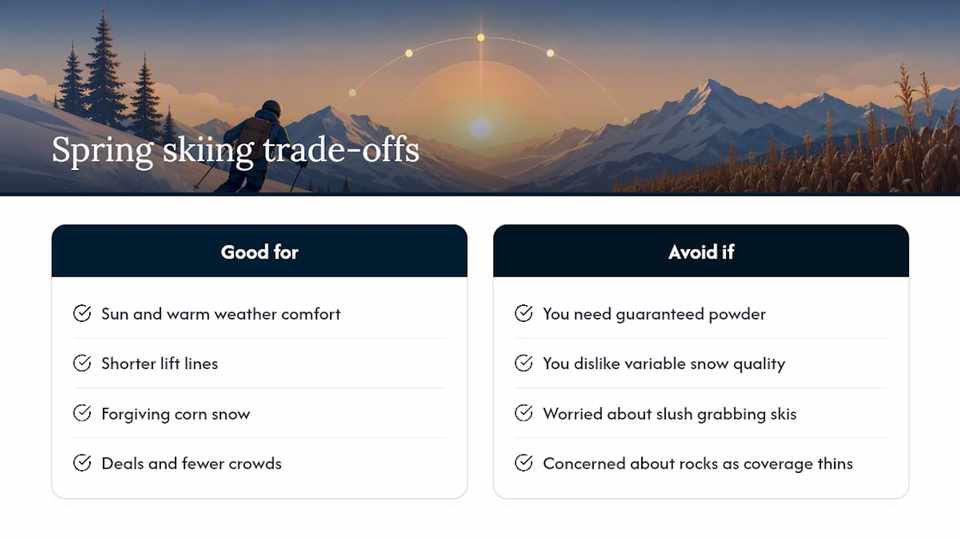
Spring rewards travelers who value sun, shorter lift lines, and forgiving corn over guaranteed powder. Deals often follow the crowds out the door, and on-mountain events pick up as the season winds down.
The trade-offs are real: snow quality swings hard within a single day, slush can grab skis and ankles, rocks emerge as coverage thins, and backcountry wet-slide risk climbs through the afternoon. Skiers who value flexibility, warm-weather comfort, and don’t mind variable conditions gain the most. Powder purists chasing bottomless days should look elsewhere on the calendar.
A Practical Take on Timing and Trip Matching
Live terrain reports beat memory or last week’s forecast every time. The corn window moves across the mountain fast, and a trip matched by elevation and date, the way Bergme’s questionnaire approach works, cuts down on wasted travel to a resort that’s already turned to slush.
— Eduard
Let Bergme Match You to the Right Late-Season Trip
An alternative to endless resort-by-resort research for spring skiing is to answer a short questionnaire to get trip options matched to your dates, ability, and the elevation that actually holds corn snow into late season.

That matching approach filters out mismatches before you spend a minute browsing, comparing curated packages against your travel window and group preferences rather than handing you a generic list of ski towns. If you’re weighing a late-April or May trip and want options that account for elevation and current conditions, browse hand-picked ski trips and see what fits your dates.
Sources
- Spring Skiing, Explained
- Corn snow skiing (how-to) — Powder
- Best resorts for spring skiing — National Geographic
- Essential guide to backcountry spring skiing — GearJunkie
FAQ
Where Is the Best Spring Skiing?
High-elevation resorts with north-facing terrain hold the best spring conditions, including Mammoth Mountain, Arapahoe Basin, Snowbird, Alta, and Big Sky Resort. Their elevation, often above 9,000 to 10,000 feet, keeps snowpack colder and deeper into the season than lower-elevation resorts can manage.
Can You Still Ski in April in Colorado?
Yes. Colorado’s high-elevation resorts, particularly Arapahoe Basin, routinely operate well into April and sometimes into June depending on snowpack. Conditions shift daily, so checking terrain reports the morning of your trip matters more than relying on a general season calendar.
Is It Possible to Ski in March?
March is one of the most reliable months for classic spring skiing, since most North American resorts are still fully open and daily melt-freeze cycles are well established. Expect firm mornings, a corn window typically forming between 10:30 and 11:00 a.m., and softer afternoons.
Where Is Best to Ski in April?
April favors the same high-elevation resorts that hold snow late: Mammoth, A-Basin, Snowbird, Alta, and Big Sky all tend to have strong April conditions when the winter snowpack has been solid. If you’re unsure which of these fits your travel dates and ability level, a matching service like Bergme can narrow the options based on current conditions and your preferences.