5 November 2026
Whistler vs Banff: Which Canadian Ski Trip Fits Your Group?

Whistler suits skiers who want one very large, connected ski area and a purpose-built village where lifts, lodging and restaurants sit close together. Banff suits those who want three different mountains, a Rocky Mountain national park setting and scenery as a core part of the trip. The two resorts are in different provinces, roughly nine hours apart by road, so the decision is usually made on snow type, atmosphere, budget and how the group spends time off the slopes.
TL;DR
- Whistler Blackcomb is one large interconnected ski area of over 3,300 hectares, with coastal snow that can be heavy at lower elevations.
- Banff means three separate resorts in a national park, typically with drier Rocky Mountain snow and more dramatic surroundings.
- Both seasons run from roughly November to late May, so spring skiing is possible at either.
- Whistler tends to cost more for lodging and dining; Banff can be cheaper, especially when staying in nearby Canmore.
- Whistler is reached from Vancouver in about two hours; Banff from Calgary in about 90 minutes.
Table of Contents
- The core difference: one big mountain complex or three mountains
- Terrain and snow
- Village atmosphere, dining and nightlife
- Cost: lodging, lift tickets and park fees
- Getting there
- Which one suits which trip
- Our perspective
- Matching the trip to the group
- FAQ
- Sources
The core difference: one big mountain complex or three mountains
The clearest split is structural. Whistler Blackcomb is North America’s largest year-round outdoor resort, covering over 3,300 hectares across two mountains joined by the PEAK 2 PEAK Gondola. Skiers can spend a full week without repeating a run, and every lift is reached from one base area.
Banff works differently. The area is usually described as three resorts, Banff Sunshine, Lake Louise and Mt Norquay, each with its own base, lift tickets and character. One analysis frames the choice as a single colossal interconnected experience versus varied experiences across three unique mountains. Moving between them involves a short drive or shuttle rather than a lift.
Another comparison notes that Banff is shaped by its national park setting, while Whistler is engineered for efficient movement between accommodation and lifts. That difference shows up in everything from where visitors sleep to how they spend evenings.
Terrain and snow
Size and layout
Whistler Blackcomb is the larger of the two by a clear margin. Published comparisons put its terrain at more than 8,000 acres, against roughly 6,000 acres spread across the three Banff resorts, according to one 2026 comparison. The practical consequence is that Whistler is a single-ticket, single-base experience, while Banff rewards groups willing to rotate between areas.

For mixed-ability groups, both work. Whistler’s size means beginners, intermediates and experts can separate in the morning and meet at midday on the mountain. In Banff, the usual approach is to assign each resort to a different day or ability mix, which suits groups that like variety.
Snow character
Whistler sits in the Pacific Coast Mountain Range. Its official guide says the location creates abundant snowfall, often enhanced by coastal moisture, and that lower-elevation snow can occasionally be wet. Skiers who want consistently dry powder will find that Rocky Mountain snow around Banff is typically described as drier and lighter, while Whistler’s is wetter and heavier, per the same 2026 comparison.
Temperature follows the same pattern. Coastal Whistler tends to be milder, and Banff is colder with a wider temperature range. That affects clothing choices: Banff trips call for serious insulation layers, face protection and hand warmers, while Whistler trips call for waterproof shells as much as warm ones.
Season length
Whistler skiing runs from November to May, with the upper mountain often continuing later. Banff’s three resorts typically operate from early November through late May, and Sunshine Village often runs into the Victoria Day weekend, according to a 2026 to 2027 comparison. For spring skiing, both are credible. Exact opening and closing dates change each year, so the resort’s official operating calendar is the page to check before booking.
| Factor | Whistler | Banff area |
|---|---|---|
| Layout | Two connected mountains, one base | Three separate resorts |
| Terrain (reported) | 8,000+ acres | About 6,000 acres combined |
| Typical snow | Coastal, can be wet and heavy | Rocky Mountain, drier and lighter |
| Season | November to May | Early November to late May |
| Setting | Purpose-built pedestrian village | Town inside a national park |
Village atmosphere, dining and nightlife
The two bases feel different, and visitor discussion repeats the same themes. Whistler is often described as the livelier party town, with a stronger restaurant and bar scene and more summer entertainment. Banff is described as a more compact, small-town setting where the mountains surrounding the streets are the main attraction. One 2025 comparison for non-skiers describes Banff’s evenings as more intimate, with firelit taverns, bistros and alpine bars; this is a visitor impression rather than a measured ranking.
For groups, the pattern is usually:
- Groups of friends who want nightlife and ski-in, ski-out convenience: Whistler Village keeps lodging, lifts, bars and dining within walking distance.
- Couples who want scenery and a quieter evening: Banff, or Lake Louise for a more remote feel.
- Families: both work. Whistler’s walkable base reduces transfers with children; Banff offers wildlife, frozen lakes and winter activities away from the slopes.
- Non-skiers in the group: Banff offers more to see by default, since the national park is the attraction. Whistler offers shopping, spas and village activities.
One point of confusion in travel planning: Lake Louise and Banff townsite are different bases. Lake Louise is a smaller settlement near the ski area of the same name, with less dining and nightlife. Banff townsite has the larger selection and is a short drive from Mt Norquay and Sunshine.
Cost: lodging, lift tickets and park fees
Published comparisons agree on direction rather than exact amounts. One 2026 travel comparison says that Whistler is generally more expensive for lodging and dining, with high walk-up lift ticket prices, while Banff is often more budget-friendly but charges a national park entry fee. Multi-resort passes can lower the cost per day at Whistler, and buying lift tickets in advance is typically cheaper than at the window at either destination.
Current lift ticket and park fee amounts change each season, so they should be read from the resort and park pages at the time of booking. A reliable approach is to compare total trip cost rather than ticket price alone:
- Lodging per night. Whistler Village and Banff townsite are both premium locations. Staying slightly outside the core lowers the nightly rate.
- Lift access. Count days actually on snow. A five-day ticket on one connected mountain differs from rotating between three resorts with separate tickets.
- Transport. Whistler’s village is walkable. Banff stays often involve shuttles or a rental car between resorts.
- Food. Whistler’s restaurant prices run higher in the village core. In both places, groceries and a kitchen in the room reduce the daily total.
- Park fee. Banff visitors pass through a national park and should check current entry fee rules before arriving.
The Canmore option
Canmore sits about 20 minutes from Banff and is a popular alternative base. One local guide reports that lodging there is often 30 to 40% cheaper than in Banff townsite. The trade-off is a daily drive, which is manageable for groups with a car and less convenient for those relying on shuttles.
Getting there
Whistler is reached from Vancouver International Airport along the Sea-to-Sky Highway, about a two-hour drive. Another guide suggests allowing roughly 2.5 to 3 hours by bus or car once airport procedures and winter conditions are included, which is the safer planning figure.
Banff is about 90 minutes from Calgary, and the two destinations are roughly nine hours apart by road. Visiting both in one trip is therefore a major commitment. A domestic flight between Vancouver and Calgary is a more realistic option for travelers who want to combine them.

Both routes involve winter mountain driving. Travelers unfamiliar with it often prefer a pre-booked shuttle or private transfer over driving a rental car after a long flight.
Which one suits which trip
| Trip type | Better fit | Why |
|---|---|---|
| One week, mixed-ability group | Whistler | One base, one connected ski area, walkable village |
| Scenery-focused couple | Banff or Lake Louise | National park setting and quieter evenings |
| Budget-conscious group | Banff, staying in Canmore | Lower reported lodging costs |
| Friends who want nightlife | Whistler | Larger village bar and restaurant scene |
| Skiers who want variety | Banff | Three mountains with different terrain |
| Spring skiing | Either | Both seasons extend into May |
Another comparison puts it plainly: Whistler is best for those wanting a comprehensive resort experience for a full week, while Banff or Lake Louise suit those prioritizing scenery and a classic Rocky Mountain atmosphere.
For travelers who want to go beyond the lift system, luxury heli-skiing planning is a separate category of trip with its own logistics, and it is worth understanding before adding it to either destination.
Our perspective
We built BergMe around a simple observation: a comparison like Whistler versus Banff is rarely about which resort is better. It is about which one matches a particular group.
The same two destinations give different answers for a family with two children, a couple on a first winter trip and six friends splitting costs. Terrain size, snow type, how far the bed is from the lift and what a non-skier does all weigh differently for each of them.
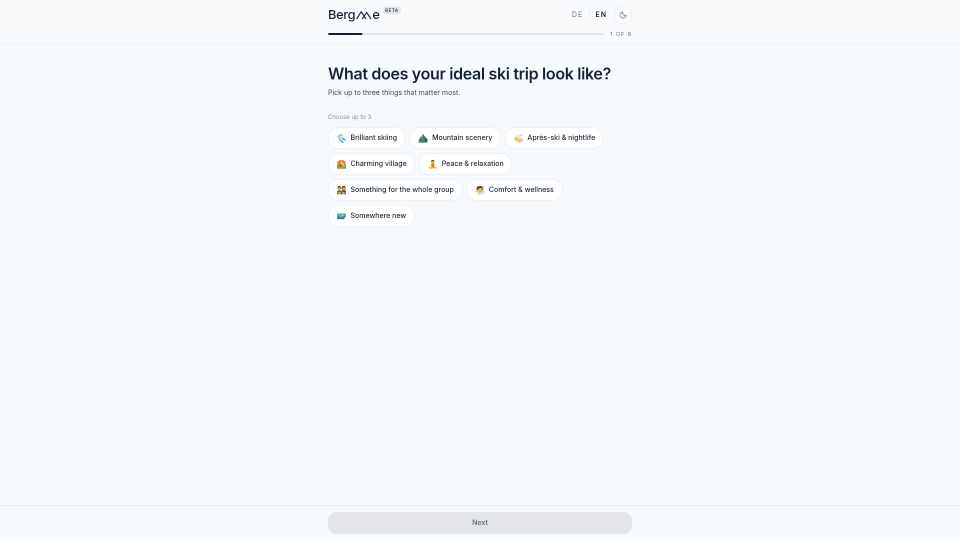
That is why our questionnaire asks about skiing style, group makeup and preferences first, and then filters out mismatches and ranks resorts and packages. It takes a few minutes and requires no registration or email, so the comparison starts from the group rather than from a generic ranking.
A two-resort comparison is a good starting point. A matched shortlist is faster.
Eduard
Matching the trip to the group
BergMe uses a short questionnaire covering skiing style, group dynamics and preferences, then recommends specific resorts and packages. For readers still torn between Whistler and Banff, the hand-picked ski trips page is the place to start, and no sign-up is needed to see the matches.
The journal on the same site adds resort comparisons and planning advice for families, couples and groups.
FAQ
Is Whistler or Banff better for beginners?
Both have beginner terrain. Whistler’s single connected base makes it easy for a mixed group to split up and regroup, while Banff offers the choice of three resorts with different learning areas. Beginners in a group that wants variety often prefer Banff; those who want everything in one walkable village often prefer Whistler.
How far is Whistler from Banff?
They are roughly nine hours apart by road, according to a 2026 travel comparison. Whistler is about two hours from Vancouver and Banff about 90 minutes from Calgary. Most visitors choose one destination per trip, or fly between the two cities.
Which has better snow, Whistler or Banff?
Whistler receives abundant coastal snowfall, which can be wetter and heavier at lower elevations. Banff’s Rocky Mountain snow is typically described as drier and lighter. Which is better depends on whether a skier prioritizes snowfall volume or snow texture.
Is Banff cheaper than Whistler?
Published comparisons generally say yes for lodging and dining, with the national park entry fee as an added cost. Staying in Canmore can lower lodging costs further. Whistler’s cost can be reduced with advance lift tickets and multi-day or pass options.
Can you ski in spring at both?
Yes. Whistler skiing runs into May, with the upper mountain sometimes open longer, and Banff’s resorts typically run to late May. Operating dates vary each season, so the official resort calendars are the reference before booking.
Sources
- Whistler Blackcomb: What to know about skiing Whistler Blackcomb
- Whistler Blackcomb: Whistler month by month
- Travel Pass: Whistler vs Banff resort guide
- Powder Edition: Banff vs Whistler
- Canada Spirit: Whistler vs Banff skiing
- Packzup: Whistler vs Banff
- Blue Passport Travel: Whistler and the Sea-to-Sky Highway
- Canmore vs Banff: where to stay
- Iroamly: Best ski resorts in Canada
- Hidden Door Travel: luxury heli-skiing